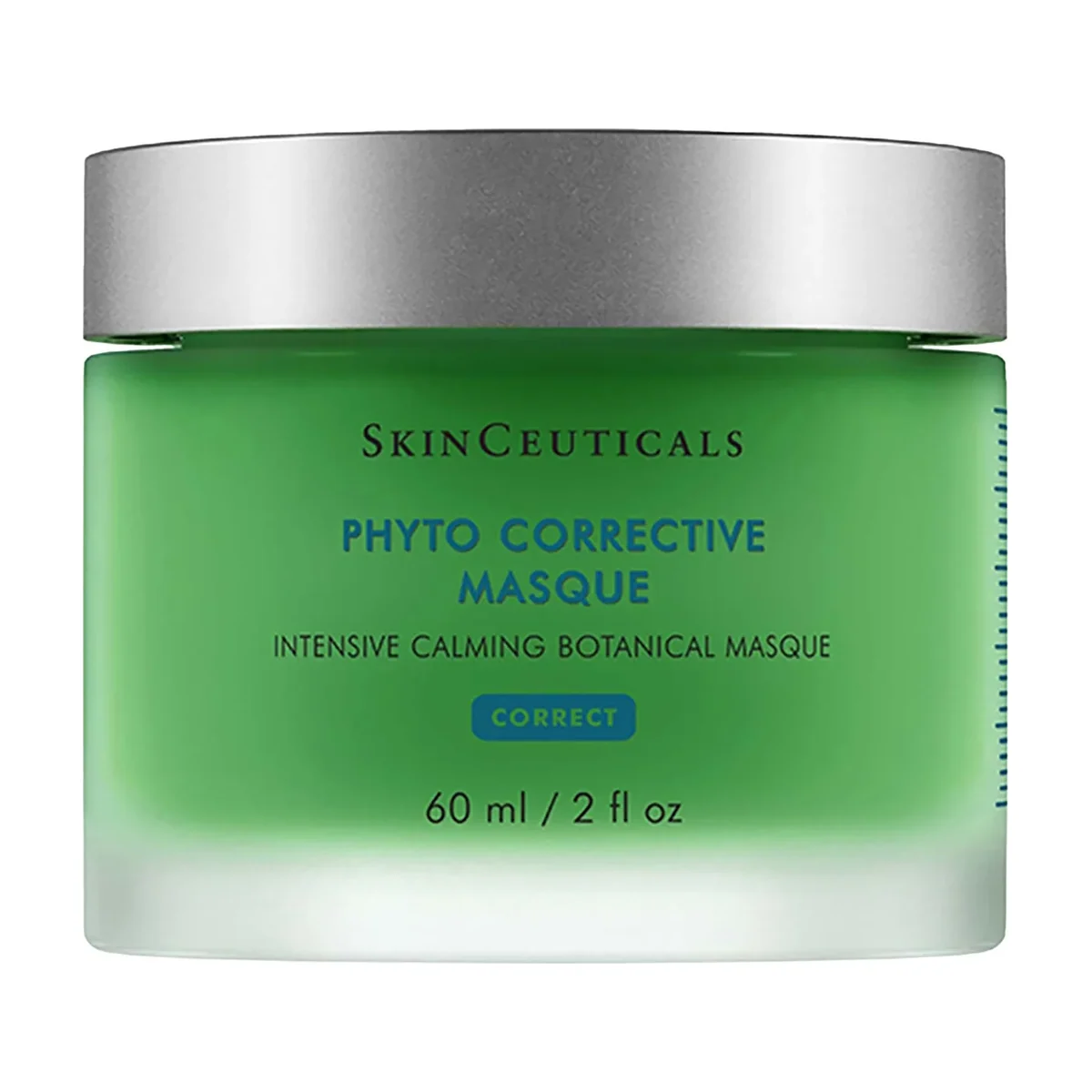
The three days after an in-office laser or chemical peel are a particular kind of skincare hell. The skin is hot, tight, reactive, and hostile to almost everything the bathroom cabinet usually contains. Fragrance stings, active serums burn, heavy creams feel like punishment, and the patient is left staring at a face that desperately needs help but refuses to accept any of the usual tools. This is the specific window the Phyto Corrective Masque was built for — and it's where it earns its place in dermatology office aftercare kits.
The formula takes the same multi-pathway calming approach as SkinCeuticals' Phyto Corrective Gel and reformulates it for a different purpose. Instead of a lightweight gel designed to layer seamlessly under other products, this is a richer cream-gel built for longer skin contact. Glycerin is loaded near the top of the ingredient list, delivering a generous humectant base that produces an immediate cooling sensation on contact — the kind of chill that reactive skin craves during a flare. Dipotassium glycyrrhizate from licorice root remains the primary anti-inflammatory heavy lifter, the same star ingredient from the gel, but the longer wear time in this masque format gives it more opportunity to actually reach and work on inflamed tissue. Thyme, cucumber, and olive leaf extracts round out the botanical calming stack, and hyaluronic acid reinforces the hydration backbone that keeps the mask feeling supportive rather than dehydrating.
A few quieter inclusions do real work. Zinc acetate and zinc sulfate sit deep in the list — mildly astringent zinc salts with a long history in dermatology as soothing agents for irritated, weeping, or over-reactive skin. A mushroom extract contributes additional polysaccharide-based calming. Dimethicone and dimethiconol form the light silicone film that gives the masque its slip and its mild occlusivity, which is precisely why the silicone-averse will want to know it's there before buying. The pH is held at 5.2, close enough to the skin's native acidity that a compromised barrier won't register it as an insult.
Application is almost ritualistic. Squeeze out a generous layer, spread it across the face like a proper mask rather than a serum, and leave it for ten minutes. The immediate cooling sensation from the glycerin and cucumber is genuinely pleasant, particularly on freshly-treated or heat-aggravated skin. After the wait time, the skin looks visibly calmer and feels less tight. You can either rinse the residue or — more commonly in the dermatology-office protocol — press a soft tissue across the face to remove the excess and leave the active layer in place. For overnight use, the lightweight texture is forgiving enough to sleep in without leaving the pillow coated in product.
That chill, incidentally, is chemistry rather than temperature, and the distinction matters more than it sounds. Glycerin at high concentration and cucumber extract produce the cooling sensation on their own. Refrigerating the tube feels lovely and changes nothing about how the licorice derivative behaves once it's on your face. Anyone who has been storing calming products in the fridge under the belief that cold is the active ingredient has been getting a pleasant placebo alongside a working one.
The mask format isn't arbitrary either. A serum layer is lost under subsequent products within a few minutes, which is fine for daily maintenance but insufficient when the skin needs concentrated help. Holding the calming actives against the skin for ten minutes or overnight allows a deeper exposure than a serum can provide, and the richer texture creates a mild occlusive effect that supports barrier recovery during the acute reactive window. This is why it's recommended specifically for the 48-to-72-hour post-procedure window rather than as an everyday product. The masque and the gel are not rivals — they're a maintenance layer and a rescue layer, and reactive skin generally benefits from having both rather than choosing.
The real limitations come down to price and positioning. Sixty-six dollars for two ounces places this squarely in the specialty skincare tier, and non-sensitive users may find the calming effects subtle enough that the price doesn't feel justified for routine use. Reserved for flares and procedure recovery, a tube stretches across three or four months; used as a several-nights-a-week overnight mask, it's gone in under two, and the arithmetic stops flattering it. It's also worth saying clearly that this is a supporting tool, not a treatment — anyone hoping for lasting rosacea improvement or pigment correction should set expectations accordingly. The masque makes reactive skin feel and look better in the moment; it doesn't rewrite the underlying condition, and chronic rosacea remains a prescription conversation.
The fourteen hundred or so reviews it has collected are unusually consistent for a product at this price, and they read like a description of the formula itself: users report immediate cooling, real usefulness after in-office procedures, and appreciation for the dual rinse-off and overnight formats. The objections are the two you'd predict — the size relative to the cost, and the silicone slip.
Clinicians who reach for this do so for very specific patients: those in the immediate post-procedure recovery window, rosacea patients during flares, sensitive-skin users dealing with seasonal reactivity, and anyone running an aggressive actives routine who occasionally needs to hit pause and let the skin recover. It's fragrance-free, alcohol-free, safe in pregnancy, and safe for anyone managing fungal acne — a short list of exclusions for a category that usually has a long one. If you're in one of those categories and the budget allows, it's a legitimately useful tool that will get pulled out exactly when you need it. If you're looking for a daily calming product, the Phyto Corrective Gel or a lower-priced calming serum probably fits your situation better.