Long before bottled cleansers, people in Asia washed with soapberries. The dried fruit of Sapindus mukorossi, rubbed in water, releases saponins that foam and lift dirt, and soapberry shells are still sold today as a laundry alternative. Soapwort, its European counterpart, has a similar history. Sooryehan built the BON Cleansing Foam around that idea, pairing soapberry with its signature ginseng and calling the combination 'Ginseng Soapberry'. It is a lovely story. The ingredient list tells a more modern one.
The first surprise is at the very top. Glycerin is listed before water, which is unusual and meaningful. It means the paste in the tube is thick, humectant-rich and designed to leave a softer after-feel than a typical foam. Next come myristic acid, butylene glycol and potassium cocoyl glycinate, followed by potassium hydroxide, stearic acid, cocamidopropyl betaine and lauric acid. The fatty acids and potassium hydroxide react to form potassium soap, the backbone of many classic Korean foams. The glycinate, an amino-acid surfactant, and the betaine soften and refine that soap lather.
So the cleansing power comes mostly from soap and synthetic surfactants, not from soapberry. The Sapindus and Saponaria extracts appear after the ginseng, in the middle of a long run of hanbang botanicals: wax gourd seed, sweet flag root, Korean angelica, mung bean, carob, snake gourd root, patchouli leaf, apricot kernel and poria mushroom. These plants have roots in traditional Korean and Chinese medicine, and their presence gives the foam its identity. At the levels implied by their position, and with a contact time of well under a minute, they add character rather than measurable function.
The ginseng deserves the same honesty. Sooryehan's Ginseng Bonchodan is made by dripping cold water slowly over ginseng roots, leaves and stems, a technique the brand says preserves ginsenosides and amino acids. Topical ginseng has some laboratory and small clinical evidence for antioxidant and anti-ageing effects, but those studies involve leave-on formulas. In a cleanser, ginseng is washed down the drain almost immediately. It connects the foam to the rest of the BON line, where it has more time to work.
In use, the foam is genuinely pleasant. A small amount of the pale-yellow paste whips into a fine, creamy lather with tiny bubbles. It spreads easily, rinses completely and leaves skin feeling soft and clean rather than squeaky, which is where the glycerin earns its top billing. Oily, combination and normal skin generally find it comfortable twice a day. Dry skin can use it in the evening, ideally after an oil cleanser, and may prefer something gentler in the morning.
The fragrance is the main drawback. The scent is warm and herbal-floral, noticeably stronger than most facial cleansers, and the list declares benzyl benzoate, hexyl cinnamal, limonene and linalool, four fragrance allergens that must be labelled in Europe above certain thresholds. The foam also contains sunset yellow and tartrazine, synthetic dyes that give it its colour. None of this is a problem for most people, and rinse-off products carry lower allergy risk than leave-ons. For people with rosacea, eczema or a known fragrance allergy, though, it is an avoidable exposure, and a fragrance-free, dye-free cleanser is the safer route.
The soap component matters too. Even softened by glycerin and an amino-acid surfactant, soap-based cleansers tend to be alkaline and can disturb the barrier with frequent use. For resilient skin, this is rarely noticeable. For compromised or very dry skin, it can add to tightness and flaking over time, especially alongside retinoids or acids.
It is also worth saying what the foam does not contain, because that is part of its appeal for some buyers. There are no sulfates, no silicones, no drying alcohol and no exfoliating acids, so on intact skin it is less likely to sting than an acid-based wash, though the perfume can still bother a fresh shave. For people who simply want a pleasant, rich lather to end the day, that restraint is welcome.
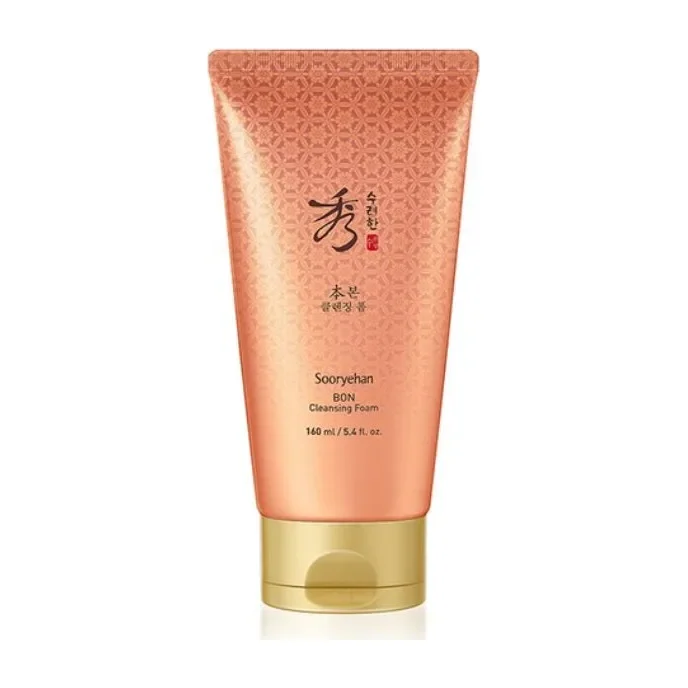
Price is middling. At about $17.50 for 160ml from a US import store, and up to $25 elsewhere, it costs more than many Korean foams with similar cleansing systems. Part of that premium is the Sooryehan name and the luxurious hanbang packaging, a coral tube printed with a traditional lattice motif and topped with a gold cap. Shoppers who enjoy the ritual and the scent may feel that is worth it. Those focused purely on formula will find better value elsewhere.
Sooryehan itself has a long history. It is LG Household & Health Care's premium hanbang line, sold in Korea for around two decades, and the BON range is its ginseng-centred hydration and elasticity line. The brand's strength is sensorial luxury and heritage rather than clinical research, and this cleanser reflects both.
A quick note on routine fit. The foam pairs naturally with the rest of the BON line, especially the toner and emulsion, which carry the ginseng in leave-on formats. It also works well as the second step of a double cleanse. Because it is not a treatment product, it will not help acne, pigmentation or ageing directly; its job is to clean comfortably.
The bottom line: a comfortable, rich, glycerin-first foam for oily, combination and normal skin that enjoys a strongly scented hanbang ritual. Sensitive, rosacea-prone or eczema-prone skin should skip it, and anyone buying for soapberry or ginseng benefits should know that the cleansing comes from soap chemistry, not the plants on the label.