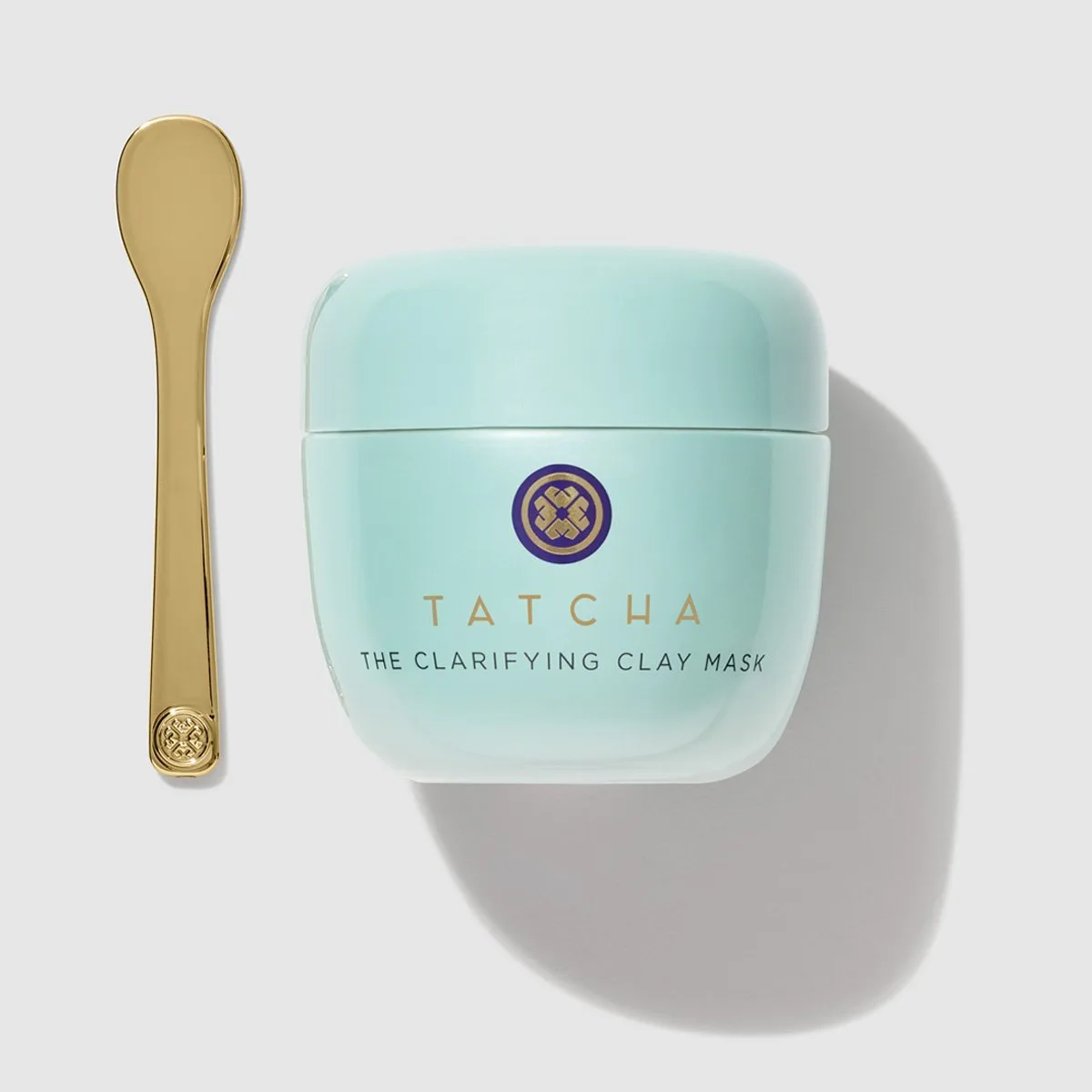
There is a moment, about ninety seconds into wearing the Tatcha Clarifying Clay Mask, when the sage-green paste on your face begins shifting to a warm, ruddy red. Your skin feels gently heated, the clays are visibly transforming, and for a brief window you feel like you are participating in something more interesting than skincare. That is the magic trick this mask performs — it makes a fundamentally simple category (clay absorbs oil, you rinse it off) feel like an event.
The formula is built around what Tatcha calls Okinawa kucha clay, though the INCI list reveals a more standard triple-clay system: kaolin, illite, and bentonite. Kaolin provides gentle, surface-level absorption. Illite, the most distinctive component, is derived from Okinawan sea sediment and brings a mineral-rich profile with ultrafine particles. Bentonite adds heavier oil-binding capacity. Together, they create a comprehensive absorption system that tackles everything from surface shine to deeper pore congestion.
The warming effect comes from volcanic soil, which generates mild heat through an exothermic reaction with skin moisture. This is not the aggressive tingle of a chemical peel or the sting of an acid — it is a gentle, enveloping warmth that genuinely feels like it is opening pores. Whether the thermal effect meaningfully improves clay absorption compared to a standard cold-apply mask is debatable from a dermatological standpoint, but the sensorial benefit is undeniable. It transforms the experience from dutiful to enjoyable. One clarification the warmth invites: heat here is not irritation. The sensation comes from an exothermic reaction between the volcanic soil and skin moisture, a controlled thermal effect rather than a chemical assault — though tolerance varies, and warmth that crosses into genuine discomfort or burning is the signal to rinse immediately rather than tough it out.
Glucomannan, derived from konjac root, provides the exfoliation component. As you massage the mask off after three minutes, the konjac particles offer a gentle, non-abrasive scrub that helps lift loosened dead skin cells and debris. It is a smarter approach than the crushed walnut shells and microbeads of a previous skincare era — effective physical exfoliation without micro-trauma.
The supporting ingredients are competent. Niacinamide helps with post-mask pore appearance and oil control. Dipotassium glycyrrhizate from licorice root provides anti-inflammatory support to counterbalance the aggressive clay and heat treatment. Rice ferment filtrate and green tea extract contribute antioxidant support. These are thoughtful inclusions that prevent the mask from being purely extractive. The three-minute treatment window is also a rule, not a suggestion. The old habit of leaving clay masks on until they crack bone-dry actively backfires — over-dried clay pulls water back out of the skin and invites rebound oil — and this formula does its absorbing within minutes. Timing discipline extends to the calendar too: keep retinoids and acid exfoliants off the same night, since freshly clay-treated skin has no spare tolerance to lend them.
Now, for the less enchanting details. This mask contains parfum/fragrance, alcohol, citral, limonene, and linalool. For a $74 luxury product in 2026, the inclusion of a fragrance cocktail and alcohol in a product designed to be applied to skin with opened pores is a genuinely puzzling choice. The herbal scent is pleasant, certainly, but it eliminates an entire segment of potential users — anyone with fragrance sensitivity, rosacea, or reactive skin — from a product category that is otherwise straightforward.
The price demands scrutiny. At $74 for 50 mL, used 1-2 times weekly, this jar lasts about 2-3 months. That works out to roughly $25-37 per month for a clay mask. The core technology here is oil-absorbing clay with a warming mineral. The konjac exfoliation is nice. The niacinamide and licorice are nice. The Okinawan clay provenance is nice. But none of these ingredients are expensive to source, and the formulation, while elegant, is not complex by modern standards. You are paying significantly for the experience — the color change, the warmth, the weighted glass jar, the Tatcha mystique.
Post-use results are genuinely good. Skin looks noticeably brighter, smoother, and less oily immediately after rinsing. Pores appear tighter, though this is likely temporary smoothing rather than permanent reduction. There is none of the tight, stripped feeling that aggressive clay masks leave behind — the glycerin base and licorice derivative keep skin feeling balanced rather than parched. Over weeks of consistent use, the cumulative effect on oil control and texture is positive, though not dramatically different from what a well-formulated drugstore clay mask can achieve.
The Tatcha Clarifying Clay Mask is fundamentally a good clay mask wrapped in an excellent experience. If the ritual — the color change, the warmth, the spa-like herbal scent, the beautiful jar on your bathroom shelf — brings you genuine joy and your budget accommodates it, the product performs its basic function well. If you are evaluating purely on ingredient efficacy per dollar, the math does not favor it. The warming, color-changing gimmick is genuinely clever and more fun than it has any right to be, but the fragrance, alcohol, and luxury pricing keep this from being the easy recommendation that the sensorial experience alone might warrant. The twelve hundred reviews averaging 4.5 stars affirm both halves of that judgment: near-universal delight in the color-change ritual and the brighter, smoother, un-stripped after-feel, running alongside the same recurring objections — the price, the fragrance-and-alcohol surprise, warmth too intense for some, and a small jar that empties fast when applied at honest thickness. The included spatula at least keeps the jar hygienic, and the formula poses no issue in pregnancy — the barriers here are budget and skin type, never safety.