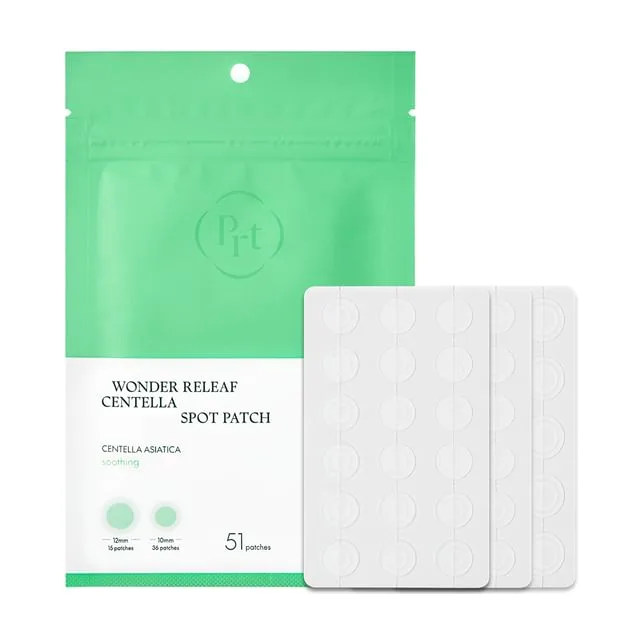
Spot patches are a strange corner of skincare, because the part everyone markets — here, the cica — is largely beside the point. A hydrocolloid spot patch is fundamentally a piece of material science: an absorbent dressing borrowed from wound care that pulls fluid out of a surfaced whitehead, flattens it, and seals it from your picking fingers and outside bacteria. That mechanism is the same across every brand, proven, and effective. So judging a spot patch isn't really about the 'active ingredient' at all — it's about how thin, how adhesive, how invisible, and how well-sized the material is. Reframe it that way, and this VT patch reviews very well, because on the things that actually matter, it's good.
The hydrocolloid itself does its job reliably. Press one onto a clean, dry whitehead, and over several hours it turns opaque white as it absorbs the spot's fluid, leaving the blemish visibly flatter and calmer when you peel it off — cleanly, with no itch or post-patch redness, which reviewers consistently note. It also does the underrated job of physically stopping you from picking, which is half the battle with a tempting whitehead. This is the proven core, and VT's version executes it well.
Where it earns its specific praise is the material quality. These patches are notably thin and breathable — thinner than many competitors — so they sit nearly invisible on the skin, even in daylight, and adhere securely enough to survive water exposure. That thinness is the difference between a patch you'll actually wear out of the house and one you save for bed. And the pack includes two sizes, 10mm and 12mm, so you can match the patch to the spot rather than slapping an oversized circle on a small blemish. These practical details are the real selling points, and they're done thoughtfully.
The cica is the brand's signature flourish, and I'll be honest about it: the centella complex (asiaticoside, madecassic and asiatic acids) is infused at low levels — 60 to 80ppm — so it adds a modest soothing benefit to the inflamed spot, not a dramatic one. It's a nice touch that distinguishes the patch from a bare hydrocolloid and fits VT's sensitive-skin heritage, but it's not a reason to choose this over another good patch on its own. Don't pay a premium for the cica; the thinness and sizing are what you're really getting.
The drawbacks are inherent to the category, not flaws in this product. Hydrocolloid patches only work on surfaced whiteheads with fluid to absorb — they do little for deep, closed, cystic blemishes or blackheads, which have nothing to draw out. They're a spot tool for individual come-to-a-head pimples, not a treatment for the underlying acne, which still needs a real routine (BHA, benzoyl peroxide, a retinoid). And they require a clean, dry, product-free spot to adhere, so they don't layer over serums or moisturizer. The only minor product-specific gripe is that a two-size pack means fewer of each size than a single-size box.
The value, though, is excellent and the best argument for it. At around $7 for 66 patches in two sizes, this is one of the cheaper-per-patch options going, and the pack lasts most people months. It's vegan, fragrance-free, and — being a physical patch with no oils — fungal-acne safe and suitable for literally every skin type. There's almost nothing to react to.
There's a behavioral benefit to spot patches that rarely makes the ingredient list but matters as much as the hydrocolloid: they physically stop you from picking. Half the damage a whitehead does isn't the blemish itself but what your fingers do to it — the picking, squeezing, and prodding that spread bacteria, deepen inflammation, and turn a two-day spot into a two-week mark or a scar. A patch puts a literal barrier between you and the temptation, and for chronic pickers that protective function alone can be worth more than the fluid absorption. It's the quiet reason dermatologists are generally fond of these patches: not because they're a powerful treatment, but because they prevent self-inflicted harm.
A small technique tip maximizes results: apply the patch as early as possible once a whitehead has surfaced, on freshly cleansed and thoroughly dried skin, and choose the size that covers the spot with a little margin so the edges seal. Left overnight, it does its best work while you sleep and can't interfere. And don't be discouraged if a deep, unsurfaced bump doesn't respond — that's not a patch failure, just the wrong tool for that lesion; wait until it comes to a head, then patch it. Used this way, on the right spots, it's about as close to foolproof as skincare gets, which is a large part of why these have become a near-universal staple.
Where it lands: this is a genuinely good, well-priced spot patch, and a category staple worth keeping on hand. Buy it understanding what a hydrocolloid patch does — flatten and protect surfaced whiteheads, stop you picking, heal them faster — and what it doesn't, which is treat the acne underneath. Judge it on material, not the cica, and it scores well: thin, invisible, secure, dual-sized, and cheap. For managing the occasional whitehead, especially one you need to wear out of the house, it's one of the better, more wearable patches at a price that makes it an easy staple.