Keratosis Pilaris ('Chicken Skin'): What Actually Works and What's a Scam
The rough little bumps on your arms are harmless, genetic, and impossible to cure — which hasn't stopped a whole aisle from promising otherwise.
Read the preview
Can anything get rid of chicken skin for good? No — keratosis pilaris is genetic keratin plugging follicles, so it's managed, never cured. Scrubbing isn't the answer; chemical exfoliants plus steady moisturizing are. In one trial, ten percent lactic acid smoothed bumps better than five percent salicylic, though it stung and smelled more. And winter makes it rougher. The Dermington Gazette smooths things over.
The bumps are keratin, not dirt
Run your hand up the back of your arm and feel that fine sandpaper texture — dozens of tiny raised bumps, sometimes topped with a faint red or brown halo, occasionally with a coiled hair trapped underneath. That is keratosis pilaris, and the first thing worth internalizing is that it has nothing to do with cleanliness. You cannot scrub it off because you are not looking at grime. You are looking at keratin.
Each bump is a hair follicle whose opening has become plugged with a compacted plug of keratin, the same structural protein that makes up the outer skin and the hair itself. The follicle can't shed its dead cells normally, so they pile up into a hard little cap. Histology of KP shows exactly this: orthokeratotic plugging of the follicular opening, a dilated infundibulum, and sometimes a trapped, coiled hair. It clusters where vellus hair follicles are dense — the outer upper arms, the thighs, the buttocks, and in some people the cheeks. It is one of the most common skin findings there is, especially in childhood and adolescence, and it very often eases with age. None of that makes it feel less annoying when you're wearing short sleeves.
Why it's genetic, and why that matters
Keratosis pilaris runs in families and is frequently inherited in an autosomal dominant pattern, which is a clinical way of saying: if a parent has it, there's a good chance you will too, and that's simply how your follicles are built. It tends to travel with other dry-skin and atopic conditions — people with eczema or ichthyosis vulgaris see it more often — which points at a shared theme of impaired skin barrier and disordered keratinization rather than anything you did wrong.
That genetic root is exactly why the word 'cure' should make you suspicious. You are not fixing a mistake; you are managing a trait. A follicle that is prone to plugging will keep being prone to plugging, so any product that helps does so only for as long as you keep using it. Stop, and the bumps drift back over weeks. This is the honest frame the marketing skips: keratosis pilaris is a maintenance relationship, not a one-time repair. Understanding that reframes the whole shopping decision — you're not hunting for a miracle, you're choosing something gentle and pleasant enough that you'll actually keep reaching for it. You can run a candidate through the [ingredient-decoder] to see whether it's built around a real keratolytic or just a nicely scented lotion.
What genuinely works: acids and urea, applied relentlessly
The treatments with actual evidence behind them are keratolytics — ingredients that loosen the keratin glue so the follicle can clear — paired with steady moisturizing. Alpha hydroxy acids like lactic and glycolic acid, the beta hydroxy acid salicylic, and the humectant-keratolytic urea are the workhorses. In a controlled comparison, 10% lactic acid produced a roughly 66% reduction in lesions versus about 52% for 5% salicylic acid over twelve weeks, so lactic acid comes out ahead on smoothing — with the caveat that it stung and smelled more, which is a real adherence issue when you're treating a large area twice a day. Urea, especially around 10 to 20%, is prized because it both dissolves keratin and pulls water into the skin, hitting the plug and the dryness at once.
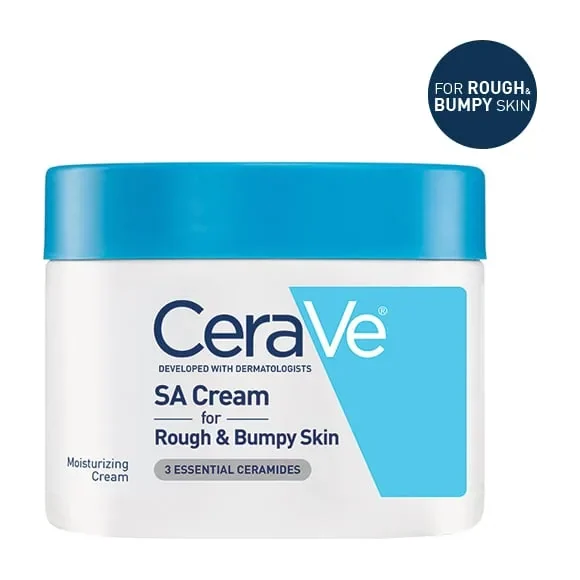
In practice, a lactic-acid body product like AmLactin Alpha-Hydroxy Therapy Lotion or a dedicated formula such as First Aid Beauty KP Smoothing Body Lotion with 10% AHA combines the exfoliating acid with an emollient base so you're moisturizing in the same step. For people who tolerate salicylic acid better, a cream like CeraVe SA Smoothing Cream pairs salicylic and lactic acids with ceramides. The active matters less than the consistency: KP responds to what you do three times a week for months, not to one aggressive session. If you're also using acids on your face, the [conflict-checker] is worth a glance so you're not doubling up irritation across your whole routine.
Why scrubbing and 'cure kits' fail
The single most common mistake is attacking KP with physical force — a stiff loofah, a gritty scrub, a dry brush — on the theory that if the bumps are rough, you should sand them down. This backfires. Mechanical scrubbing irritates the follicles it's meant to clear, and inflamed skin plugs and reddens more, so aggressive buffing often leaves the area angrier and no smoother. The bumps are a chemistry problem — compacted keratin — and chemistry, in the form of keratolytic acids, is what dissolves them.
The 'cure kit' genre deserves particular skepticism. Anything marketed as permanently eliminating KP is promising something the biology doesn't allow, because the follicular tendency is baked into your genes. Some kits are simply a lactic-acid lotion and an exfoliating wash sold together at a premium; they may help, but no better than their individual parts, and not permanently. Others lean on 'detox,' 'purifying,' or coconut-oil-and-essential-oil blends that do little for the actual plug and can sensitize skin. Be equally wary of very high-strength peels marketed for at-home KP use without guidance — over-exfoliation swaps rough bumps for irritation and post-inflammatory marks. When you catch yourself reading the words 'finally cure your chicken skin,' translate it to 'temporarily improve, like everything else, but pricier.'
The winter flare and setting real expectations
If your arms are smoother in August and sandpapery by January, you're not imagining it. Keratosis pilaris characteristically worsens in cold, dry, low-humidity conditions, because the same barrier dryness that underlies it gets amplified when the air pulls moisture out of your skin. Central heating, long hot showers, and harsh soaps all tilt the balance toward drier, more plugged follicles. This is why moisturizing isn't an optional companion to the acids — it's half the treatment. A humectant-rich, ceramide- or urea-containing lotion applied to damp skin after a lukewarm shower does real work.
Set the timeline honestly: expect gradual softening over four to eight weeks of consistent use, better smoothness than a truly bump-free result, and a slow slide back if you stop. The redness component in particular is stubborn and can linger even when the texture improves. For persistent, distressing cases — especially the facial variant or the scarring type — a dermatologist can add prescription-strength options and sometimes laser for the redness, so it's a reasonable thing to bring to a visit. But for the classic bumps on the arms, the unglamorous truth is that a modest lactic-acid lotion used faithfully will out-perform almost any dramatic 'cure' you can buy.
Each shelf lists every product in the catalogue built on the ingredient, graded live against your profile — the shelf stays current when a single pick would not.
Products named in this piece
Independently reviewed, with a verdict per concern — the real products behind this piece.



References
- A Narrative Review on the Role of Acids, Steroids, and Kinase Inhibitors in the Treatment of Keratosis Pilaris — Cureus, 2021
- Epidermal Permeability Barrier in the Treatment of Keratosis Pilaris — Dermatology Research and Practice, 2015
Every cited link is verified to resolve to the paper named. Where a source could not be independently confirmed, it is listed without a link rather than pointing you somewhere wrong.
Frequently asked
Can keratosis pilaris be cured permanently?
No. KP stems from a genetic tendency for keratin to plug hair follicles, so it can be managed but not eliminated for good. Consistent keratolytic exfoliation and moisturizing keep it smooth, but the bumps gradually return if you stop treating. Any product promising a permanent cure is overselling what the biology allows.
Is lactic acid or salicylic acid better for chicken skin?
In a head-to-head trial, 10% lactic acid reduced KP lesions more than 5% salicylic acid — roughly 66% versus 52% over twelve weeks. However, lactic acid stung and smelled more, which matters when you're treating large areas daily. The best choice is whichever keratolytic you'll actually use consistently.
Why does my keratosis pilaris get worse in winter?
KP is tied to underlying skin dryness, and cold, low-humidity winter air pulls moisture out of the skin, worsening the plugging and redness. Hot showers, central heating, and harsh soaps make it worse. That's why steady moisturizing — ideally a urea- or ceramide-rich lotion on damp skin — is half the treatment, not an afterthought.
Will scrubbing get rid of the bumps faster?
No — physical scrubbing tends to irritate the follicles and can make KP redder and more inflamed rather than smoother. The bumps are compacted keratin, which responds to chemical exfoliants like lactic, glycolic, salicylic acid, or urea, not to mechanical force. Swap the loofah for a keratolytic lotion.
How long until I see results treating KP?
Expect gradual improvement over about four to eight weeks of consistent use, with texture softening before the redness fades. Results depend heavily on sticking with it several times a week. If you stop, the bumps slowly return, since you're managing a genetic trait rather than curing it.