Psoriasis Isn't a Dry-Skin Problem — But Your Skincare Still Matters
It's an immune disease writing itself on your skin. Moisturizer won't fix that, but the right routine genuinely lowers flares and makes the real treatments work better.
Read the preview
Is psoriasis just very dry skin? No — it's an immune disease, not a lack of moisture. Even so, skincare matters. Injury can spark new plaques where none existed, so aggressive scrubbing backfires. Gentle softeners like urea help medications get in. But creams have a ceiling. Where does the real treatment start? The Dermington Gazette sorts the supporting cast from the main event.
The mistake baked into the word 'skincare'
Look at a psoriasis plaque — the raised, red, silvery-scaled patch on an elbow or scalp — and your instinct is to treat the surface. Slather on moisturizer, buff off the flakes, repeat. It's an understandable read, and it's the wrong one. Psoriasis isn't a problem of skin that's too dry or insufficiently exfoliated. It's an immune disease that happens to display its symptoms on the skin.
The machinery is now well mapped. As a 2017 review in the Journal of the European Academy of Dermatology and Venereology lays out, psoriasis is driven in large part by the IL-23/IL-17 immune axis: immune cells overproduce signaling molecules that command skin cells to multiply far too fast, so keratinocytes that should take about a month to reach the surface get there in days. They pile up unshed as the characteristic scale. The redness is inflammation; the scale is a traffic jam of overproduced cells. Neither originates in the moisturizer aisle.
That's not a counsel of despair — it's a calibration. Once you understand psoriasis is systemic, you stop expecting a cream to cure it and start using skincare for the genuinely valuable supporting role it can play. Honest expectations are the whole game here.
A skin disease that isn't only skin-deep
Framing psoriasis as systemic isn't rhetorical. The same inflammatory activity visible on your elbows is associated with effects elsewhere in the body. A substantial share of people with psoriasis develop psoriatic arthritis, an inflammatory joint disease, and psoriasis carries recognized associations with cardiovascular disease, metabolic syndrome, and mood disorders. The skin is where you see it, not the entirety of what it is.
This is precisely why the treatment of moderate-to-severe psoriasis has moved toward targeting the immune pathway directly. Biologic drugs that block IL-23 or IL-17 don't just clear plaques; they address the driver of the whole inflammatory process. When people describe near-total skin clearance on a modern biologic, that's what treating the actual disease — rather than its surface — looks like.
The practical takeaway: if your psoriasis is more than a small, stable patch or two, the most important conversation isn't about which moisturizer to buy — it's a medical one about systemic options. Skincare supports that plan; it doesn't substitute for it. Walking into that appointment prepared helps; our derm-visit-prep tool can help you organize your history, triggers, and treatment goals so you get a real strategy rather than a brush-off.
Triggers: the part you can partly control
Psoriasis is genetic at its root, but flares are often provoked. Knowing the common triggers gives you real, if partial, leverage. Stress is a frequent and well-recognized flare driver, working through the same neuro-immune crosstalk that links stress to other inflammatory conditions. Infections matter too — streptococcal throat infections in particular can set off a specific flare pattern called guttate psoriasis, especially in younger people.
Then there's physical trauma, and this one directly reshapes how you should do skincare. The Koebner phenomenon — detailed in a 2019 paper in Bioscience Reports — describes psoriasis forming new lesions at sites of skin injury: scratches, sunburns, aggressive exfoliation, even friction. The injured skin recruits the same inflammatory mediators that drive plaques, so a wound becomes a new lesion. This is the mechanistic reason the intuitive move — vigorously scrubbing scale off — is a mistake. You can literally seed fresh psoriasis by being rough with your skin.
Cold, dry weather is another classic aggravator, which is why many people flare in winter and improve with summer sun. Certain medications can provoke psoriasis as well. You can't control your genes or every infection, but you can manage stress, protect your skin from injury, avoid harsh scrubbing, and buffer against winter dryness — and each of those measurably helps.
What skincare genuinely does for psoriasis
Within its supporting lane, skincare earns real credit. Its jobs are specific: reduce the discomfort and itch, soften and gently reduce scale, protect the barrier, and — importantly — help prescription topicals work better.
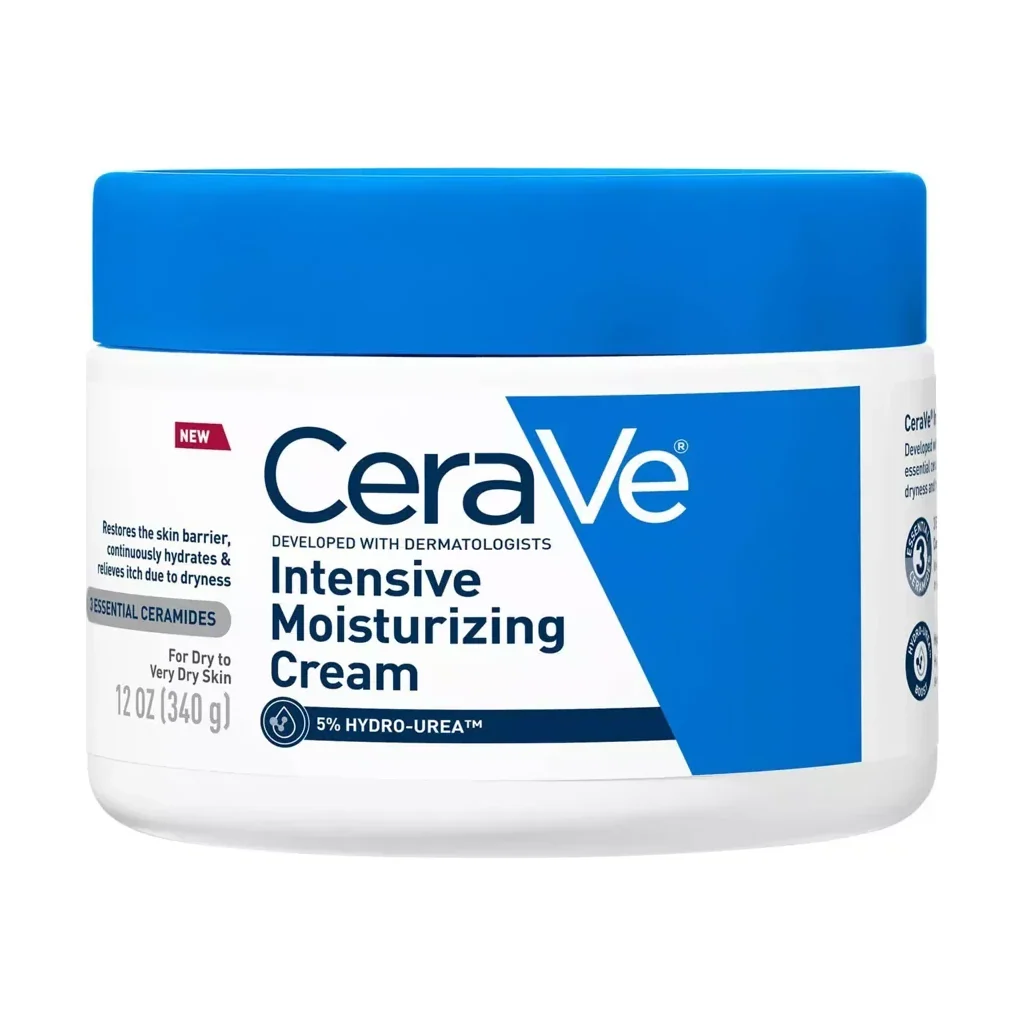
Start with moisture, generously. Rich emollients and occlusives reduce the dryness, cracking, and itch that make plaques miserable, and well-hydrated skin is less prone to the fissuring that can trigger Koebnerization. A rich, protective cream like Prequel Barrier Therapy Rich Skin Protectant Cream layers colloidal oatmeal with the ceramide-cholesterol-fatty-acid trio to seal and soothe, while an intensely hydrating body option like CeraVe Intensive Moisturizing Cream pairs urea with ceramides for the large plaques that show up on limbs and trunk.
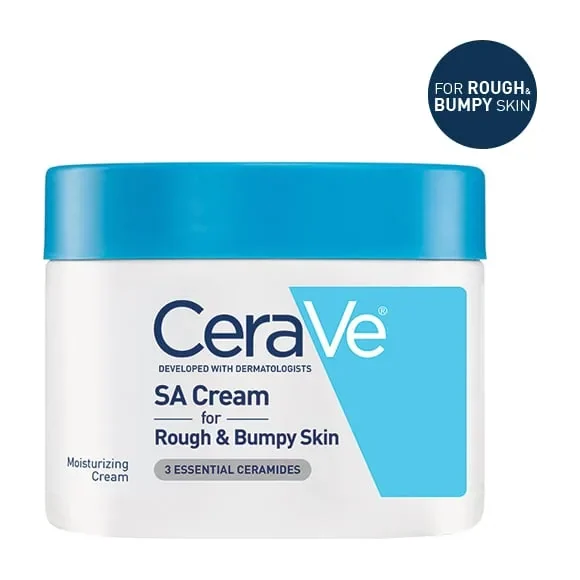
The second, more active role is gentle keratolysis — chemically softening scale rather than scrubbing it. Urea and salicylic acid are the workhorses. Urea both hydrates and helps break down the excess keratin, so a dedicated formula like Eucerin UreaRepair Plus 10% Urea Lotion can visibly reduce thick, flaky plaques without mechanical trauma. Salicylic acid dissolves the intercellular glue holding scale together; a salicylic-and-lactic formula like CeraVe SA Smoothing Cream softens rough, built-up areas. Reducing scale isn't just cosmetic — it lets medicated treatments actually reach the skin beneath, so keratolytics often make the real drugs more effective. If you want to keep an objective eye on whether your regimen is helping, our eczema-severity tool, while built for eczema, offers a useful framework for tracking itch and skin severity over time so you're judging by trend, not by a bad day.
Doing it without making things worse
A few principles keep a supportive routine genuinely supportive. Be gentle to the point of feeling almost too cautious: lukewarm (not hot) water, short showers, a non-stripping cleanser, and moisturizer applied to damp skin to trap water. Skip physical scrubs, stiff brushes, and any urge to pick or peel scale — remember Koebner. Fragrance and known irritants are best avoided on inflamed skin, which flares more easily.
Sun deserves a nuanced note. Controlled UV exposure, and medically supervised phototherapy in particular, can genuinely improve psoriasis, which is why many people clear in summer. But sunburn is skin trauma and can trigger the Koebner response, so the goal is sensible, non-burning exposure and diligent protection of unaffected skin — not deliberate baking. If you're on photosensitizing treatments, this balance shifts further toward protection.
The honest bottom line: no cream reaches the immune pathway rewriting your skin, and any product promising to 'cure' psoriasis is selling you something. What good skincare reliably delivers is comfort, less scale, a calmer barrier, fewer self-inflicted flares, and a better foundation for the treatments that do the real work. That's a meaningful contribution — as long as you ask it to play its position and let medicine handle the rest.
Each shelf lists every product in the catalogue built on the ingredient, graded live against your profile — the shelf stays current when a single pick would not.
Products named in this piece
Independently reviewed, with a verdict per concern — the real products behind this piece.


References
- The role of IL-23 and the IL-23/TH17 immune axis in the pathogenesis and treatment of psoriasis — Journal of the European Academy of Dermatology and Venereology, 2017
- Koebner phenomenon leading to the formation of new psoriatic lesions: evidences and mechanisms — Bioscience Reports, 2019
Every cited link is verified to resolve to the paper named. Where a source could not be independently confirmed, it is listed without a link rather than pointing you somewhere wrong.
Frequently asked
Can moisturizer alone control my psoriasis?
No. Psoriasis is an immune-driven systemic disease, and no topical moisturizer reaches the inflammatory pathway causing it. Moisturizer meaningfully reduces dryness, itch, cracking, and scale-related discomfort, and it supports medicated treatments, but it's a supporting measure. Anything beyond a small, stable patch generally needs prescription topicals, phototherapy, or systemic and biologic medications.
Is it bad to scrub or pick the scales off psoriasis plaques?
Yes, avoid it. Physical trauma to the skin can trigger new psoriatic lesions at the injured site through the Koebner phenomenon, so scrubbing or picking can literally seed fresh plaques. Instead, soften scale chemically and gently with keratolytics like urea or salicylic acid and rich moisturizers, which reduce buildup without the mechanical injury that provokes flares.
What ingredients actually help reduce psoriasis scale?
Urea and salicylic acid are the two most useful over-the-counter keratolytics. Urea hydrates while helping break down excess keratin, and salicylic acid dissolves the glue binding dead cells together, so both soften and reduce scale. Beyond comfort, thinning the scale helps prescription topicals penetrate to the skin beneath, making the medications that treat the disease work better.
Does sunlight help or hurt psoriasis?
It can do both. Controlled UV exposure and medically supervised phototherapy often improve psoriasis, which is why many people clear in summer. But sunburn is a form of skin trauma that can trigger the Koebner response and cause new plaques. The aim is sensible, non-burning sun exposure with protection of unaffected skin, ideally guided by your clinician if you're on photosensitizing treatments.
When should I see a doctor instead of managing psoriasis with skincare?
If your psoriasis covers more than a small, stable area, is spreading, affects the scalp, nails, or joints, or is impacting your quality of life, it's time for a medical evaluation. Joint pain is especially important, since psoriatic arthritis needs prompt treatment. Modern systemic and biologic drugs target the underlying immune pathway and can dramatically clear skin that no cream will.