Chlorella (Chlorella Vulgaris Extract)
Products with Chlorella (Chlorella Vulgaris Extract)
 Salon Daily SPF
 Prisma Protect SPF30 Moisturizer
A well-engineered daily SPF moisturizer that solves the real problem, getting people to wear a full-dose chemical sunscreen every morning, with a satin finish that disappears under makeup and enough hydration to replace a moisturizer on combination skin. The light-activated algae pitch is decoration, the four high-dose filters rule it out for reactive skin, and sixty-nine dollars is a steep habit. Good product, salon price, marketing hook you can ignore.
Key Avobenzone · Chlorella
 Mature-Skin Daily SPF
 Superactive Moisturizer SPF 50: Wrinkle-Fighting
The most comfortable Superactive for mature, dry skin: the line's NMF hydration set plus sodium PCA and a soothing trio, on a properly stabilised SPF 50 that stays sheer. As a daily sunscreen for an ageing face it is very good, and the sunscreen is the anti-ageing ingredient. The bio-retinoid it charges thirteen dollars extra for is an unnamed chlorella extract, and the fragrance carries declared allergens.
Key Avobenzone · Homosalate
 Vegan Peach Tone-Up
 Fresh Vegan Tone-up Suncream SPF 50+ PA++++
The vegan, cast-free answer to Hyggee's mineral tone-up. This fully chemical sunscreen uses a modern four-filter system in a light base with a flattering light-peach tint that brightens dullness rather than whitening — so it suits a wider range of skin tones than a white mineral tone-up. Vegan, fragrance-free, and clinically tested, with only the alcohol content as a caveat for very reactive skin.
Key Uvinul A Plus · Tinosorb
 Esthetician's Workhorse
 Intensive Moisture Balance
A well-formulated barrier repair moisturizer that earns its place in treatment rooms, even if its price tag requires more justification than its ingredient list alone provides. Dry and sensitive skin types will find reliable, no-nonsense hydration here — just don't expect the word 'intensive' to mean revolutionary.
Key Hyaluronic Acid · Ceramides
 Award-Winning Hydration Burst
 Waterfull Hyaluronic Cream
A refreshingly honest K-beauty hydrator that delivers exactly what it promises — layered hyaluronic acid hydration with probiotic microbiome support — in a featherweight gel-cream that oily skin types will genuinely love. Its back-to-back Glowpick awards weren't luck; this formula earns its fans through performance, not marketing.
Key Hyaluronic Acid · Probiotics & Prebiotics
 Velvet Finish, Panel-Sized Proof
 Firming Velvet Cream
A genuinely pleasant squalane-and-glycerin day cream with a matte velvet finish that behaves beautifully under makeup — and that is the honest extent of it. The firming and lifting language rests on two panels of twenty-odd volunteers and a chlorella extract listed behind the preservative, and sixty-nine dollars is a prestige price for a well-made basic moisturiser wearing a heavy floral perfume.
Key Squalane · Glycerin
 Budget Overnight Hydrator
 The Great Abyss
The Great Abyss is a surprisingly thoughtful budget sleeping mask that stacks several humectants under a shea-and-squalane seal to leave dry skin dewy by morning. It is fragrance-free, which is rare at this price, and the main caveats are its richness for oily skin and a less hygienic tub.
Key Hyaluronic Acid · Shea Butter
 Everyday Hydration Serum
 Waterfull Hyaluronic Acid Serum
A clean, fragrance-free hydration serum that bets on delivery rather than ingredient-count theatrics — triple hyaluronic acid and a liposome-encapsulated ceramide, lifted by a chlorella antioxidant boost. It's gentle enough for nearly any skin including sensitive, layers invisibly, and offers genuine value, as long as you seal it with a moisturizer and don't expect a hydrator to do a treatment's job.
Key Hyaluronic Acid · Ceramides
 Lightweight Hydration Pick
 Moisture Boost Cooling Marine Concentrate Serum
A lightweight, fast-absorbing hydration serum that stacks three weights of hyaluronic acid with niacinamide and a calming cica-and-turmeric base, then adds a genuine menthol cooling kick. At $25 for a generous 80ml it's good value and pleasant to use daily — just know the cool tingle that makes it feel refreshing is also the reason very sensitive skin should approach carefully.
Key Niacinamide · Hyaluronic Acid
 Dry-Touch Oil, Big Claims
 Firming Activating Oil-Serum
As a face oil this is expertly built — macadamia and jojoba up front, linoleic oils behind them, a proper dose of vitamin E, and a dry-touch finish that makes it one of the easiest oils to wear under makeup. As a firming serum it is a perfume-laden plant-oil blend with a chlorella extract in ninth place and an 18-volunteer questionnaire for evidence, and seventy-five dollars is a lot to pay for the story.
Key Macadamia Oil · Jojoba Oil
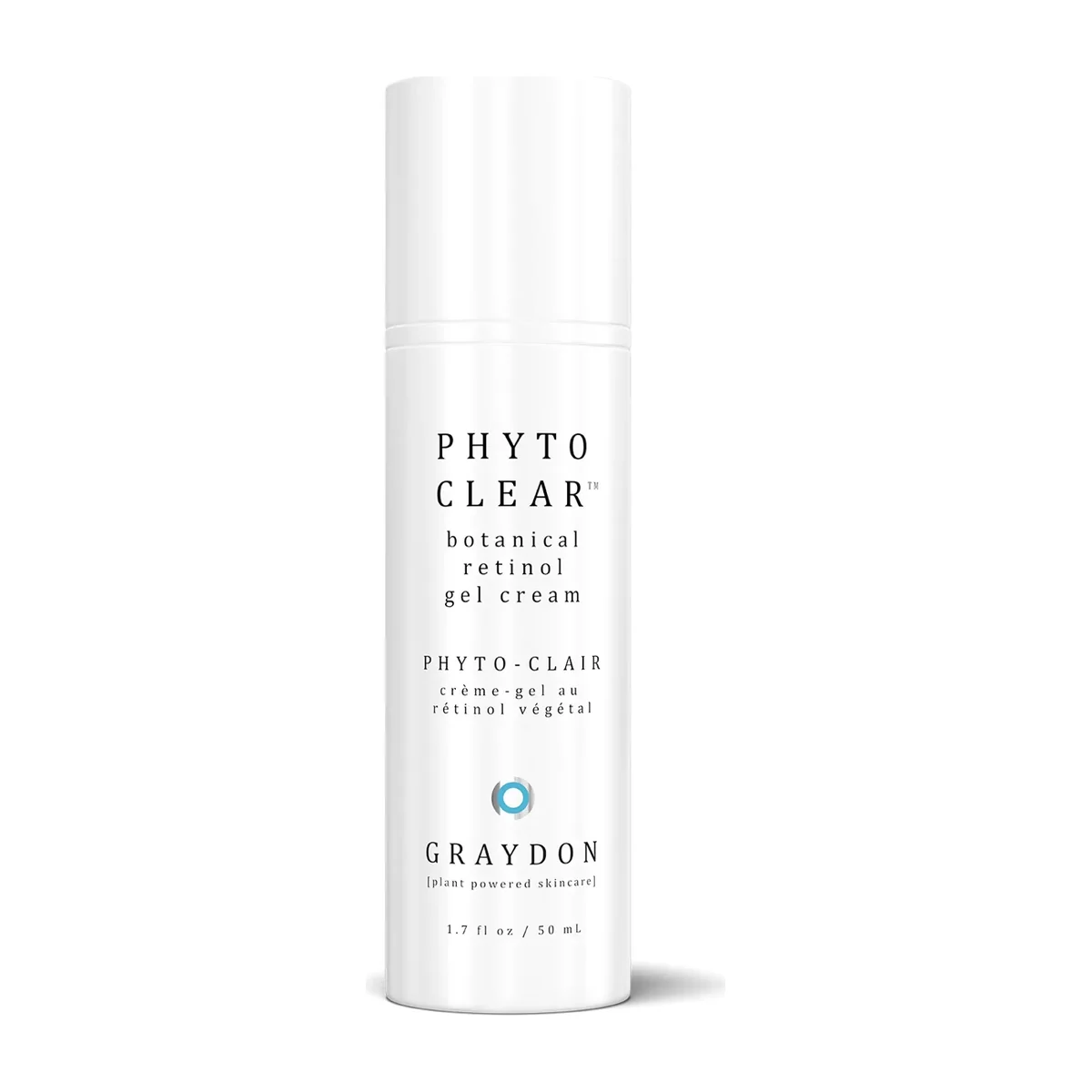 Botanical Retinol for Acne
 Phyto Clear
Graydon's Phyto Clear is a genuinely smart botanical-retinol gel for oily, acne-prone skin: bakuchiol — a clinically promising, gentle retinol alternative — paired with fungal-acne-safe squalane and purifying neem in a lightweight, pH-balanced vegan formula. It smooths and clarifies without retinoid irritation. The one real catch is the blend of essential oils, which undercuts its gentleness for sensitive skin.
Key Bakuchiol · Retinol
 Soft-Focus Primer-Moisturizer
 Firming Powdery Cream, Merveillance Lift 50 ml
A soft-focus primer-moisturizer wearing a firming cream's name: squalane and macadamia underneath, an acrylate-and-wax film on top that sets matte and blurs pores, and a citrus-floral fragrance with nine allergens. For normal-to-combination skin that wants a French cream to put makeup on, it is genuinely nice at $69. As anti-aging care it is thin — the algae sit twenty-fourth and the only firming peptide is an eye-bag ingredient at twenty-fifth.
Key Squalane · Film Formers & Texture Polymers
 Light Day-and-Night Cream, Loud Fragrance
 The Exceptional Day & Night Cream 75ml, Merveillance Lift
The lighter, cheaper twin of Nuxe's day-and-night idea: squalane second, niacinamide seventh, alcohol fifth for a velvety flash-dry finish, at $86 for 75 ml. Combination skin that finds the Nuxuriance cream too rich gets a genuinely pleasant wear and one evidenced active. The '4 billion cells' are a Chlorella extract at twenty-third, and alcohol plus a nine-allergen citrus fragrance twice a day is the price of the texture.
Key Niacinamide · Squalane
 Weightless Anti-Aging Luxury
 R.N.A. Power Airy Milky Lotion
A texturally brilliant lightweight moisturizer that proves anti-aging peptides and Pitera don't need to come wrapped in a heavy cream. The airy finish is perfect for oily and combination skin, but the luxury price, parabens, and fragrance make this a hard sell when the SKINPOWER successor offers an updated formula.
Key Galactomyces Ferment Filtrate · Niacinamide
 Sensitive Eye Area Essential
 Minéral 89 Eyes
A masterclass in restraint — this fragrance-free, ophthalmologist-tested eye gel does exactly three things (hydrate, de-puff, smooth fine lines) with a clean, minimal formula built on Vichy's researched volcanic mineral water. It won't overhaul dark circles or turn back the clock, but it is one of the safest, most universally tolerable eye products at any price point.
Key Caffeine · Hyaluronic Acid
 Clinical HSA Eye Cream
 Illuminé Eye Cream
A sophisticated clinical-tier eye cream built around Senté's patented Heparan Sulfate Analog, dual peptides, niacinamide, and a deliberately sensitive-skin-friendly vehicle. The formulation is genuinely differentiated, the tolerability is excellent, and the results are visible but subtle. The $85 price tag is the main friction point and positions it firmly as a clinical or medical-spa purchase rather than an impulse buy.
Key Peptides · Niacinamide
 Cozy Botanical Night Cream
 Brightening Night Cream
A genuinely rich, antioxidant-packed botanical night cream that nourishes dry skin beautifully and leaves it looking plump and rested by morning, all at a budget-friendly price. The deep avocado-almond-argan base is its strength, but lemon and lavender essential oils plus comedogenic oils make it a poor match for sensitive or acne-prone skin.
Key Chlorella · Argan Oil
 Luxury Hydration Icon
 Pro-Collagen Marine Cream
An iconic luxury gel-cream moisturizer that delivers immediately noticeable hydration and plumping in a genuinely beautiful texture — though the $145 price is driven more by two decades of brand prestige and the exquisite sensory experience than by the cutting-edge potency of its marine actives.
Key Algae Extract · Glycerin
 Gentle Vita-A Band Mask
 Pro Vita A Retinal Derm Band Mask Sheet
A genuinely gentle, fragrance-free sheet mask whose close-fitting band sheet and niacinamide-adenosine essence leave skin hydrated, smooth and a little firmer, earning its strong Olive Young reviews. Just don't buy it as a retinoid: the retinal is declared at 2ppm, so this is a well-made hydration and wrinkle-care mask wearing a Vita A label.
Key Niacinamide · Adenosine
 Derm Office Hall-of-Fame Serum
 TNS Advanced+ Serum
The serum that built the growth factor category, updated in 2020 with a more comprehensive peptide and botanical support cast. The science is more substantive than most luxury anti-aging serums, and the texture is elegant — but at $295 for one ounce, this is an investment product that only earns its place in very specific routines.
Key Growth Factors · Chlorella
 Soft-Focus in a Tube
 Lift Eye Cream
A better eye cream than its marketing deserves: squalane and glycerin lead, the fragrance is low enough to declare no allergens, and a cellulose soft-focus finish genuinely blurs crow's feet under concealer. It lifts nothing and reduces no bags — the algae and peptide sit behind the preservative — and fifty-nine dollars for 15 ml is a prestige price for a competent, cosmetic-only under-eye moisturiser.
Key Squalane · Glycerin
 Satisfying Peel-Off Treat
 Beyond The Coast
Beyond The Coast is a fun, deeply satisfying peel-off mask that leaves skin looking instantly brighter for under nine dollars, with a clever forest-and-sea mushroom-and-algae theme. Just know the brightening is cosmetic surface lifting, and the alcohol-and-fragrance base makes it a treat for resilient, oilier skin rather than a serious treatment.
Key Glycerin · Chlorella
 AHA in Name, Willow in Practice
 Good Skin AHA Peeling Ampoule
A ten-dollar hydrating ampoule wearing an AHA label it does not earn: citric acid sits seventeenth in the list behind its own buffer, and the exfoliating gesture is a pair of willow bark extracts that smooth gently over weeks at best. It is pleasant, cheap and mild, and it would be an easy recommendation as a light serum if it were not scented with bergamot and orange oils that add declared allergens and a sun-sensitivity question to a product already asking for sunscreen. Buy it as a humectant serum with a citrus smell; do not buy it to peel.
Key Citric Acid · Willow Bark Extract
 Spicule Shot in a Probiotic Base
 Bifida Infusion Shot Ampoule 1DX
Sponge spicules suspended in a 68% bifida lysate with niacinamide high on the list — a resurfacing prickle that arrives with its own soothing base, which is the cleverest thing about it. Used once or twice a week with everything else paused for two days, it polishes texture and tightens the look of pores in the mild way spicule ampoules do. It is brand new, has one public review, dresses its mechanism in trademarked names, and is the wrong bottle for anyone whose skin is sensitive, reactive or breaking out.
Key Probiotics & Prebiotics · Hydrolyzed Sponge
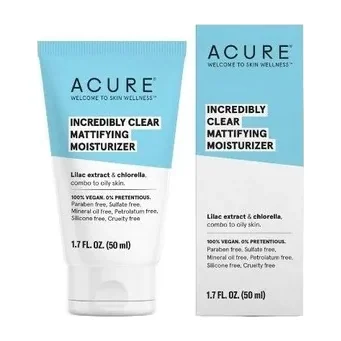 Natural Beauty Aisle Staple
 Incredibly Clear Mattifying Moisturizer
A pleasant, affordable clean-beauty moisturizer that does a solid job of hydrating combination skin but leans heavily on botanical marketing to sell an oil-control story it doesn't quite earn. Good for daily maintenance; not a replacement for a real mattifying gel-cream or a BHA treatment.
Key Chlorella · Glycerin
 Herbal Mild-Acid Blemish Toner
 TRE.AC pH Condition Toner
A mild-acid blemish toner with a genuinely kind construction, willow and meadowsweet salicylates, lactic acid, and a ceramide-cholesterol-fatty-acid trio to spare the barrier, then five essential oils above the actives that hand the sensitive, breakout-prone buyer it names a reason to react. Resilient oily skin will find it cooling and effective for texture; everyone else has better toners, and everyone has to import it.
Key Willow Bark Extract · Lactic Acid
 Retinal for the Retinoid-Shy
 Firm Revival HydroRetinal Firming Serum
The retinoid Dieux took six years to make is a good one: 0.05 percent retinal in a hydrating gel with a real irritation-buffering system, stated doses where it counts, barrier lipids, no fragrance, a National Eczema Association seal and a 31-panelist instrumental study behind it, at $42. It is two months old, its algae booster is a plausible extra rather than a proven one, and its study has no vehicle arm; none of that changes the fact that this is one of the more thoughtfully built beginner retinals sold at the price. Buy it for the retinal, not the algae.
Key Retinal · Chlorella
 Budget Scrub Night Staple
 Clear The Deck
Clear The Deck is an honest, no-pretense volcanic-sand scrub that smooths and brightens skin for under ten dollars. The grit is genuinely coarse and the added fragrance limits it for sensitive types, but used once or twice a week it earns its modest spot as a budget scrub-night treat.
Key Lactic Acid · Chlorella
 Starter-Strength Vitamin C
 Mandarin Vitamin C5 Dark Spot Serum
A sensibly gentle vitamin C serum that pairs 5% L-ascorbic acid with a stable derivative and a penetration enhancer, a reasonable starting point for vitamin C beginners. Its sensitive-skin promise is undercut by seven essential oils, and with almost no independent reviews and frequent stock-outs, it is hard to recommend over better-documented options at this price.
Key Vitamin C · Chlorella
 French 'Bonne Mine' Tinted Cream
 Firming Radiance Cream
A French 'bonne mine' cream sold as firming care: a sheer, warm universal tint from mica and iron oxides — credited on the page to tomato — in a good glycerin-squalane base with the Merveillance Lift velvety-set film. For light-to-medium skin that wants a healthy-glow moisturizer under sunscreen, it delivers exactly what the first ten minutes promise. The wrinkle line has no figure, the algae sit twenty-fourth, and fragrance sits sixth.
Key Iron Oxides · Botanical Extracts
 French Pharmacy Comfort Cream
 Concentrated Night Cream
A genuinely comfortable squalane-and-shea night cream for dry, mature skin, wrapped in a lovely French perfume and a $69 price that the formula does not fully justify. It softens and plumps overnight; it does not lift, and the micro-algae extract that headlines the marketing sits below the preservatives. Buy it for the feel, not for the firmness claim.
Key Squalane · Glycerin
 Sensitive-Skin Comfort Cream
 Superkind Calming Crème
The best-loved product in Tata Harper's sensitive-skin line, and deservedly: a thick, pillowy, genuinely unscented cream of plant sterols, olivate esters, squalane and bisabolol that stops the sting and the tightness within minutes and cocoons dry, flushed skin through a winter. It carries no ceramide, its pepperberry and microalgae headliners are trace-level, its 87 percent figure is a survey, and $168 for 50 mL is the highest price in the barrier-cream class for what is a very good plain cream. Comfort, at a luxury tariff.
Key Phytosterols · Bisabolol
 At-Home Spa Cica
 BALANCEFUL Modeling Pack
BALANCEFUL Modeling Pack is Torriden's weekly at-home spa play — a powder-plus-water alginate rubber mask that seals the full 5D Cica complex against your skin for twenty minutes of cooling occlusion. It's a little messy, mildly theatrical, and one of the more credibly formulated modeling packs on the K-beauty market.
Key Centella Asiatica · Algae Extract
 Thick-Hair Daily Wash
 Hydrating Shampoo
A pleasant, silicone-free daily wash for thicker or textured hair that adds conditioning polymers and a creamy base to Divi's minty scalp-cleansing formula. It leaves hair softer and easier to detangle than most thorough cleansers. Its main surfactant is still strong for very dry hair, and its scalp extras matter little in a rinse-off.
Key Film Formers & Texture Polymers · Sodium Cocoyl Isethionate
The full chlorella (chlorella vulgaris extract) guide
Chlorella is a single-celled freshwater alga that packs more chlorophyll per gram than almost any other plant, and the same busy cellular machinery produces a rich mix of peptides, amino acids and antioxidants.
In skincare, its extract shows up in moisturizers, eye creams and masks, where people reach for it to help skin look firmer and to defend against everyday stress. It's gentle and easy to tolerate. One thing it isn't is a sunscreen, and it plays no part in breakouts — it's a maintenance ingredient.
How it's regulated in the US
FDA does not classify ingredients — it classifies products, by what they are sold to do. The same molecule can be a drug active in one product and a cosmetic ingredient in the next, and only the claim on the label decides which. What follows is a statement about that legal standing, not about whether it works — the evidence question is answered separately above.
Cosmetic Chlorella (Chlorella Vulgaris Extract) is a cosmetic ingredient in the US: no OTC monograph covers it and it is not an active in any FDA-approved drug, so a product built around it is a cosmetic rather than a drug.
Collagen is the main thread in chlorella studies: whether its extract encourages skin cells to make more of it, and whether it slows the enzymes that break collagen and elastin down. Most of that is lab work on cells and on peptide fractions taken from the alga, alongside tests of its antioxidant activity. A handful of small studies on finished cosmetic formulas have measured things like hydration and skin-surface proteins tied to the barrier. Whether those lab effects add up to visible firmness on the face is still an open question, and larger studies are scarce.
How it works
Chlorella's topical activity is usually traced to three overlapping mechanisms, all rooted in its unusually dense nutritional profile. Its polysaccharides and peptides appear to nudge fibroblasts toward synthesizing collagen type I while reducing expression of MMP-1, the protease most responsible for dismantling existing collagen — a two-sided angle on structural support that builds new collagen while slowing the breakdown of what's already there. Its pigment-heavy makeup, rich in chlorophylls and carotenoids, contributes direct free-radical scavenging, neutralizing reactive oxygen species generated by UV and pollution and helping interrupt the oxidative cascade behind photoaging. And when its proteins are enzymatically broken down, the resulting small peptide fragments show measurable inhibition of both elastase and collagenase in lab settings. One caveat dominates everything else: chlorella's cell wall is notoriously tough, so whole-algae powder applied to skin does very little. Efficacy hinges on the extract being properly cell-wall-disrupted — via enzymatic hydrolysis, bead milling, or aqueous extraction — so the bioactives can actually reach skin. This is why form matters: a serum built around a processed extract behaves nothing like raw powder dusted into a clay mask. Some research also points to chlorella supporting epidermal differentiation proteins in keratinocytes, hinting at a barrier-related role beyond antioxidant defense, though that thread is earlier-stage than the collagen and antioxidant work.
Key benefits
- Helps skin look firmer and more resilient over time
- Antioxidant pigments help defend against daily stress
- Supports a comfortable, well-functioning skin barrier
- A gentle addition to eye creams and moisturizers
- Easy to tolerate across dry, normal and reactive skin
Concentration & usage
Chlorella vulgaris extract usually appears in finished products at concentrations below 1%, with most functional research conducted in the roughly 0.1–1.6% range. The frequently cited in-vitro collagen figures (a larger increase at higher concentrations) reflect cell-culture conditions and don't translate one-to-one into required formulation levels. On an INCI list, look for "Chlorella Vulgaris Extract" (the standard INCI name) or "Dermochlorella Algae Extract." "Chlorella Growth Factor" (CGF) refers to a water-soluble nucleic-acid and amino-acid complex drawn from chlorella, but it also files under the INCI name Chlorella Vulgaris Extract. Because the cell wall has to be disrupted for the bioactives to be available, well-processed aqueous or hydroethanolic extracts are preferable to raw powder. No meaningful pH dependency has been identified for topical chlorella extract — unlike AHAs or vitamin C, it isn't a pH-sensitive active.
Who it's for & who should be cautious
Who it's for
Chlorella suits anyone building a maintenance anti-aging routine who wants antioxidant and collagen-support input without committing to a dedicated retinoid or vitamin C step. It sits comfortably in moisturizers and eye creams where a gentle, non-irritating approach is the goal, and dry-to-normal skin tends to appreciate the mix of barrier-friendly peptides and nutrient-rich actives. It's also a reasonable pick for people who react to stronger actives, since its tolerability profile is genuinely low-risk.
Who should be cautious
Algae allergies and iodine sensitivity are both reasons to steer clear, since chlorella naturally contains iodine and can provoke contact dermatitis in reactive individuals. People in the middle of an active breakout won't get much from it — chlorella doesn't engage acne pathways, so the budget is better spent on targeted treatments. And while its antioxidant activity is a useful complement to sun protection, it is not a photoprotectant and should never stand in for SPF.
Pairs with & conflicts
Myths & facts
Myth: Chlorella in a face mask works just like chlorella extract in a serum
Reality: Raw chlorella powder has a tough, nearly impermeable cell wall that sharply limits how much can reach skin when applied topically. Skincare extracts are processed — enzymatic hydrolysis, bead milling, or aqueous extraction — to break or strip that wall, which is what makes the peptides and antioxidants accessible. A green-tinted clay mask with chlorella powder near the end of the INCI is a very different proposition from a serum built around a cell-wall-disrupted extract.
Myth: Because chlorella is a 'superfood,' eating it gives the same skin benefits as applying it
Reality: The oral and topical routes are distinct. Oral chlorella has its own evidence base, largely around heavy-metal binding and systemic antioxidant status, but swallowing it doesn't reliably reproduce the local MMP-1 inhibition and collagen-synthesis signaling that topical extract studies measure directly at the fibroblast level. The two are complementary, not interchangeable.
Myth: Chlorella is basically the same ingredient as spirulina in a formula
Reality: Spirulina is a cyanobacterium (blue-green algae) and chlorella is a true green alga — separate evolutionary lineages with different active profiles. Spirulina leans on phycocyanin for much of its antioxidant pathway, while chlorella is the more chlorophyll-dense of the two and its peptide research targets different enzymes. Plenty of formulas use both, which makes sense precisely because they aren't redundant.
Frequently asked questions
Does chlorella actually do anything for skin, or is it mostly a label flex?
It lands somewhere between those extremes. There's real in-vitro data on collagen stimulation, MMP-1 inhibition, and antioxidant activity — not nothing. But large randomized human trials are scarce, and chlorella typically sits below 1% inside complex formulas, which makes its solo contribution hard to isolate. Treat it as a credible supporting ingredient rather than a hero active.
How is Chlorella Growth Factor (CGF) different from a regular chlorella extract?
CGF is a water-soluble fraction concentrated in nucleic acids, amino acids, and peptides, marketed as the most bioactive portion of the alga. In practice both list as 'Chlorella Vulgaris Extract' on an INCI, so the distinction is more about sourcing and marketing than a separate regulated ingredient. Either way, the question that matters is whether the extract is cell-wall-disrupted and standardized for activity.
Is chlorella extract okay to use while pregnant?
There's no known contraindication for topical chlorella extract in pregnancy, and its general safety profile is well-regarded. Because chlorella contains iodine and nucleic acids, anyone with a thyroid condition or specific sensitivities should run it past their OB or dermatologist. Oral chlorella supplements carry separate considerations that don't automatically apply to a topical.
Will chlorella help with acne-prone skin?
Not in any direct mechanistic sense — chlorella has no known activity against Cutibacterium acnes and doesn't regulate sebum or keratinization. Its comedogenic rating is effectively zero, so it won't aggravate breakouts, but it also won't be the ingredient doing the work. Layered into a moisturizer alongside dedicated acne treatments, it's a benign and possibly supportive companion.
Why does chlorella usually sit near the bottom of the INCI list?
It's typically dosed under 1%, which places it in the lower portion of an INCI ordered by descending concentration. That position doesn't mean it's inert — plenty of potent actives like peptides and retinol live in the same zone. It does mean chlorella is generally a supporting player rather than the headline driver of a formula's claims.
Does chlorella offer any sun protection on its own?
No. Chlorella is not a UV filter and provides no meaningful defense against UVA or UVB. Its antioxidant activity can help mop up free radicals generated after sun exposure, which is a worthwhile complement, but that's a different job from physical or chemical sunscreen. A chlorella-containing product is never a substitute for SPF.
Sources
- https://pmc.ncbi.nlm.nih.gov/articles/PMC12028799/
- https://pmc.ncbi.nlm.nih.gov/articles/PMC8398991/
- https://pmc.ncbi.nlm.nih.gov/articles/PMC12355925/
- https://hal.science/hal-04874122v1
- https://www.researchgate.net/publication/348278309_The_extraction_of_antioxidants_from_Chlorella_vulgaris_for_cosmetics