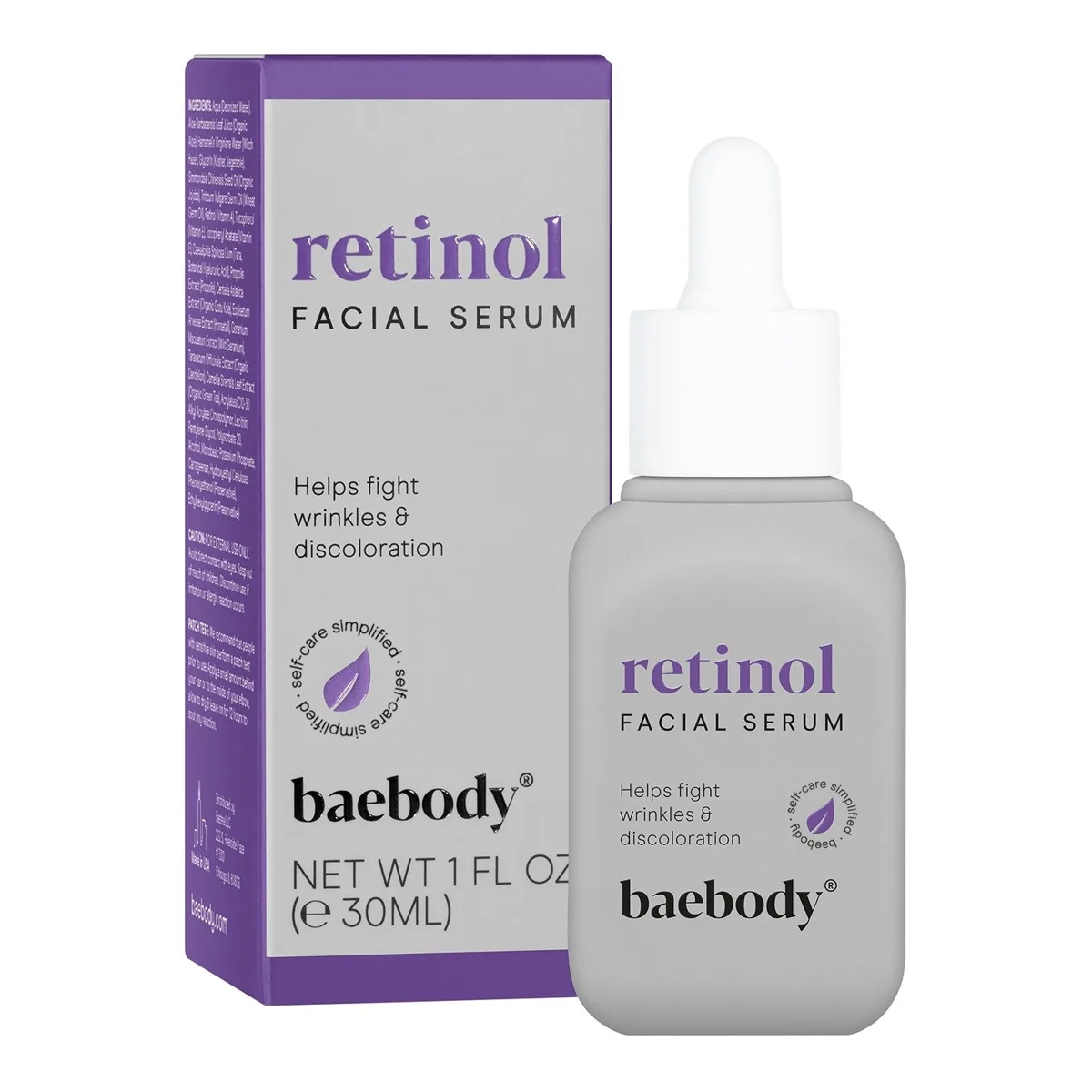
Baebody Retinol Serum dropper bottle
Good choice for Aging
What makes this different

It's the water-based, fast-absorbing counterpart to Baebody's retinol moisturizer — same gentle low-dose retinol, but in a light serum texture that suits oily and combination skin better than a rich cream. It lets you layer retinol under your own moisturizer of choice rather than committing to the brand's cream base.

Baebody

Baebody Retinol Serum Review

Lightweight Beginner Retinol Serums serum clean beauty Paraben free Cruelty free

The lightweight, water-based sibling to Baebody's retinol moisturizer — a gentle, low-dose beginner retinol in a fast-absorbing serum that suits oily and combination skin and layers under your own moisturizer. Like the cream, its marketed retinol strength overstates the real (blend-based, undisclosed) dose, so results are mild and gradual. Witch hazel, alcohol, fragrant geranium, propolis, and wheat germ oil narrow who it fits. As an affordable, light-textured first retinol, it's fine — just read the ingredients over the headline, skip it while pregnant, and calibrate expectations to a low dose.

Price $22.95 1 oz (30 mL)
Shopper rating 4.1 ★★★★★ 9,000 reviews
On the market 2016 Made in United States
Buy at Amazon ♥
Verdicts

How well it fits each concern

One verdict per concern. Open a row for the reasoning; the receipt has every source.

The scaleRecommendedGoodSupportingEarly evidenceNot for thisAvoidhow it works

Good choicefor AgingRetinol is a trial-supported active for aging; this serum carries it, though the concentration is not declared.Receipt4 sources on the row · concentration not declared; studied range 0.075–0.5% · row checked Jul 17, 2026 · rule R5, same reading on 9,843 products · open the receipt

The case for it

  1. Retinol has trial-supported standing for this concern.
  2. It is plausibly present at a working level, though the concentration is not declared.
  3. The formula carries none of the triggers this concern is sensitive to.

Moderate evidenceGentleNo reviews read yet

What would change this: A declared concentration would move this to a firmer reading of the dose.

Same rule for everyone. “Good choice” is the verdict on 10,340 of 45,446 concern verdicts across the catalog; rule R5 decided 9,843 of them. Unchanged since September 5, 2026, engine 5.2.0.

Brand or formulator? Disclose a concentration or correct a fact →

The full receipt: rule, row, sources, dates →All aging products →

Unprovenfor DullnessHyaluronic Acid has early or mechanistic evidence for dullness — a reasonable bet, not a recommendation; the other actives here are not yet assessed for it.Receipt1 source on the row · row checked Jul 17, 2026 · rule R9, same reading on 4,156 products · open the receipt

The case for it

  1. Tara Gum has early or mechanistic evidence for this concern, not trial-backed standing.
  2. It is plausibly present at a working level, though the concentration is not declared.
  3. The formula carries none of the triggers this concern is sensitive to.

Limited evidenceGentleNo reviews read yet

What would change this: A declared concentration would move this to a firmer reading of the dose.

Same rule for everyone. “Unproven” is the verdict on 4,156 of 45,446 concern verdicts across the catalog; rule R9 decided 4,156 of them. Unchanged since October 9, 2026, engine 5.2.0.

Brand or formulator? Disclose a concentration or correct a fact →

The full receipt: rule, row, sources, dates →All dullness products →How dullness is treated →

Promisingfor AcneRetinol has trial-level evidence for acne but no guideline or regulatory standing yet — promising, short of a recommendation; the other actives here are not yet assessed for it.Receipt2 sources on the row · concentration not declared; studied range 0.2% · row checked Jul 17, 2026 · rule R9p, same reading on 4,872 products · open the receipt

The case for it

  1. Retinol has at least one trial behind it for this concern but no guideline or regulatory standing yet.
  2. It is plausibly present at a working level, though the concentration is not declared.
  3. The formula carries no trigger this concern is sensitive to, with the cautions noted.

Moderate evidenceStandard tolerabilityNo reviews read yet

Cautions: known irritants; fungal-acne triggers.

What would change this: A declared concentration would move this to a firmer reading of the dose.

Same rule for everyone. “Promising” is the verdict on 4,872 of 45,446 concern verdicts across the catalog; rule R9p decided 4,872 of them. Unchanged since September 5, 2026, engine 5.2.0.

Brand or formulator? Disclose a concentration or correct a fact →

The full receipt: rule, row, sources, dates →All acne products →How acne is treated →

Promisingfor Large PoresRetinol has trial-level evidence for large pores but no guideline or regulatory standing yet — promising, short of a recommendation; the other actives here are not yet assessed for it.Receipt3 sources on the row · concentration not declared; studied range 0.1–1% · row checked Jul 17, 2026 · rule R9p, same reading on 4,872 products · open the receipt

The case for it

  1. Retinol has at least one trial behind it for this concern but no guideline or regulatory standing yet.
  2. It is plausibly present at a working level, though the concentration is not declared.
  3. The formula carries none of the triggers this concern is sensitive to.

Moderate evidenceGentleNo reviews read yet

What would change this: A declared concentration would move this to a firmer reading of the dose.

Same rule for everyone. “Promising” is the verdict on 4,872 of 45,446 concern verdicts across the catalog; rule R9p decided 4,872 of them. Unchanged since September 5, 2026, engine 5.2.0.

Brand or formulator? Disclose a concentration or correct a fact →

The full receipt: rule, row, sources, dates →All large pores products →

Also listed for Rough Texture — the actives here (Retinol, Centella Asiatica, Hyaluronic Acid, Jojoba Oil) are in our research queue for that concern; there is no verdict until their evidence rows are written. That is a gap in our table, not a mark against the product.

Where our review and the verdict differ. The review below was written on the formulation and the published trials; the verdicts above apply the stricter standing test in our methodology — an active earns a recommendation only with guideline or regulatory standing for the concern. Where the two disagree, the verdict is Dermington’s position.

A verdict is Dermington’s assessment of how well a product’s ingredients fit a concern — never a claim about what the product treats. Evidence dots and collected reviews sit beside it and are never blended in. Rules 0.5.1 · evidence table ev-2026.10-r231 · engine 5.2.0 · how we decide · this product’s receipt

Reader poll · Town SquareQuestion 1 of up to 3

Have you used Retinol Serum?

One tap counts. A couple of optional follow-ups come next.

No account neededOne answer each, change it any timeCounted only in anonymous totalsHow the Square counts →
Assessment

Pros & cons

What it does well 6

  • Lightweight, water-based, fast-absorbing texture
  • Suits oily and combination skin better than a cream
  • Gentle, buffered low-dose retinol for beginners
  • Layers flexibly under your own moisturizer
  • Affordable
  • Soothing gotu kola and green tea

Where it falls short 5

  • Marketed retinol strength overstates the real low dose
  • Witch hazel, alcohol, and geranium can irritate
  • Wheat germ oil is comedogenic and a gluten source
  • Contains propolis, a bee-derived ingredient
  • Not pregnancy-safe; results are modest and gradual
Review

The full review

There's a widespread assumption worth dismantling right at the top, because it shapes how people shop retinol: that a serum is inherently stronger than a cream. It isn't. 'Serum' describes a texture and a delivery format — lightweight, water-based, fast-absorbing — not a potency tier. This Baebody retinol serum is a perfect illustration: it's the light-textured counterpart to the brand's retinol moisturizer, carrying a similarly gentle, low, undisclosed retinol dose. Choosing between them isn't about picking the powerful one; it's about picking the texture that suits your skin and routine.

On that score, the serum has a clear lane. Its water-based, near-weightless formula absorbs quickly and suits oily and combination skin that finds retinol creams too rich, and because it's a serum rather than an all-in-one moisturizer, it layers under whatever moisturizer you already like — a flexibility the cream doesn't offer. The retinol is buffered by soothing gotu kola and green tea and conditioned by lightweight jojoba and wheat germ oils, so it stays gentle. As a light, low-commitment way to introduce vitamin A, especially for oilier skin, it does the job.

The same honest caveat that shadows the brand's retinol cream applies here, though: the marketed retinol strength reflects a pre-diluted blend, not pure retinol, so the actual dose is low and undisclosed. That's genuinely fine — a low dose is beginner-appropriate and forgiving — but it means results are mild and gradual (smoother texture and a fresher look over weeks, fine-line benefits over months), and anyone expecting the punch the marketing implies will be underwhelmed. Experienced retinol users wanting real strength should choose a product that discloses a genuinely higher concentration.

And there's a wrinkle specific to this serum that's worth flagging plainly: despite the gentle, natural positioning, it isn't the blandest option for reactive skin. It contains witch hazel water, a little alcohol, and fragrant wild geranium — a trio that can tingle or irritate sensitive or rosacea-prone complexions. Add propolis (a bee product, so it isn't vegan) and wheat germ oil (a gluten source and comedogenic, relevant for acne-prone or wheat-allergic users), and the 'gentle natural retinol' story carries a few asterisks the front label skips. For robust normal or oily skin these are minor; for the most sensitive users they matter.

It's worth sitting with the serum-versus-cream question a little longer, because it's one of the most common sources of confusion in a retinol routine and this pair of products makes it concrete. Marketing has trained us to read 'serum' as the potent, targeted step and 'cream' or 'moisturizer' as the gentle, hydrating one — and while that's often roughly true for how a routine is layered, it says nothing reliable about active concentration. A brand can put its highest dose of an active in a cream and its lowest in a serum, or vice versa; the only way to know is the ingredient list and any disclosed percentage. With Baebody's two retinols, the honest reading is that they're formulated around the same gentle, low, undisclosed dose, and the real decision is dermatological: oily and combination skin, or anyone who likes to control their own moisturizer, leans serum; drier skin that wants retinol and hydration in one comforting step leans cream. Frame it that way and you'll choose correctly instead of chasing a potency difference that isn't really there. The universal retinol rules apply in full regardless of the low dose. It's a nighttime product, it increases sun sensitivity so daily sunscreen is essential, and — importantly — it is not pregnancy-safe; gentle and natural do not mean pregnancy-compatible, and retinol is advised against in pregnancy and breastfeeding at any dose. Expecting or nursing users should reach for bakuchiol or peptides instead. The jojoba and wheat germ oils also mean it isn't fungal-acne safe.

On value, it's a fair budget pick. At around $23 for a 1 oz bottle that lasts months on a few-nights-a-week cadence, it's inexpensive for a gentle retinol serum, and the light texture plus the freedom to pair it with your own moisturizer are genuine pluses. As with the cream, you're paying for accessibility and gentleness, not potency or premium actives — reasonable on those terms, provided you set expectations to the real, low dose rather than the headline.

Who should buy it? Retinol beginners and oily or combination skin wanting a lightweight, fast-absorbing, low-dose introduction to vitamin A that layers under their existing moisturizer. Who should skip it? Pregnant or nursing people (the retinol), experienced users wanting a disclosed, higher-strength retinoid, vegans (the propolis), wheat-allergic users (the wheat germ), fragrance-, witch-hazel-, or alcohol-sensitive and rosacea-prone skin, and fungal-acne-prone skin (the oils). Taken honestly — a light, affordable, gentle low-dose retinol serum whose format is about feel rather than force — it's a decent entry point, as long as you judge it by its ingredient list and not the bold number on the bottle.
The science

As with the brand's retinol cream, the central caveat is a marketing-versus-reality gap in strength. Retinol is a well-evidenced over-the-counter retinoid that converts to retinoic acid to normalize keratinocyte turnover, support collagen, and improve texture, fine lines, and comedonal acne; here it is present at a low, undisclosed level, since the marketed figure reflects a pre-diluted retinol blend rather than pure retinol. That low dose fits the serum's gentle, buffered behavior — gotu kola and green tea provide soothing antioxidant support, and jojoba and wheat germ oils condition. The water-based vehicle (aqua, witch hazel water, aloe) gives a light feel suited to oily skin. Formulation and tolerance notes: witch hazel water, alcohol, and Geranium maculatum extract are potential irritants for reactive or rosacea-prone skin; the 'botanical hyaluronic acid' is caesalpinia spinosa (tara) gum, not hyaluronic acid; propolis renders it non-vegan; and wheat germ oil is both comedogenic and a gluten source, relevant to acne-prone and wheat-allergic users, while making it unsuitable for Malassezia (fungal) acne. Retinol is photolabile and photosensitizing (PM use, daily sunscreen) and contraindicated in pregnancy. Overall, a legitimately gentle low-dose retinol serum whose true strength sits well below its headline claim.

The clinical view

Clinically, this reads as a light, low-concentration retinol serum suitable for beginners, with the same labeling caveat as the brand's cream: the marketed strength reflects a diluted blend rather than literal potency, so expectations should track a gentle, gradual retinol. The water-based, fast-absorbing format is well-suited to oily and combination skin and to layering beneath a moisturizer, and the buffering botanicals aid tolerability. Dermatologists would flag that, despite its gentle positioning, the inclusion of witch hazel, alcohol, and a fragrant geranium extract makes it less ideal for the most sensitive or rosacea-prone patients, who may prefer a fragrance- and alcohol-free retinol. Standard guidance applies: apply at night two to three times weekly, increase as tolerated, moisturize, and use daily broad-spectrum sunscreen given retinol's photosensitizing effect. Retinol is contraindicated during pregnancy and breastfeeding at any strength, with bakuchiol or peptides as alternatives. Additional practical notes for patients: propolis makes it non-vegan, wheat germ oil is a gluten source and comedogenic, and the oil content makes it unsuitable for fungal-acne-prone skin. Experienced users seeking efficacy will need a disclosed, higher-strength retinoid.

Formula

Key ingredients

  1. Retinol (Marketed high, blend-based)

    A vitamin A derivative that promotes cell turnover to smooth texture and soften fine lines; the marketed strength reflects a retinol blend rather than pure retinol, so the actual dose is low and undisclosed — gentle and beginner-appropriate.

    Emerging for Aging
  2. Gotu Kola & Green Tea

    Gotu kola (centella) and green tea add antioxidant, soothing support that helps buffer the retinol's potential irritation in this water-based serum.

    Not yet assessed
  3. Jojoba & Wheat Germ Oils

    Lightweight jojoba and vitamin-rich wheat germ oil condition the skin and offset retinol dryness without making this water-based serum heavy.

    Not yet assessed
  4. Tara Gum ('Botanical Hyaluronic Acid')

    Labeled 'botanical hyaluronic acid' but actually caesalpinia spinosa (tara) gum — a plant polysaccharide adding slip and light hydration, though not true hyaluronic acid.

    Plausible mechanism for Dullness
Full ingredient list 27 ingredients ShowHide

Aqua (Deionized Water), Aloe Barbadensis Leaf Juice (Organic Aloe), Hamamelis Virginiana (Witch Hazel) Water, Glycerin (Vegetable), Simmondsia Chinensis (Jojoba) Seed Oil (Organic), Triticum Vulgare (Wheat Germ) Oil, Retinol (Vitamin A), Tocopherol (Vitamin E), Tocopheryl Acetate (Vitamin E), Caesalpinia Spinosa Gum (Tara, labeled 'Botanical Hyaluronic Acid'), Propolis Extract, Centella Asiatica (Gotu Kola) Extract (Organic), Equisetum Arvense (Horsetail) Extract, Geranium Maculatum (Wild Geranium) Extract, Taraxacum Officinale (Dandelion) Extract, Camellia Sinensis (Green Tea) Leaf Extract (Organic), Acrylates/C10-30 Alkyl Acrylate Crosspolymer, Lecithin, Pentylene Glycol, Polysorbate 20, Alcohol, Monobasic Potassium Phosphate, Carrageenan, Hydroxyethyl Cellulose, Phenoxyethanol, Ethylhexylglycerin

Safety & formulation facts

  • Not pregnancy safe
  • Not fragrance free
  • Not alcohol free
  • Not oil free
  • Silicone free
  • Paraben free
  • Sulfate free
  • Cruelty free
  • Not vegan
  • Not fungal-acne safe
Pore-clogging (comedogenic) wheat germ oil
Potential irritants retinolwitch hazelwild geranium extractalcohol
Common allergens wheat germ (gluten)wild geraniumpropolis
Compatibility

Skin types & routine

Routine step treatment
Time of day Night
Best season All year
Finish lightweight, fast-absorbing, non-greasy

Layering

Apply a few drops at night to clean skin before moisturizer. Start two to three nights a week and build up as tolerated. Its lightweight, water-based texture suits oily and combination skin and layers under a richer moisturizer. Sunscreen daily; not for pregnancy.

When to expect results

Smoother texture and a fresher look over four to eight weeks; fine-line benefits build gradually over months given the low retinol dose.

Pairs well with hyaluronic-acidniacinamidepeptidesceramides
Don't combine with retinol

A routine built around it

Morning

  1. Cleanser
  2. Serum
  3. Moisturizer
  4. Sunscreen

Night

  1. Cleanser
  2. Baebody Retinol Serumthis product
  3. Moisturizer
Guidance

How to use it, and who it's for

How to use

At night, put a few drops on clean skin before your moisturizer, starting two or three nights a week and increasing gradually as your skin adjusts. Its lightweight texture layers easily under a richer moisturizer if you need more hydration. Always follow with a broad-spectrum sunscreen the next morning, since retinol raises sun sensitivity. Avoid during pregnancy and breastfeeding, and if you get persistent dryness or irritation, reduce frequency and moisturize more before rebuilding slowly.

Is it worth the price?

At roughly $23 for a 1 oz bottle that lasts three to five months on a beginner's cadence, this is an affordable, low-commitment way to try a gentle retinol in serum form, and on that basis the value is fair. You're paying for a light, flexible texture and gentleness rather than potency or premium actives, which suits a first retinol and oily skin that dislikes rich creams. The value narrows with experience and specific needs: those wanting disclosed, higher-strength retinol won't find it here, and buyers who require vegan, fragrance-free, or gluten-free formulas will need to spend elsewhere given the propolis, geranium, and wheat germ. But for a beginner or oily-skinned shopper wanting an inexpensive, lightweight introduction to vitamin A — and who calibrates expectations to the low actual dose rather than the marketed number — it offers reasonable value and pairs economically with a moisturizer you already own.

Who should buy it

Retinol beginners and oily or combination skin wanting a lightweight, fast-absorbing, low-dose introduction to vitamin A that layers under their existing moisturizer. Its water-light texture and low price make it a flexible, low-stakes first retinol for people who find retinol creams too heavy.

Who should skip it

Pregnant or nursing people must skip it for the retinol, and experienced users wanting a disclosed, higher-strength retinoid will find it too mild. Vegans should avoid the propolis, wheat-allergic users the wheat germ oil, fragrance-, witch-hazel-, or alcohol-sensitive and rosacea-prone skin the botanicals, and fungal-acne-prone skin the oils.

Ready to try it?Baebody Retinol Serum · $22.95 · 1 oz (30 mL)
Details

The product, in detail

Texture
A lightweight, water-based serum that absorbs quickly with a near-weightless feel.
Scent
A light botanical scent.
Packaging
A 1 oz dropper bottle.
How long it lasts
A 1 oz bottle lasts three to five months on a few-nights-a-week retinol schedule.
Once opened
Use within 12 months · track your toss-by date →
Size
1 oz (30 mL)
Made in
United States
Launched
2016

What the first two weeks feel like

Absorbs fast and feels light and non-greasy, suiting oilier skin that finds retinol creams heavy. The low dose rarely stings, though witch hazel, alcohol, and geranium can tingle on reactive skin. Some mild dryness or flaking is possible early. Results build gradually — don't expect the punch its marketing implies.

The story behind it

Why it exists

Baebody offered a serum version of its popular retinol alongside the cream, giving shoppers a lighter-textured way to use the same gentle, low-dose vitamin A during the Amazon retinol boom.

About Baebody Established Brand (5–20 years)

Baebody is an Amazon-native 'natural' skincare brand launched around 2015. This is the lightweight, water-based serum companion to its retinol moisturizer — a gentle, low-dose retinol marketed with a big number that reflects a blend, not pure retinol; it contains propolis (not vegan), wheat germ oil, and fragrant wild geranium, and its 'botanical hyaluronic acid' is tara gum.

Brand founded 2015 · This product since 2016

Myth vs. reality

What people get wrong about it

MythA retinol serum is stronger than a retinol cream.

RealityNot inherently. 'Serum' describes texture and delivery, not potency — a lightweight, water-based serum can carry the same or even less retinol than a rich cream. This serum is the light-textured sibling of Baebody's retinol moisturizer, with a similarly gentle, low, undisclosed dose. Choose the serum for a weightless feel that suits oily skin and layers under your own moisturizer; choose the cream for built-in richness. The format is about how it feels and layers, not how powerful it is.

MythWater-based retinol serums are the gentlest option.

RealitySometimes, but not automatically. This one is low-dose and buffered, which is gentle — but it also contains witch hazel water, alcohol, and fragrant wild geranium, all of which can irritate reactive or rosacea-prone skin, so it isn't the blandest choice for the most sensitive users. Its water-light base does suit oily skin well, but 'gentle' depends on the whole formula, not just the texture. Patch test if you're easily irritated, and consider a fragrance- and alcohol-free retinol if that describes you.

FAQ

Questions people ask

How strong is the Baebody Retinol Serum?

Its marketed retinol figure reflects a pre-diluted retinol blend rather than pure retinol, so the actual retinol dose is low and undisclosed — gentle and beginner-appropriate rather than powerful. The lightweight, buffered formula behaves like a mild retinol, giving gradual results. That's fine for easing into vitamin A, but treat the headline number as marketing, and if you want a disclosed, genuinely higher-strength retinoid, choose a product that states its true concentration.

Is it better than the Baebody retinol cream?

Neither is better — they differ in texture. This serum is water-based, lightweight, and fast-absorbing, which suits oily and combination skin and lets you layer it under your own moisturizer. The retinol moisturizer bundles a similar gentle retinol into a rich cream base. Both carry a comparable low, undisclosed dose. Pick the serum for a weightless feel and flexibility, the cream for built-in richness on drier skin. It's a format choice, not a potency upgrade.

Can I use it during pregnancy?

No — it contains retinol, a vitamin A derivative advised against during pregnancy and breastfeeding regardless of its low dose or natural marketing. If you're expecting or nursing and want gradual texture or anti-aging help, consider a bakuchiol serum or peptides instead, and check with your doctor. The gentle formula doesn't change this; retinol is retinol, and this serum is unsuitable while pregnant.

Is it good for oily or acne-prone skin?

The lightweight, water-based texture suits oily and combination skin well, and retinol can genuinely help acne and texture over time. Two caveats: the wheat germ oil is comedogenic and the botanicals mean it isn't fungal-acne safe, so very breakout-prone or fungal-acne-prone skin should be cautious. For general oily skin wanting a light, gentle retinol, it's a reasonable fit — introduce it slowly and pair with a non-comedogenic moisturizer and daily sunscreen.

Is it vegan and fragrance-free?

Neither. It contains propolis, a bee-derived ingredient, so it isn't vegan (though the brand is cruelty-free), and it includes wild geranium extract, a fragrant botanical, plus witch hazel and a little alcohol — so it isn't fragrance-free and can irritate reactive skin. It also contains wheat germ oil, a gluten source relevant to those with wheat allergies. If you need a vegan, fragrance-free retinol, look elsewhere.

How should I use it?

Apply a few drops to clean skin at night before your moisturizer, starting two or three nights a week and increasing gradually as your skin adjusts. Always follow with a broad-spectrum sunscreen the next morning, since retinol increases sun sensitivity. Avoid during pregnancy and breastfeeding, and if you get persistent dryness or irritation, scale back frequency. Its light texture layers easily under a richer moisturizer if your skin needs more hydration.

Reviews

What shoppers tend to say

Recurring themes our editors read across retailer reviews — summaries in our words, not quotations, and not a substitute for a patch test.

Common praise

  • Lightweight, water-based texture
  • Gentle for retinol beginners
  • Suits oily and combination skin
  • Affordable

Common complaints

  • Retinol strength overstated and undisclosed
  • Witch hazel and alcohol can irritate
  • Contains propolis (not vegan) and geranium
  • Results are modest and gradual
Notable endorsementsPopular affordable retinol serum on Amazon
Next stepCheck it against what you already useClashes, spacing and the right order, with everything on your shelf.