Jojoba Oil
Products with Jojoba Oil
 The Medicated Step Nobody Expected
 Scalp Revival Dandruff Relief Conditioner
A genuine rarity: a drug-facts conditioner. Monograph 1.8% salicylic acid keeps descaling through the conditioning dwell while colloidal oat, beta-glucan, and bisabolol handle the itch and redness the acid can't. It completes Briogeo's treatment pair intelligently and even works solo over a gentle shampoo — at a price that asks you to value the category of one it currently occupies.
Key Salicylic Acid · Colloidal Oatmeal
 Sensitive-Skin Eczema Pick
 Eczema Relief Cream
A genuinely gentle, fragrance-free eczema cream that pairs the FDA-recognized 1% colloidal oatmeal active with a sensible emollient and soothing-botanical base. It eases itch on contact and softens flaky, irritated patches without stinging, making it a reliable everyday option for sensitive, eczema-prone skin. The small 4 oz tube and mid-tier price are the main quibbles.
Key Colloidal Oatmeal · Allantoin
 Luxury Lip Sunscreen Upgrade
 Protective Lip Balm SPF 30
A genuinely overachieving SPF lip balm that uses three modern UV filters to deliver real broad-spectrum protection — something the lip category almost universally ignores. Expensive and not appropriate for anyone with essential oil sensitivity, but for a very specific buyer it's one of the most technically competent lip sunscreens on the market.
Key Zinc Oxide · Tinosorb
 Dual Exfoliating Acne Wash
 Even & Clear Gentle Exfoliating Wash
A capable dual-exfoliating acne wash that pairs 1.5% salicylic acid with smooth jojoba microbeads, soothed by oat and sea whip so the double action stays reasonably gentle. It clears blackheads, smooths texture, and controls oil for around seven dollars — best for oily and combination skin used no more than once daily, and less suited to dry or sensitive skin given the beads and light vanilla scent.
Key Salicylic Acid · Jojoba Oil
 Natural Acne Pick
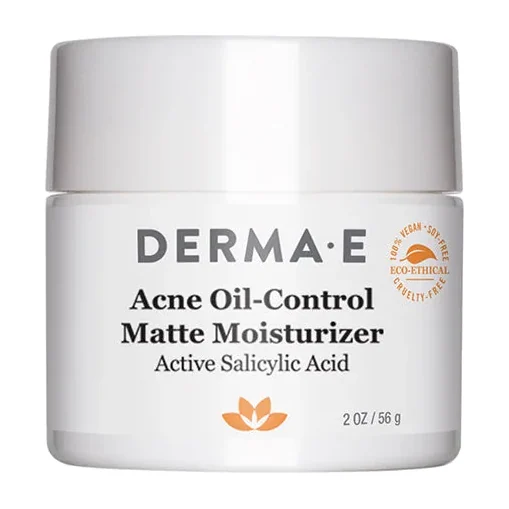
 Acne Rebalancing Cream
A serviceable natural-positioned daily acne moisturizer from a legacy California vegan brand, combining 0.53% salicylic acid with a supporting cast of tea tree, willow bark, and soothing botanicals. The matte finish and vegan credentials earn it a place in oily-skin routines, though the heavy essential oil load will rule it out for anyone who's reactive.
Key Salicylic Acid · Tea Tree Oil
 Deep-Pore BHA Pads
 Deep Pore Acne Cleansing Pads
Convenient, cheap grab-and-go pads that deliver a 2% salicylic acid deep-pore treatment in an astringent base, softened with an anti-redness soother that sets them slightly apart from a bare wipe. They clear pores and control oil fast on oily skin — but the alcohol base and fragrance keep them drying and narrowly suited to oily, resilient skin, and, unlike the 3-in-1 pads, they skip the exfoliating texture.
Key Salicylic Acid · Alcohol Denat.
 Drugstore BHA Apricot Scrub
 BHA Apricot Face Scrub
St. Ives' BHA Apricot Face Scrub combines salicylic acid BHA with dual physical exfoliation (jojoba beads + apricot kernel powder) at 8-dollar drugstore pricing. Combined chemical + physical exfoliation is aggressive for many skin types.
Key Salicylic Acid · Jojoba Oil
 Drugstore BHA Green Tea Scrub
 BHA Green Tea & Bamboo Face Scrub
St. Ives' BHA Green Tea & Bamboo Face Scrub combines BHA with dual physical exfoliation plus green tea antioxidant in drugstore format. 8-dollar accessible pricing. Multi-mechanism aggressive exfoliation.
Key Salicylic Acid · Jojoba Oil
 Oil-Free Daily Hydrator
 Feel So Soft
A smart little oil-free daily moisturizer that hides salicylic acid and niacinamide inside a fragrance-free, lightweight base. It keeps acne-prone skin hydrated without grease or scent, making it a sensible budget finisher, though dry and sensitive skin will find it too light and the leave-on acid less than ideal.
Key Salicylic Acid · Niacinamide
 Budget Holy Grail
 Daily Face & Body Moisturizer
A genuinely rich, fragrance-free whipped cream that deeply moisturizes dry and melanin-rich skin for around thirteen dollars — shea and mango butters plus seven nourishing seed oils, balanced so it's not greasy. Too heavy and coconut-oil-rich for oily or fungal-acne-prone skin, but for dry skin craving relief from tightness and ashiness, it's a budget standout.
Key Mango Butter · Jojoba Oil
 Overnight Lip Rescue
 Lip Repair Night Treatment
A deceptively powerful overnight lip treatment that punches well above its drugstore price point, using a dimethicone-anchored multi-oil formula to deliver genuinely transformative overnight results for chronically cracked lips. The tiny jar belies the serious repair work happening inside.
Key Petrolatum · Shea Butter
 Thirteen-Dollar Night Cream
 Holy Hydration! Nourishing Night Cream
A plush, fragrance-free, silicone-and-shea night cream that seals in moisture overnight and leaves skin softer by morning for thirteen dollars, with an olive-derived emulsifier as a quiet sign of decent formulation. It has no actives and the jar is a jar, but as a budget evening basic for dry to normal skin it is one of the easier recommendations in the e.l.f. Skin range.
Key Dimethicone · Shea Butter
 Overnight Lip Seal
 Jojoba Lip Essence
The sealing counterpart to Sidmool's centella lip treatment, this jojoba essence pairs a petrolatum-and-wax occlusive base with sebum-like jojoba and a light orange scent. It is an effective, affordable overnight lip mask and daily protector for dry lips, with the citrus fragrance the main reason sensitive users might reach for its fragrance-free sibling instead.
Key Jojoba Oil · Petrolatum
 Elbow-and-Shin Rescue, Med Edition
 Ice Plant Intensive Cream
A dense, fragrance-free spot cream that does what the itch of very dry skin needs — seals cracked elbows and shins under avocado, mango butter, shea and lanolin within minutes — with the ice plant juice at its highest dose in the range. Lanolin and ethanol are odd passengers on a cream that names atopic skin and infants over six months, and $55 for 50 ml is a face-cream price on a body product. Good on the right patch; expensive and slightly compromised for the skin it is sold to.
Key Botanical Extracts · Avocado Oil
 Atopic Winter Cream Benchmark
 Amino Moist Moist Charge Cream
The richest, most barrier-supportive product in Minon's Amino Moist range — a fragrance-free cream combining petrolatum, shea butter, beeswax, squalane, two phytosteryl emollient esters, and the brand's eleven-amino-acid NMF complex. Genuinely the cream to reach for during winter dryness or atopic flares. The 40g size at premium pricing is the only meaningful value flag.
Key Squalane · Petrolatum
 Squalane-First Ritual Balm
 Massage Cream
A squalane-first, wax-bodied massage balm that does its one job beautifully: a full minute of glide, a warm flush, a plump morning, and a residue that reads as skin once it is blotted. It is a ritual sold as a treatment, with a heavy fragrance and a paraben along for the massage, and $135 buys texture and a name rather than any active. For dry skin that loves the evening ceremony, it is a quiet pleasure.
Key Squalane · Petrolatum
 The Hauschka a Dermatologist Might Tolerate
 Ice Plant Face Cream
The most dermatologist-friendly thing Dr. Hauschka makes: a rich, essential-oil-free jojoba-and-butter cream that genuinely ends the tight, flaky feeling of very dry skin, built around a desert succulent's juice with a good story and no trial. Lanolin, refined peanut oil and ethanol at position five are the old habits it did not shed, and they matter most for the eczema-prone skin it names. At $50 for 40 ml it is fair for the sourcing and steep for the evidence.
Key Botanical Extracts · Jojoba Oil
 Summer Sheen Mist
 Go For The Glow
A ten-dollar dry-oil mist that does the one thing the format promises — a quick, sheer, mango-scented sheen on arms and legs that dries before you dress — and nothing more. Two real plant oils thinned by comedogenic esters and volatile silicones, a fragrance, no humectants: keep it off the face and chest, use it over a lotion on dry skin, and enjoy it for what it is, a summer finishing spray at a drugstore price.
Key Emollient Esters · Dimethicone
 Buffered Beginner Retinol
 Vitamin A Serum
Alpha-H built its 0.5% retinol on a squalane and plant-oil base specifically to make a meaningful retinol concentration tolerable for the beginners it knew were already running aggressive AHA routines. The buffering works — this is one of the few 0.5% retinol serums new users can actually stick with through the adjustment period. The price is the only meaningful complaint.
Key Retinol · Squalane
 Beginner-Friendly Retinol Pick
 Retinol Serum
A gentle, well-cushioned retinol that makes an easy on-ramp for beginners: the active is buffered by a botanical hydrator, green tea, centella and nourishing oils, and it arrives in a generous double-sized bottle for the money. The honest catch is the opaque 2.5% claim — a pre-diluted blend, not pure retinol — so treat it as a soft introduction rather than a clinical-strength treatment.
Key Retinol · Botanical Extracts
 No-White-Cast Kids Essential
 Kids SPF 50
A no-white-cast kids' sunscreen that finally gives melanin-rich families a sun protection option designed for them, not adapted from someone else's formula. The broad-spectrum SPF 50 delivers solid protection with moisturizing botanicals at a genuinely accessible price. It is not reinventing UV chemistry, but it is solving a real problem that the sunscreen industry ignored for decades.
Key Avobenzone · Homosalate
 Melanin-Rich Skin Sun Essential
 SPF 30 Broad Spectrum
The sunscreen that proved the industry had been ignoring an enormous market. A moisturizing, cast-free SPF 30 with an oil-rich formula specifically designed for melanin-rich skin. It is not for oily skin, but for dry to normal darker complexions that have spent years fighting white cast and ashy finish, this $16 tube is exactly the product that should have existed decades ago.
Key Avobenzone · Homosalate
 Melanin-Friendly Pioneer
 SPF 30 Broad Spectrum Sunscreen
A genuinely useful sunscreen that solved a real problem — disappearing completely on melanin-rich skin while delivering competent SPF 30 protection. The moisturizing botanical oil base is a bonus for dry skin but a drawback for oily types. Not the most sophisticated formula on the market, but it earns its spot by being the sunscreen that finally got a lot of people to wear sunscreen at all.
Key Avobenzone · Homosalate
 Budget High-Strength Retinol
 2.5% Retinol Serum
An inexpensive way to get a high 2.5% OTC retinol dose, wrapped in soothing botanicals — green tea, aloe, gotu kola, jojoba — meant to make the strength survivable. It can genuinely smooth and renew over time for resilient skin, but the potent dose plus astringent witch hazel make it a poor first retinol for sensitive types, and budget retinol's stability is always a fair question.
Key Retinol · Green Tea Extract
 Vegan Mineral Sun Serum
 Daily Liquid Sun Serum SPF 30 Mineral Sunscreen
Derma E's Daily Liquid Sun Serum delivers 22 percent zinc oxide SPF 30 in unusual serum-format mineral sunscreen with jojoba esters, aloe, vitamin E, and bisabolol at 24.95 dollars. Strong vegan, fragrance-free, reef-safe positioning. White cast on deeper skin tones is the persistent mineral sunscreen consideration.
Key Zinc Oxide · Jojoba Oil
 Richer Retinol Cream
 Black Carrot Vita-A Retinol Firming Cream
The richer, stronger sibling of Goodal's well-built Black Carrot retinol ampoule. It delivers real encapsulated retinol at roughly three times the dose, on a nourishing wax-and-oil base, with niacinamide, antioxidants and a deep hyaluronic complex, all fragrance-free. A genuinely good step-up retinol cream for dry or retinol-acclimated skin. The trade-offs: the higher dose's greater adjustment period, a rich base too heavy for oily skin, and the usual retinoid caveats.
Key Retinol · Niacinamide
 Clean Mineral SPF for Men
 Moisturizing Balm SPF 30
A mineral sunscreen that refuses to be boring — the 20% zinc oxide provides robust protection while astaxanthin and a collagen-stimulating peptide turn daily sun protection into an active anti-aging treatment. The clean, fragrance-free formula is a standout in the men's SPF category, limited only by its small size and premium price.
Key Zinc Oxide · Astaxanthin
 Esthetician's Pick
 Sheer Tint Broad Spectrum SPF 45
A refined, elegantly formulated tinted mineral sunscreen that does what so many mineral SPFs fail at — it actually feels good on the skin. The iron oxide inclusion for visible light protection gives it genuine clinical value beyond basic UV defense, though the $56 price for 1.7 ounces demands a premium for that sophistication.
Key Zinc Oxide · Titanium Dioxide
 Brightening Moisturizer
 Yuja Niacin Anti Blemish Cream
The moisturizing finale of the Yuja Niacin line, and a surprisingly loaded one: 5% niacinamide plus three vitamin C forms, arbutin, and glutathione, cushioned by centella and jojoba into a lightweight, brightening cream. It moisturizes while continuing the tone work, at a friendly price. The citrus peel oil, limonene, and linalool keep it off the table for sensitive skin, but for the fragrance-tolerant it's a genuinely capable brightening moisturizer.
Key Niacinamide · Vitamin C
 Matte Daily SPF Pick
 Daily 50 Face Gel
Sun Bum's Daily 50 Face Gel is the matte-finish silicone-gel sibling to the Daily 50 Lotion — same chemical filter quartet, different carrier built for oily skin. Alcohol-free, primer-friendly, and meaningfully cheaper than Supergoop Unseen at roughly half the price. Coconut oil and isododecane still rule it out for active acne-prone skin.
Key Avobenzone · Silica
 The Glovebox Zinc
 PLAY Mineral Sunscreen Stick SPF 50
A properly made all-zinc SPF 50 balm stick — plant wax and butters, no chemical filter, no fragrance, rated for infants and water-resistant for 80 minutes — that solves the problem sticks exist for: it gets reapplied. The cast on deeper skin, the cocoa butter on acne-prone faces and the four passes every stick needs are its honest limits. At $20 for 19 g it is fair, and as a pocket top-up for children's noses and adults' ears it is one of the better ones.
Key Zinc Oxide · Jojoba Oil
 Best Budget Retinol Starter
 Retinol 0.2% in Squalane
The most honest retinol on the market — eight ingredients, no pretense, and a price tag that makes the entire luxury retinol category look ridiculous. It won't transform your skin overnight, but as a first step into retinoid territory, it's nearly impossible to beat.
Key Retinol · Squalane
 Smart Step-Up Retinol
 Retinol 0.5% in Squalane
The sweet spot in The Ordinary's retinol trilogy — potent enough to deliver clinically meaningful results, gentle enough that most retinol-experienced users can tolerate it nightly, and priced so low it makes the entire premium retinol market look like performance art.
Key Retinol · Squalane
 High-Potency Budget Powerhouse
 Retinol 1% in Squalane
The final boss of The Ordinary's retinol line — a genuinely potent 1% concentration that demands respect but delivers results close to prescription territory, all for less than ten dollars. Not for the uninitiated, but for those who've earned their retinol tolerance, it's a powerhouse.
Key Retinol · Squalane
 Mineral Sensitive-Skin Pick
 Zinc Oxide Sunscreen Lotion SPF 50 Fragrance-Free
A capable, fully-mineral SPF 50 body lotion with a strong zinc-and-titanium pairing and an emollient base that fights physical-sunscreen chalkiness. The catch is honesty in labeling: the 'fragrance-free' claim is undercut by several essential oils, and at thirty-eight dollars for one small tube, you pay a real premium for gentle mineral protection.
Key Zinc Oxide · Titanium Dioxide
 Fragrance-Free Mineral Spray
 Zinc Oxide Sunscreen Spray SPF 30 Fragrance-Free
A genuinely fragrance-free, fully-mineral SPF 30 in a convenient non-aerosol spray — a combination the market rarely offers. The 14.5 percent zinc protects gently and the formula is truly unscented, but spray application demands diligence to cover evenly and rub in the cast, and the price runs steep for a single small bottle.
Key Zinc Oxide · Bentonite Clay
 Mineral Sport Workhorse
 UV Active Broad-Spectrum SPF 50+
A rare thing: a true all-mineral sport sunscreen that actually holds up to sweat and water. With 19% zinc, 4% titanium, SPF 50+, and 80-minute water resistance in an oil-free base, it's built for sensitive or breakout-prone skin that still wants to swim and sweat without chemical filters. The trade-offs are a thick texture, a white cast, and a small tube for the price.
Key Zinc Oxide · Titanium Dioxide
 Blackhead Polish Wash
 Pore Cleanser
A balanced two-way exfoliating wash, one percent salicylic acid plus soft jojoba beads and clays, that polishes oily, blackhead-prone skin smooth without the scratch of an old-school scrub, for under eleven dollars. It is a few-nights-a-week cleanser rather than a daily one, it is two months old with a thin record, and sensitive or rosacea-prone faces should not go near it.
Key Salicylic Acid · Jojoba Oil
 Clean Mineral SPF MVP
 Argan Daily Moisturizer SPF 47
A genuinely impressive mineral sunscreen disguised as a moisturizer — SPF 47 from zinc oxide and titanium dioxide alone, with a texture that actually feels pleasant to wear daily. The argan oil backbone delivers on both hydration and clean beauty credentials, though the added fragrance is a puzzling inclusion.
Key Zinc Oxide · Titanium Dioxide
 Luminizing Mineral SPF
 Sunglow SPF 35
Kinfield's Sunglow SPF 35 is a genuinely lovely 100% mineral tinted sunscreen that solves the usual mineral gripes, white cast and chalkiness, with a high 20.3% non-nano zinc dose, light-reflecting tint, and nourishing oils for a luminous, low-cast glow. It's reef-safe, gentle, and flattering. The trade-offs: a moderate SPF 35, UVA resting on zinc alone, a natural citrus fragrance, and a premium price.
Key Zinc Oxide · Titanium Dioxide
 Maximum-Strength OTC Retinol
 360 Retinol 1.0
The maximum-strength OTC retinol from a brand with 35 years of clinical credibility, wrapped in the same entrapped microsphere technology that makes the 0.5% version so tolerable. Clinical evaluation data showing zero dryness or flaking at this concentration is genuinely impressive. The $90 price remains the sticking point — you're paying for delivery engineering and pedigree, and whether that's worth it depends entirely on how your skin handles conventional retinol.
Key Retinol · Coenzyme Q10
 Classic Acne Cleanser
 Deep Cleansing Wash
A functional but dated salicylic acid cleanser from a legacy acne brand. The 2% BHA active works for pore clearing, but menthol, fragrance, isopropyl alcohol, and a cosmetic green dye drag down a formula that should be simpler. Cheaper, better-formulated alternatives abound.
Key Salicylic Acid · Aloe Vera
 Naturally-Derived Mineral SPF
 Balancing UV Protector R
A nourishing, roughly 94%-natural mineral sunscreen that behaves more like a skincare-SPF hybrid, with zinc oxide and titanium dioxide buffered by a generous blend of plant oils and an aromatherapeutic essential-oil scent. Lovely on dry skin and minimal-cast for a mineral formula, but the heavy essential-oil load, added alcohol, SPF40-not-50 rating and $46 price for 30ml narrow its appeal considerably.
Key Zinc Oxide · Titanium Dioxide
 Budget Acne Charcoal Wash
 Tomatoes Detoxifying Charcoal Facial Cleanser
Yes To's Tomatoes Charcoal Cleanser is a better acne wash than its trendy branding suggests, because underneath the charcoal theatrics sits a genuinely effective 1% salicylic acid. The BHA does real pore-clearing work, soothing botanicals soften the formula, and it's cheap. The alcohol and fragrance make it a skip for dry or sensitive skin, but for oily, blackhead-prone skin on a budget, it delivers.
Key Salicylic Acid · Activated Charcoal
 Starter Retinol in a Dry Oil
 Retinol Body Oil
A simple, fragrance-free, water-free retinol oil that is gentler and more stable than most body retinol creams and a sensible first step for crepey necks and arms. The dose is undisclosed and plainly modest, the clear glass bottle is an odd home for retinol, and 3.8 ounces for twenty dollars is small by the brand's standards, but the formula itself is well reasoned.
Key Retinol · Caprylic/Capric Triglyceride
 Lightweight Beginner Retinol
 Retinol Serum 2.5%
A lightweight, water-based beginner retinol serum with a genuine advantage over some budget rivals: it uses actual retinol, not a weak ester. But the '2.5%' reflects a diluted blend, so the real dose is low and gentle, and results are gradual. The usual template quirks apply — the 'botanical hyaluronic acid' is cassia gum, and it contains propolis (not vegan), wheat germ oil, alcohol, and fragrant geranium. As an affordable, light, low-dose introduction to real retinol for oily and combination skin, it's fine; just read the ingredients over the '2.5%' headline, and skip it while pregnant.
Key Retinol · Hyaluronic Acid
 Lightweight Beginner Retinol
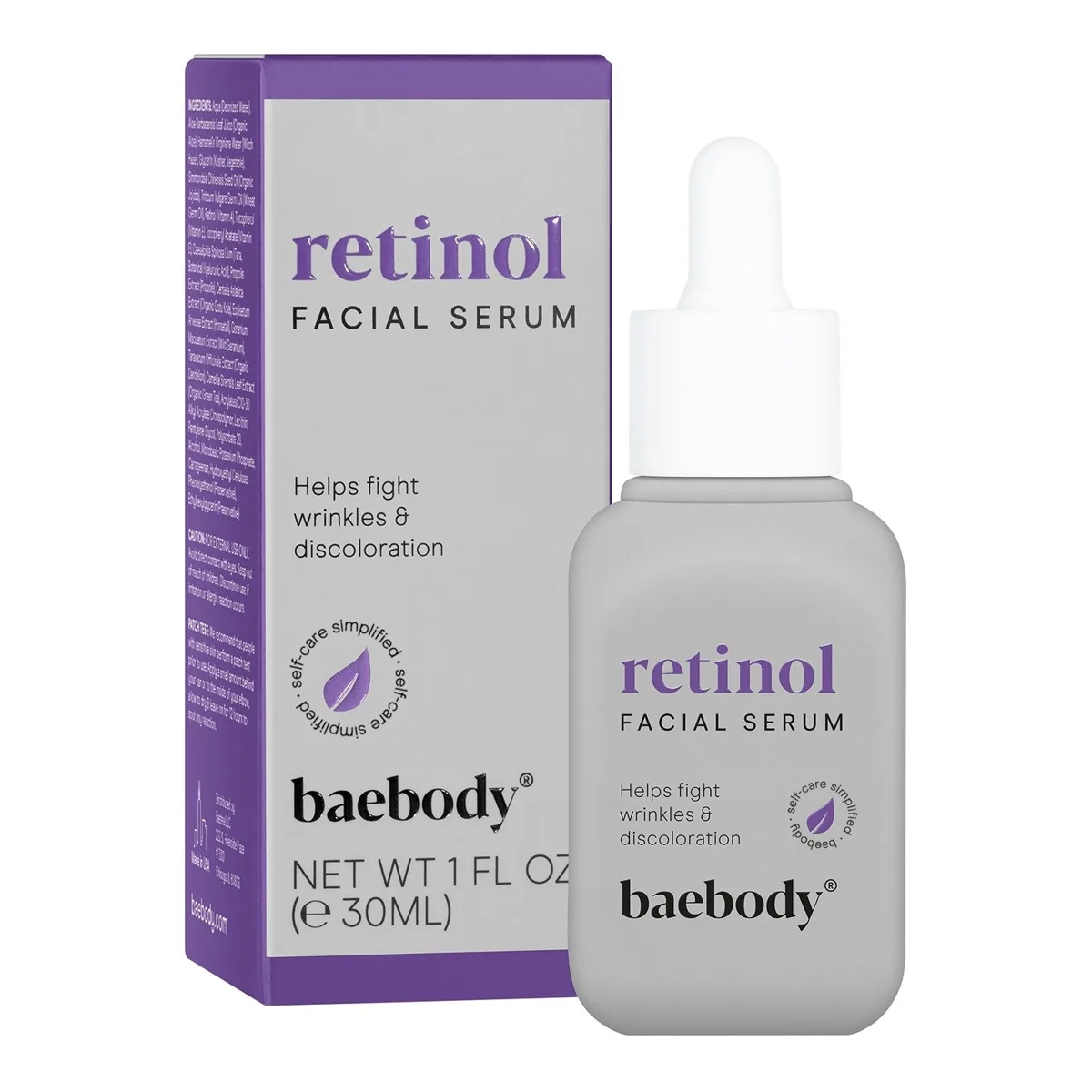
 Retinol Serum
The lightweight, water-based sibling to Baebody's retinol moisturizer — a gentle, low-dose beginner retinol in a fast-absorbing serum that suits oily and combination skin and layers under your own moisturizer. Like the cream, its marketed retinol strength overstates the real (blend-based, undisclosed) dose, so results are mild and gradual. Witch hazel, alcohol, fragrant geranium, propolis, and wheat germ oil narrow who it fits. As an affordable, light-textured first retinol, it's fine — just read the ingredients over the headline, skip it while pregnant, and calibrate expectations to a low dose.
Key Retinol · Centella Asiatica
 Gentle Retinol, Wrong Jar
 Retinol Eye Cream
A calm, well-cushioned way to bring a low dose of retinol to the eye area, with aloe, jojoba, shea and real hyaluronic acid doing the comfort work and no sting to speak of. The undeclared strength means results will be gradual and the jar is the wrong home for a light-sensitive active, so it is a sensible first retinol eye cream rather than a powerful one, priced a little above what the dose justifies.
Key Retinol · Jojoba Oil
 Training-Wheels Retinol
 Retinol Cream Moisturizer
A pleasant, fragrance-free emollient night cream carrying a small and undisclosed dose of retinol in an airless pump for seventeen dollars. It is one of the easiest ways to start retinol without flaking, and one of the least transparent about what you are actually applying; the 'clinically proven' claim on the box has no study behind it.
Key Retinol · Jojoba Oil
 Glowy Skincare SPF Serum
 SPF50+ Daily Sunscreen Serum
A genuinely wearable, fragrance-free broad-spectrum SPF50 serum that reframes daily sunscreen as glowy skincare — a well-stabilized chemical filter combo with antioxidant support and a radiant, no-white-cast, makeup-friendly finish. Its real strength is that you'll actually want to wear and reapply it, the single most important quality in a sunscreen. Chemical filters and the need for generous application are the only real caveats.
Key Avobenzone · Octisalate
 Budget Beginner Retinol
 Retinol Serum
Tree of Life's Retinol Serum is a gentle, hydration-buffered budget retinol pitched at beginners, with a real vitamin A retinoid cushioned by hyaluronic acid and soothing botanicals. It's affordable, comes in a generous size, and feels mild — but the retinol concentration is undisclosed and likely modest, and the witch hazel and alcohol in the base undercut the gentleness. A low-stakes way to dip a toe into retinol, not a serious anti-aging treatment.
Key Retinol · Hyaluronic Acid
 Starter Retinol in a Moisturizer
 Retinol Cream
A twenty-dollar retinol moisturizer that does the beginner's job — a low, tolerable dose in a sunflower-jojoba-shea cream with panthenol — without telling you the dose, and whose old '2.5 percent' claim the ingredient list quietly refutes. Dry skin new to retinoids will find it easy and slow; oily skin will find it greasy; anyone wanting a real retinoid result should buy a serum.
Key Retinol · Panthenol
 Gentle Retinol Pick
 Ideal Resource Youth Retinol Oil Concentrate
A thoughtfully engineered, gentle retinol that suspends the unstable active in single-use capsules and a nourishing oil base, making it one of the easier ways for dry or retinol-shy skin to start. The encapsulated freshness and soothing oils are genuine advantages, but the added fragrance is an odd choice on a retinol, the strength is undisclosed, and patchy availability makes the value harder to judge.
Key Retinol · Jojoba Oil
 Clear Top-Up Stick
 The Take-Out One Invisible Sun Stick SPF 30 with Hyaluronic Acid
The Take-Out One is a practical, genuinely clear SPF 30 stick that makes topping up sunscreen during the day easy, water resistant and mess-free. It includes Tinosorb S, which is unusual in a stick. The trade-offs are a strong perfume with several declared allergens, a little denatured alcohol, and the need for five full passes to reach its rated protection.
Key Octocrylene · Avobenzone
 The Green Balm That Doubles as a Pore Mask
 Mugwort Calming Deep Cleansing Balm
A wax-structured cleansing balm that puts salicylic acid, its lipophilic derivative and a polyhydroxy acid into the Mugwort line's ester-and-plant-oil base, so a rolling massage softens blackheads and smooths the T-zone while it removes sunscreen; used once or twice a week and double cleansed, it is a genuinely useful pore step at $20 for 100 ml. Its acids are undeclared and mild, its base leads with a flagged ester, its green is mineral pigment and its herbal scent is tea tree and mugwort oil, and 'calming' is the line's word for a product that exfoliates.
Key Salicylic Acid · Emulsifiers
 Pore-Care Oil Cleanser
 Poreless Deep Cleansing Oil
A cleansing oil with a genuinely clever twist: it folds an AHA-BHA-PHA acid complex and oil-soluble salicylic acid into the oil phase, so it decongests pores while it melts makeup. That makes it a smart first cleanse for blackhead-prone oily skin, though a heavy citrus fragrance keeps it off the list for anyone sensitive or reactive.
Key Salicylic Acid · Centella Asiatica
 On-the-Go Reapply Stick
 Aqua Soothing Sun Stick SPF50+
A convenient twist-up sun stick that packs Real Barrier's modern filter trio and cooling botanical complex into a format you can swipe over makeup, making midday reapplication genuinely painless. It protects well when you use enough, but the heavy essential-oil load and the chronic under-application risk of sticks are real caveats.
Key Uvinul A Plus · Tinosorb
 Derm Office Staple
 Exfoliating Cleanser
ZO's Exfoliating Cleanser does a specific job well: it polishes, decongests, and leaves skin feeling genuinely prepped for whatever comes next. The SLS, the fragrance, and the allergen panel make it a hard no for sensitive skin, but resilient oily and combination types will understand why dermatology offices keep reordering it.
Key Salicylic Acid · Jojoba Oil
 Botanical Barrier Booster
 Recovery Oil
A thoughtfully curated botanical oil that goes beyond basic emolliency by including ceramide NP and sphingolipids for genuine barrier repair. Eight antioxidant-rich plant oils led by sea buckthorn and rosehip deliver nourishment and glow. The only face oil at this price point with actual barrier-repair architecture.
Key Ceramides · Squalane
 Sensitive-Skin Gloss MVP
 ShineOn Lip Jelly
The product that built Tower 28's reputation: a fragrance-free, dye-free, lanolin-free lip jelly that delivers serious gloss and a sheer wash of color without stickiness, and is genuinely safe for eczema-prone lips. Sheer pigment and a Sephora price tag are the only honest gripes.
Key Squalane · Jojoba Oil
The full jojoba oil guide
Jojoba oil isn't really an oil: pressed from jojoba seeds, it's a liquid wax, built from the same kind of molecule that makes up part of your skin's own natural oil.
That family resemblance is why it absorbs so cleanly and why even oily skin tends to tolerate it without drama. It's also remarkably shelf-stable, resisting the rancid turn that catches most plant oils, and is often added to formulas to keep other oils fresh. People use it neat as a face oil, in oil cleansers, and as a light softener in creams.
Where the evidence stands, by concern
Evidence for an ingredient is not one grade — it differs concern by concern. Each row below was researched separately against regulatory approvals, clinical guidelines, and trials our team opened and verified; the band and dots rank how central jojoba oil is to treating that concern, from first-line therapy down to supportive care, at treatment-level doses and vehicles. A product's own grade weighs its actual formula.
How it's regulated in the US
FDA does not classify ingredients — it classifies products, by what they are sold to do. The same molecule can be a drug active in one product and a cosmetic ingredient in the next, and only the claim on the label decides which. What follows is a statement about that legal standing, not about whether it works — the evidence question is answered separately above.
Cosmetic Jojoba Oil is a cosmetic ingredient in the US: no OTC monograph covers it and it is not an active in any FDA-approved drug, so a product built around it is a cosmetic rather than a drug.
Jojoba is studied mostly for how it softens skin and slows water loss, the emollient work that follows from its wax structure. Lab and skin-sample studies have explored calming effects and signals linked to collagen, interesting but early. Some of the human barrier work comes from industry panels. A popular claim, that jojoba tricks skin into making less oil, has rarely been tested directly in people. Pore-clogging is a recurring question, since a minority of acne-prone users report breakouts. For dryness, the panel further down gives its view.
How it works
Jojoba's defining trait is what it is not: a triglyceride. Most plant oils are chains of fatty acids bonded to a glycerol backbone, and when they sit on skin they behave like fats. Jojoba is overwhelmingly composed of long-chain wax esters — a fatty acid bonded directly to a fatty alcohol, without the glycerol middleman. That structure is chemically close to the wax esters in human sebum, so the stratum corneum integrates it smoothly into the surface lipid film rather than treating it as a foreign load. The practical effect is a lightweight, non-occlusive emollient that slows transepidermal water loss without trapping heat or leaving a heavy, greasy coating. It fills microscopic gaps between corneocytes, making the outer layer more supple and less prone to cracking — standard emollient behavior — but at a molecular weight and slip that feels closer to a very light serum than a face oil. Its exceptional oxidative stability flows from the same chemistry: with almost no triglycerides present, there are far fewer polyunsaturated bonds for oxygen to attack, which is why documented shelf life runs to five years or more versus one to two for most plant oils. Below the surface, jojoba's phytosterols (campesterol, stigmasterol, beta-sitosterol) show anti-inflammatory activity in animal and in vitro models. Cell-culture studies report jojoba activating fibroblasts through calcium-dependent signaling and stimulating collagen synthesis, and more recent ex-vivo tissue work extends this to pro-collagen III and hyaluronic acid. These are encouraging signals that still need larger controlled human trials before they earn headline anti-aging billing.
Key benefits
- Sinks in cleanly without a greasy film
- Softens dry skin and slows water loss
- Stays fresh for years without turning rancid
- Light enough that many oily complexions enjoy it
- Melts easily into oil cleansers and lightweight serums
Concentration & usage
Used across an enormous range in cosmetics — from roughly 1–5% in light serums and gel moisturizers, where it acts mainly as a skin-feel modifier, up to 30–60% in facial oils and oil cleansers, and 100% as a standalone oil applied neat. There is no agreed minimum effective concentration for the emollient function; it works as part of an overall lipid blend rather than at a threshold dose. On an INCI list it appears as Simmondsia Chinensis Seed Oil (sometimes with the common name in parentheses). Don't confuse it with hydrogenated jojoba oil, a solid wax, or sulfated jojoba oil, which behaves differently and carries a higher comedogenic rating.
Who it's for & who should be cautious
Who it's for
Nearly every skin type, including oily skin — which is exactly where jojoba's reputation as the counterintuitive face oil comes from. Its sebum-like structure keeps it from feeling heavy or occlusive, making it one of the few facial oils routinely suggested for acne-prone skin. Dry and combination skin benefit from the barrier-reinforcing emollient action, and sensitive skin generally responds well given jojoba's low irritation and sensitization profile in patch-test data.
Who should be cautious
A small subset of acne-prone skin does break out from jojoba — its comedogenic rating of 2 is low but not zero, and individual skin chemistry matters. Anyone with a confirmed allergy to Simmondsia chinensis (rare but documented) should avoid it outright. And if you're managing a fungal-acne-type condition, be aware that some sources flag wax esters as potential Malassezia food; the evidence is thinner for jojoba than for heavier oils, but cautious cases are worth a careful trial.
Pairs with & conflicts
Myths & facts
Myth: Jojoba oil regulates sebum production, so oily skin should use it to reduce shine
Reality: The 'tricks your skin into making less oil' claim is repeated everywhere but rests on limited direct human evidence. What's clearer is that jojoba lowers TEWL and behaves as a lightweight emollient that doesn't worsen oiliness. Whether it actually suppresses sebaceous output in any meaningful way for most people has not been shown in robust clinical trials.
Myth: Since jojoba is technically a wax, it must clog pores
Reality: Its real-world reputation is closer to the opposite. Jojoba sits at a comedogenic rating of 2 out of 5 — among the lowest for any facial lipid — and is frequently recommended for acne-prone skin precisely because its wax ester structure doesn't behave like a triglyceride that can oxidize inside a follicle. A minority of users do report breakouts, but it is broadly considered safe for acne-prone skin.
Myth: Jojoba oil is fragile and needs refrigeration like rosehip oil
Reality: Jojoba's oxidative stability is far better than most plant oils, with a realistic shelf life of five years or more versus the one-to-two-year window typical of linoleic-acid-rich oils like rosehip and hemp seed. No fridge required — in fact, it's often added to formulas specifically to extend the stability of more perishable co-ingredients.
Frequently asked questions
Can I put jojoba oil straight on my face if my skin is oily or acne-prone?
For most people with oily skin, yes — jojoba is one of the few facial oils genuinely suited to that skin type because its wax ester structure closely resembles human sebum and leaves little residue. Its comedogenic rating of 2 does mean a small number of users break out, so a two-week patch test on the jawline before full-face use is worth the wait.
What does 'Simmondsia Chinensis Seed Oil' on a label actually mean?
That's the INCI (International Nomenclature of Cosmetic Ingredients) name for jojoba oil — the standardized botanical term used on cosmetic labels in place of the common name. Simmondsia chinensis is a shrub native to the Sonoran Desert, and the oil is cold-pressed from its seeds. You may also see 'Simmondsia Chinensis (Jojoba) Seed Oil,' with the everyday name in parentheses.
Does jojoba oil really help with collagen?
The evidence here is still early. In vitro work shows jojoba wax stimulating collagen I in fibroblasts, and a 2024 ex-vivo human skin study found increased pro-collagen III and hyaluronic acid synthesis alongside reduced inflammation. That's not the same as large controlled human trials, so 'may support collagen synthesis' is fair; 'clinically proven anti-aging' would be overstating it.
How long does a bottle of pure jojoba oil last once it's open?
Much longer than most facial oils. Jojoba's wax ester chemistry gives it an oxidative stability index that supports five years or more of shelf life, even after opening, with no need to refrigerate. Keep it out of direct sunlight and heat to be safe, but the rancidity clock that has you racing through rosehip or hemp seed oil basically doesn't apply.
Can I layer jojoba oil with retinol or other actives?
Yes, and it tends to play nicely. The emollient layer jojoba forms can help buffer some of the dryness and flaking that come with retinol, and its neutral, low-reactivity chemistry means it won't interfere with most actives. Smoothing it on after a retinol serum, as a moisturizing step, is a sensible move for skin still adjusting to retinoids.
Why is jojoba called an oil if it's actually a wax?
Because it's liquid at room temperature — a liquid wax — and in everyday use it feels indistinguishable from an oil. The 'oil' label is a common-name convention rather than a chemical one. The wax-ester-versus-triglyceride distinction matters for how it behaves on skin and how stable it is, but it doesn't make the 'oil' label wrong from a user's point of view.
- Natural & BotanicalUnrefined Sounds Better and Is Sometimes Worse. Here's the Actual Trade.Every word on a plant oil label describes what was left in — including the proteins that sensitise and the compounds that go rancid — and the variable that decided the one head-to-head trial isn't printed anywhere.
- Men's GroomingBeard Oil Is for the Skin Underneath. Most of It Is Sold for the Hair.The yeast that drives beard flaking cannot manufacture its own fatty acids — it has to scavenge them. Which is an awkward fact for an aisle built almost entirely on fatty acids.
- Hands & NailsNail Strengtheners Sell Hardness. Your Nails Are Failing From Dryness.Cross-linking a brittle nail plate makes it harder — and a harder brittle nail snaps rather than bends, which is the exact opposite of what the bottle promised.