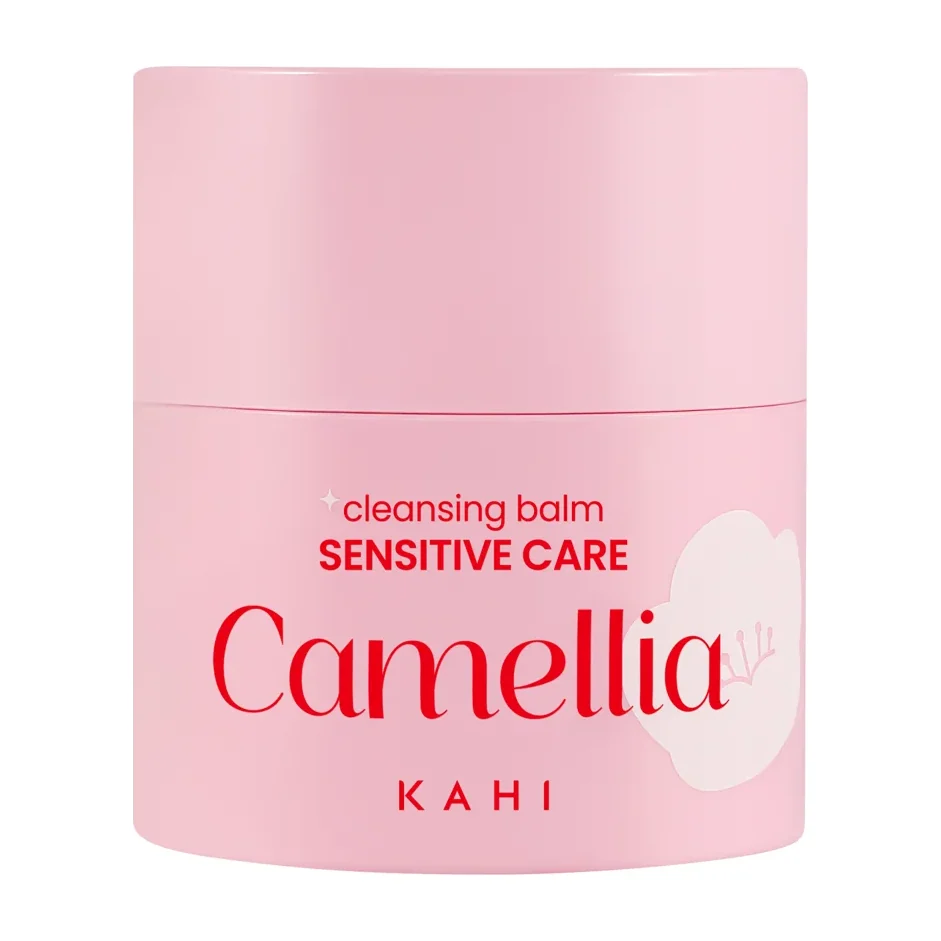
KAHI Cleansing Balm Sensitive Care Camellia pink twist-top jar
Not yet assessed for Dryness
What makes this different

The formula is just ten ingredients, and the twist-to-dispense jar grinds a clean layer off the top so no spatula or fingers are needed. Camellia and moringa oils give it a softer, less stripping rinse than many balms.

KAHI

KAHI Cleansing Balm Sensitive Care Review

Ten-Ingredient Twist Balm Cleansers balm k beauty Paraben free Not cruelty free

A tidy, ten-ingredient cleansing balm with a clever twist-to-dispense jar that melts sunscreen and make-up and rinses clean without leaving skin tight. Camellia and moringa oils make the finish soft. The catch is in the name: a product labelled Sensitive Care still contains fragrance, and at around thirty dollars for 50ml it is a pricey way to remove make-up.

Price $33.00 50ml
Buy at Amazon ♥
Verdicts

How well it fits each concern

We could not verify an English-language review count for this recent KAHI balm. The assessment is based on its short, fully disclosed ingredient list and the well-understood behaviour of emulsifying cleansing balms.

No concern verdicts yet.

The scaleRecommendedGoodSupportingEarly evidenceNot for thisAvoidhow it works

Listed for Dryness — the actives here (Emollient Esters, Emulsifiers, Camellia (Tsubaki) are in our research queue for that concern; there is no verdict until their evidence rows are written. That is a gap in our table, not a mark against the product.

As a cleanserNot judged: what a cleanser is for — surfactant mildness, pH match to skin, rinses clean without stripping — cannot yet be measured from the ingredient list (only puts something back can).

A verdict is Dermington’s assessment of how well a product’s ingredients fit a concern — never a claim about what the product treats. Evidence dots and collected reviews sit beside it and are never blended in. Rules 0.5.1 · evidence table ev-2026.10-r231 · engine 5.2.0 · how we decide · this product’s receipt

Reader poll · Town SquareQuestion 1 of up to 3

Have you used Cleansing Balm Sensitive Care?

One tap counts. A couple of optional follow-ups come next.

No account neededOne answer each, change it any timeCounted only in anonymous totalsHow the Square counts →
Assessment

Pros & cons

What it does well 6

  • Just ten ingredients in total
  • Twist-top jar dispenses a clean layer without fingers or spatula
  • Dissolves sunscreen and make-up quickly
  • Emulsifies and rinses cleanly without a greasy film
  • Camellia and moringa oils leave skin soft, not tight
  • Tocopherol helps keep the oils from oxidising

Where it falls short 5

  • Contains fragrance despite the Sensitive Care name
  • High price for a 50ml rinse-off cleanser
  • Plant oils and esters may not suit fungal acne
  • Few English-language user reviews
  • May need a second cleanse after heavy make-up
Review

The full review

Most cleansing balms come in a tub and a small plastic spatula that is lost within a week, after which fingers go straight into the balm every evening. KAHI's cleansing balms take a different approach. The top of the jar twists, and as it turns it shaves a fresh layer from the balm beneath, delivering a portion onto the fingertips without anything touching the rest. It is a small piece of design, but a genuinely useful one for a product used daily in a steamy bathroom.

The Sensitive Care version is built around camellia oil, and its ingredient list is refreshingly short: ten ingredients in all. That brevity is a real advantage for sensitive skin, because every ingredient that is not in a formula is one less possible trigger.

The first ingredient is cetyl ethylhexanoate, a light ester that does most of the dissolving. It breaks down sunscreen filters, foundation and mascara quickly while feeling less greasy than heavier oils. Sorbeth-30 tetraoleate and PEG-20 glyceryl triisostearate are the emulsifiers. They are what let an oily balm turn into a milky liquid when water is added, carrying the dissolved make-up away in the rinse rather than leaving a film. A synthetic wax gives the balm its firm, sherbet-like structure.

Camellia japonica seed oil, fifth, is the named oil. Camellia oil has a long history in Korean and Japanese skincare; it is rich in oleic acid and gives the balm a softer slip and a more cushioned feel after rinsing. Moringa seed oil adds more oleic-rich lipids and is known for its oxidative stability, and tocopherol, vitamin E, helps protect the oils from turning rancid. Two botanical extracts, eclipta and neem leaf, sit in between at low levels; neither changes the cleansing much.

The last ingredient is fragrance. The scent is light and floral, and for most people it will be pleasant and unremarkable. But it is an odd inclusion in a product explicitly named Sensitive Care. Fragrance is among the most common causes of cosmetic contact allergy, and people who seek out sensitive-skin products often do so because they react to it. It is true that a rinse-off cleanser has far less contact time than a leave-on product, which reduces the risk. Still, the label promises more gentleness than the formula fully delivers.

In use, the balm performs well. A turn of the lid gives enough for the whole face. It softens into an oil within seconds on dry skin and lifts water-resistant sunscreen and most eye make-up with light massage. Adding a little water turns it milky, and it rinses away with lukewarm water without a heavy residue. Skin feels comfortable afterwards rather than tight or squeaky, which is the main benefit of a good oil-based first cleanse. After heavy make-up or very water-resistant sunscreen, a gentle second cleanse is still sensible, in keeping with the Korean double-cleanse routine.

It is worth dwelling for a moment on why a balm like this can suit sensitive skin better than many foaming cleansers, fragrance aside. Foaming cleansers rely on surfactants that remove oil by binding it into micelles, and the stronger ones can strip the skin's own lipids along with the make-up, leaving the barrier a little more permeable and the skin feeling tight. An oil-based first cleanse dissolves the make-up and sunscreen directly, so the surfactant load needed afterwards is lighter — or, on light days, unnecessary. That is the logic behind the double cleanse, and it is sound. The design of this formula follows it well: solvents first, emulsifiers second, conditioning oils third, and very little else.

There are a few caveats. Because the balm contains plant oils and fatty esters, it is not the obvious choice for people managing fungal acne, where oils can feed the yeast involved. Oily, acne-prone skin can usually use balms without trouble if they are emulsified and rinsed thoroughly, but congestion is more likely if residue is left on the skin.

The price is the other consideration. Olive Young Global lists the 50ml jar at thirty-three dollars before discounts. That is a lot for a rinse-off product, and 50ml lasts around six to eight weeks of nightly use. The twist mechanism and the tidy formula justify some premium over a basic tub balm, but budget-conscious buyers can find effective cleansing balms for less.

English-language reviews are scarce, which is common for newer KAHI products outside Korea. The assessment therefore relies on a short and transparent ingredient list, which is simple enough to judge with some confidence: it will clean well and feel comfortable, and the fragrance is the main unknown for sensitive users.

For normal, dry or combination skin that likes a comfortable, hygienic cleansing balm and does not react to fragrance, this is a pleasant, well-made first cleanser. For genuinely fragrance-sensitive skin, the label's promise is best tested with care.
The science

Cleansing balms work on the principle that like dissolves like: sunscreen filters, silicones, pigments and sebum dissolve readily in oils and esters. Cetyl ethylhexanoate, the balm's main ingredient, is a branched ester with good solvency and a light skin feel. Sorbeth-30 tetraoleate and PEG-20 glyceryl triisostearate are non-ionic emulsifiers that allow the oil phase to disperse in water on rinsing; without them, oils would leave a residue that can contribute to congestion.

Oil-based cleansing is generally less disruptive to the skin barrier than surfactant-based foams, because it removes lipophilic debris without heavily stripping the skin's own lipids or raising skin pH. This explains why skin feels less tight after a balm than after many foaming cleansers.

Camellia japonica seed oil is high in oleic acid and contains antioxidant compounds. Moringa oleifera seed oil is also oleic-rich and notable for oxidative stability. Tocopherol acts as an antioxidant for the oil phase. In a rinse-off product, these oils mainly influence skin feel and residual softness rather than delivering lasting benefits.

Fragrance is the formula's main sensitisation risk. Although rinse-off products carry lower risk than leave-on ones because of reduced contact time, fragrance components remain among the most frequent causes of allergic contact dermatitis to cosmetics. Plant oils and fatty acid esters can support the growth of Malassezia yeast, which is relevant for people with fungal acne.

The clinical view

Oil-based cleansers are widely recommended as a first step for removing water-resistant sunscreen and make-up, particularly for dry or sensitive skin, because they tend to disrupt the barrier less than harsh foaming cleansers. Clinicians generally advise following with a gentle cleanser when heavy products were worn, and rinsing thoroughly to avoid residue. For patients with fragrance allergy, rosacea or eczema, fragrance-free cleansers are preferred even in rinse-off formats. Those with Malassezia folliculitis may do better with oil-free cleansing options.

Formula

Key ingredients

  1. Cetyl Ethylhexanoate

    The first ingredient and the real make-up solvent: a light, non-greasy ester that dissolves sunscreen and long-wear make-up as the balm melts.

    Not yet assessed
  2. Sorbeth-30 Tetraoleate + PEG-20 Glyceryl Triisostearate

    The two emulsifiers that let the oily balm turn milky with a splash of water and rinse away cleanly, so no greasy film is left behind on sensitive skin.

    Not yet assessed
  3. Camellia Japonica Seed Oil

    The namesake oil, fifth in a ten-ingredient list, adds a softer, more cushioned slip and leaves skin feeling less stripped after rinsing.

    Not yet assessed
  4. Moringa Oleifera Seed Oil + Tocopherol

    A stable, oleic-rich oil and vitamin E that help protect the oil phase from oxidation in a jar that is opened daily.

    Not yet assessed
Full ingredient list 10 ingredients ShowHide

Cetyl Ethylhexanoate, Sorbeth-30 Tetraoleate, Synthetic Wax, PEG-20 Glyceryl Triisostearate, Camellia Japonica Seed Oil, Eclipta Prostrata Extract, Melia Azadirachta Leaf Extract, Moringa Oleifera Seed Oil, Tocopherol, Fragrance

Safety & formulation facts

  • Pregnancy safe
  • Not fragrance free
  • Alcohol free
  • Not oil free
  • Silicone free
  • Paraben free
  • Sulfate free
  • Not cruelty free
  • Not vegan
  • Not fungal-acne safe
Potential irritants Fragrance
Common allergens Fragrance
Compatibility

Skin types & routine

Routine step cleanser
Time of day Night
Best season All year
Finish natural, non-greasy

Layering

Use as the first cleanse on dry skin in the evening, emulsify with water and rinse, then follow with a gentle water-based cleanser if sunscreen or heavy make-up was worn.

When to expect results

Make-up and sunscreen dissolve in under a minute, and skin feels soft rather than tight straight after rinsing. There is no treatment effect to wait for.

Pairs well with ceramidesniacinamidehyaluronic-acid

A routine built around it

Morning

  1. Water rinse or gentle cleanser
  2. Toner
  3. Moisturizer
  4. Sunscreen

Night

  1. KAHI Cleansing Balm Sensitive Carethis product
  2. Gentle foaming cleanser
  3. Toner
  4. Moisturizer
Guidance

How to use it, and who it's for

How to use

With dry hands and a dry face, turn the top of the jar in the direction of the arrow to dispense a layer of balm. Massage it over the face for 30 to 60 seconds, including the eye area if removing mascara, avoiding direct contact with the eyes. Add a little lukewarm water and massage again until the balm turns milky, then rinse thoroughly. Follow with a gentle water-based cleanser if heavy make-up or water-resistant sunscreen was worn. Use in the evening.

Is it worth the price?

Olive Young Global lists this 50ml balm at thirty-three dollars before discounts, which is expensive per millilitre for a rinse-off cleanser that lasts six to eight weeks. The short formula and hygienic twist-dispensing jar are genuine advantages, and it cleans well. But the fragrance weakens its sensitive-skin appeal, and effective, well-rinsing cleansing balms are available at lower prices. It is best bought on discount.

Who should buy it

Normal, dry or combination skin that wants a comfortable, fast-melting first cleanser with a short ingredient list and a hygienic twist-dispensing jar, and that tolerates a light fragrance.

Who should skip it

People with fragrance allergy or very reactive skin who take the Sensitive Care name at face value, anyone managing fungal acne, and shoppers looking for an inexpensive cleansing balm.

Ready to try it?KAHI Cleansing Balm Sensitive Care · $33.00 · 50ml
Details

The product, in detail

Texture
A firm, sherbet-like balm that softens into oil on contact with skin and turns milky with water.
Scent
A light floral fragrance.
Packaging
A pastel-pink 50ml jar with a twist-top that shaves off a fresh layer of balm when turned, so fingers never go into the product.
How long it lasts
About six to eight weeks of nightly use.
Once opened
Use within 12 months · track your toss-by date →
Size
50ml
Made in
South Korea

What the first two weeks feel like

The balm melts quickly on dry skin and lifts sunscreen and mascara easily. After emulsifying and rinsing, skin feels comfortable, not tight. Fragrance-sensitive users should notice within the first few uses whether the scent bothers them.

The story behind it

Why it exists

KAHI extended its balm-stick expertise into cleansing with a four-variant cleansing balm range, each keyed to a skin concern. The Sensitive Care version centres on camellia oil, a staple of Korean and Japanese skincare traditions.

About KAHI Established Brand (5–20 years)

KAHI, a Korean brand launched in 2019, built its name on portable multi-balm sticks and has since expanded into sun care and cleansers. This camellia balm belongs to a four-variant twist-dispensing cleansing balm range; no product-specific clinical data are published.

Brand founded 2019

Myth vs. reality

What people get wrong about it

MythA 'sensitive care' cleanser is fragrance-free.

RealityThis balm lists fragrance as its tenth ingredient. It is short and gentle in other respects, but fragrance-allergic skin should still choose an unscented balm.

MythOil cleansing balms clog pores.

RealityWell-formulated balms like this one contain emulsifiers that let the oils rinse away with water. Poor rinsing is the usual culprit when balms cause congestion.

FAQ

Questions people ask

Is KAHI's Sensitive Care cleansing balm fragrance-free?

No. Fragrance is the last of its ten ingredients. The formula is otherwise short and simple, but fragrance-allergic skin should patch-test.

How does the KAHI camellia balm dispense?

Turn the top of the jar in the direction of the arrow and it shaves a fresh layer of balm, so there is no need to scoop with fingers.

Does the KAHI Sensitive Care balm remove sunscreen and waterproof mascara?

Yes. Its ester base dissolves sunscreen and most long-wear make-up, and it emulsifies with water to rinse cleanly.

Do I need a second cleanser after KAHI's cleansing balm?

After heavy make-up or water-resistant sunscreen, a gentle second cleanse is sensible. On light-make-up days, many people find the balm alone enough.

Is the KAHI camellia balm suitable for fungal acne?

It contains plant oils and fatty esters, so people managing fungal acne may prefer a balm formulated without them.

Can KAHI's cleansing balm be used during pregnancy?

Its oils, esters and emulsifiers are rinsed off and are not typically restricted in pregnancy.

Related conditions DrynessSensitivity
Next stepCheck it against what you already useClashes, spacing and the right order, with everything on your shelf.