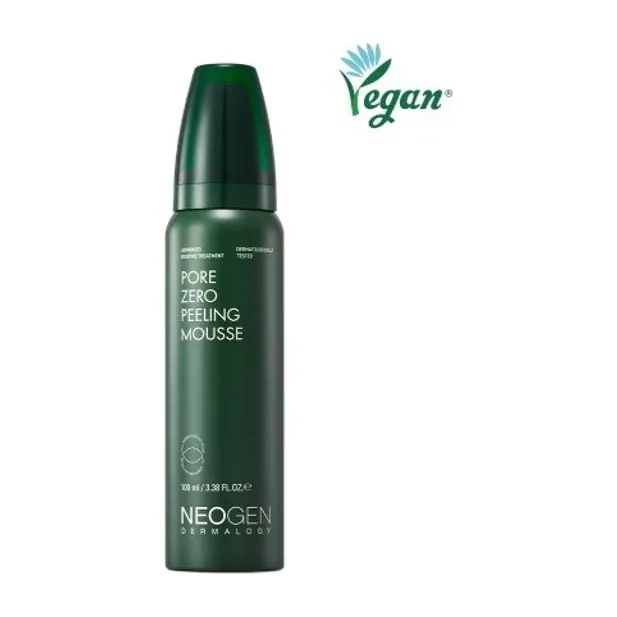
Few products demonstrate the strange power of TikTok quite like this one. The Neogen Pore Tight Peeling Mousse had been quietly sitting on K-beauty shelves since around 2017 when, years later, videos of people massaging the dense whipped foam into their skin and rinsing away the grime sent it viral all over again. That second life is worth dwelling on, because it raises the question that matters: is this a genuinely effective pore treatment, or just an extremely satisfying piece of skincare theater? The honest answer is a bit of both, and knowing which parts are which will tell you whether it belongs in your routine.
Let us start with how it actually works, because it is unlike most pore products. Rather than clay or chemical acids, the mousse leans on algae extract — sitting right at the top of the INCI — and the alginic acid it carries. As you massage the foam over your skin, those marine polymers, helped along by acrylate film-formers, physically grip onto surface oil, makeup residue, and loosened dead skin so the whole lot rinses away. There is a small hit of charcoal further down to adsorb excess sebum, a pair of gentle coconut-derived surfactants to do the foaming and lifting, and a long tail of brown and red seaweeds, spirulina, and fucoxanthin acting as an antioxidant, soothing cushion. It is a clever bit of formulating: the marine grip is the gimmick and the engine at the same time.
In practice, the experience is the selling point. It dispenses from an aerosol can like shaving cream, expands in your hand, and grips with a slightly tacky drag as you work it over the face. Rinse, and skin feels squeaky-clean, matte, and noticeably smoother to the touch. For oily and combination skin that fights midday shine and a gritty, congested forehead or nose, this delivers an immediate and genuinely pleasing payoff. It is the kind of product that makes a Sunday-night routine feel like an event, and there is real value in something you will actually reach for consistently.
But the formula is where the skepticism has to come in, gently but clearly. Alcohol denat sits high on the list — fourth, after the propellants — and there is added fragrance near the bottom. In a rinse-off product that contacts skin for only a minute or two, neither is the dealbreaker it would be in a leave-on serum, and most oily-skinned users will be completely fine. But they are exactly the ingredients that push this firmly out of bounds for dry, sensitive, or barrier-compromised skin, where even brief exposure to denatured alcohol and fragrance can leave things tight and irritated. This isn't a universal pore product; it is an oily-skin product wearing a viral-sensation costume.
It is also worth being clear-eyed about what it does and does not change. The marine-and-charcoal action clears the surface so pores look refined and skin reads smoother right after you rinse, but pore size is overwhelmingly genetic, and nothing in here permanently shrinks them. The smoothing fades as your skin rebuilds its oil, which is precisely why the product wants to be used two to three times a week rather than as a one-time miracle. If you go in expecting a satisfying weekly deep-clean that keeps congestion in check, you will be happy. If you go in expecting your pores to vanish, you will not.
One more thing worth weighing is where this fits in a routine rather than whether it works in isolation. Because it functions as a cleansing step, it is not really an add-on so much as a swap — you use it instead of your regular face wash on the days you reach for it, which keeps it from over-complicating an existing lineup. That positioning is quietly smart: it sidesteps the trap of becoming yet another bottle you forget to use, and it gives the satisfying ritual a natural slot. The aerosol propellant and the non-refillable can do raise an environmental footnote the brand does not address, and for the eco-minded that may weigh more than any formulation detail. None of this changes the core verdict, but it rounds out the picture of a product that is more sensory lifestyle pleasure than skincare necessity, and there is nothing wrong with that as long as you know which one you are buying.
The rest of the practical picture is straightforward. The aerosol can is convenient and travel-unfriendly in equal measure — keep it away from heat, and accept that it is not refillable. At $28 for 80ml used a few times a week, it stretches to a couple of months and sits at a fair mid-range price for what is, ultimately, an enjoyable rinse-off treatment rather than an active powerhouse. There are cheaper ways to control oil and far more proven ways to treat congestion with a salicylic acid, but few of them are this much fun to use. That is the real verdict here: a well-priced, well-textured pore-degreaser that earns its place for oily skin on enjoyment and consistency, as long as you do not ask it to be more clinical than it is.