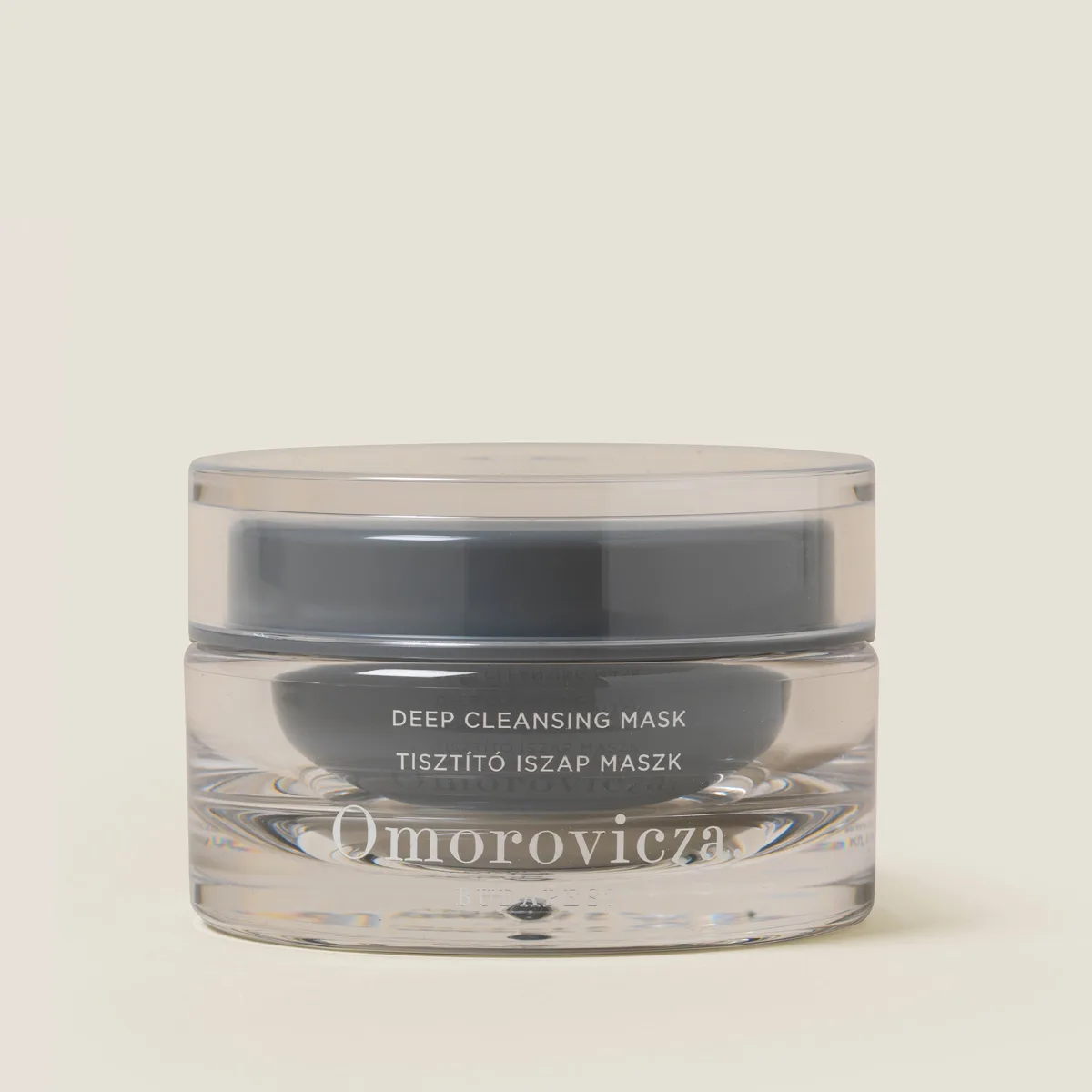
Few categories in skincare are as ruthlessly commoditized as the clay mask. Kaolin and bentonite are cheap, abundant, and effective, which means any clay mask asking serious money has to justify itself on something beyond the basic absorb-oil-and-rinse routine that a drugstore tub does for pocket change. Omorovicza's answer leans on geography and chemistry: the brand's signature mineral-rich Hungarian moor mud, plus a deliberate effort to keep the formula from drying skin to parchment. The result is a genuinely good clay mask. Whether it is a ninety-five-dollar good clay mask is the harder, more interesting question, and the honest answer involves a bit of both yes and no.
The purifying mechanics work exactly as clay chemistry promises. Kaolin and the Hungarian moor silt, both sitting high in the formula, are absorbents that bind sebum and pull pore debris toward the surface as the mask sets, with the mud adding a remineralizing mineral character you simply do not get from plain kaolin. Zinc oxide complements the clays with oil-regulating and soothing benefit, which suits oily, congested, and blemish-prone skin well. After a rinse, skin looks clarified, reads matte, and genuinely feels deep-cleaned. On the core job, it delivers, and it does so reliably enough that this remains one of the brand's longest-standing cult products, dating back to 2008. That longevity matters: with a high review volume behind it and well over a decade on the market, the consistency of the result is well-documented rather than speculative.
What lifts it above a basic clay treatment is the buffering. Glycerin and mannitol are worked in specifically to offset the transepidermal water loss that clays tend to encourage, and the brand's thermal water, a Saccharomyces ferment, and acerola-derived vitamin C round things out with soothing and light antioxidant support. The practical effect is a clay mask noticeably less tight and squeaky than most: you get the oil absorption without the post-rinse feeling that your face has been shrink-wrapped. That gentler experience is a real improvement, even if it is an evolution rather than a revolution in clay-mask design. Anyone who has abandoned clay masks because they left skin feeling stripped will notice the difference immediately.
The sensory side is where the luxury positioning earns some of its keep. The texture is a smooth grey-beige clay-mud cream that spreads easily, dries down evenly, and rinses cleanly, carried by a warm herbal-floral scent that makes the whole thing feel like a spa interlude rather than a chore. As an established brand built on its Hungarian thermal-water and moor-mud heritage, Omorovicza knows how to make a product feel expensive in the hand, and this one does. For people who value the ritual of a weekly mask as much as the result, that experience is not nothing.
Using it well is mostly about restraint. A thin, even layer left on for ten minutes or so, removed with warm water before it cracks into a fully dried, dust-tight shell, gives you the clarifying benefit without tipping into the over-drying the buffer is meant to prevent. Following with a hydrating serum or moisturizer keeps the post-mask skin comfortable, and reserving it for once or twice a week rather than reaching for it whenever skin feels congested is the difference between a mask that maintains clear pores over time and one that quietly compromises the barrier through overuse. The immediate result, that clarified, matte, deep-cleaned look right after rinsing, is consistent enough that the per-use payoff is rarely in question; the discipline is in not chasing it too often.
The limitations are the familiar luxury-mask ones, and they are worth being clear-eyed about. The price is the headline: paying around ninety-five dollars for a clay mask is a steep premium in a category where the active raw materials cost very little, and no amount of mineral heritage fully closes that gap. The formula is fragranced with parfum plus citronellol, geraniol, limonene, and linalool, so sensitive, rosacea-prone, or reactive skin should patch test or skip it entirely, because those allergens raise sensitization potential regardless of how soothing the rest of the formula is. Even with the humectant buffer, it can still over-dry if overused, which makes it a once-or-twice-a-week treatment rather than a daily ritual, and rinsing before it fully sets while moisturizing afterward keeps it comfortable. It is also not a fungal-acne-safe formulation, though it is at least vegan and cruelty-free.
On value, this is where the cool light falls. The mask is effective and the buffered, mineral-mud formula is genuinely nicer to use than a bargain clay tub, but it is not nine times nicer, which is roughly the price gap you are bridging. What the premium buys is the Hungarian heritage, the gentler sensory experience, and the luxury packaging, all of which are legitimate things to want and none of which are skincare necessities. If those matter to you and the budget allows, the purchase makes sense. If you are measuring clarifying results per dollar, mid-range and drugstore clay masks recover most of the benefit for a fraction of the outlay, and that is simply the truth of the category.
So where it lands is clear enough. This is an effective, comfortable, luxurious clay detox mask for oily, combination, and congested skin that wants to absorb oil and clear pores without the usual clay-mask tightness, and that is willing to pay luxury prices for a gentler, mineral-rich ritual. Skip it if fragrance is a problem for your skin, if you are very dry or sensitive, or if value matters more than indulgence. It is a good clay mask by any honest measure. It becomes a great one mainly when the luxury experience is the point you are paying for, and only you can decide whether that point is worth ninety-five dollars.