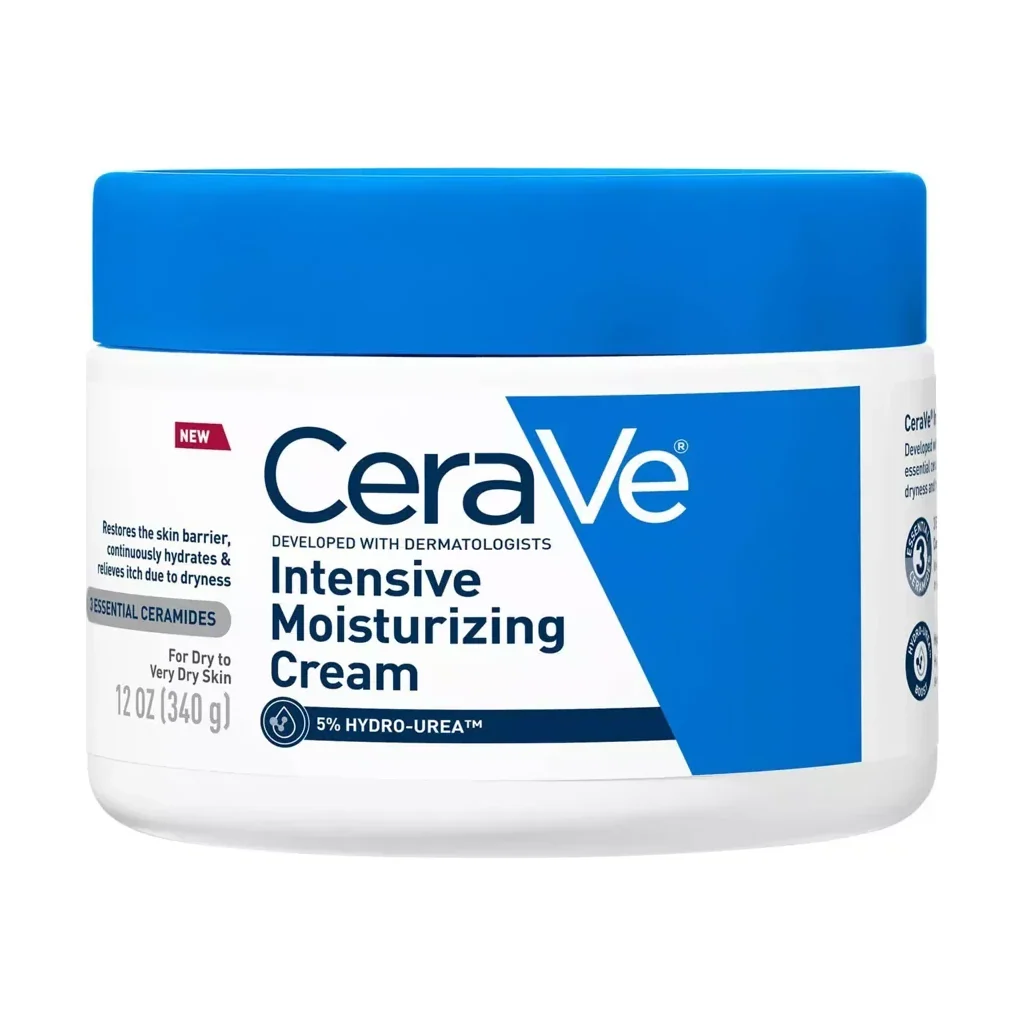
Urea has a PR problem in facial skincare. Everyone knows it from foot creams and heel balms, where it shows up at 20-40% concentrations to chemically soften stubborn calluses, and that association tends to make people assume it's too harsh or too utilitarian for facial use. The reality is that urea at 5% is one of the most effective humectants available — it's a component of the skin's own natural moisturizing factor, it pulls water into the stratum corneum more efficiently than glycerin at similar use levels, and at low concentrations it has excellent tolerability even on very sensitive skin. It's just that almost nobody builds urea products for faces. Sebamed is one of the exceptions, and this Extreme Dry Skin Relief Face Cream is the product that exists specifically for people whose skin has moved past 'dry' into 'chronically, miserably, cracked-in-the-winter dry.'
The formula is a thoughtful take on what that population actually needs. The headline 5% urea is paired with sodium lactate and sodium PCA — two other components of the natural moisturizing factor — so the humectant layer isn't relying on a single ingredient to do the work. Glycerin adds general humectant backup, and sodium hyaluronate handles the more surface-level water binding. Sealing all that moisture in is the lipid system: caprylic/capric triglyceride, shea butter, and a small amount of dimethicone. Without a proper occlusive component, a urea-heavy cream can actually worsen dryness in low-humidity environments because the urea pulls water out of the deeper skin into a stratum corneum that can't hold it. Sebamed has built a balanced system that avoids this trap.
Holding that emulsion together is the sort of unglamorous engineering the brand has been doing since 1967 — cetearyl alcohol and glyceryl stearate as the fatty-alcohol backbone, ceteareth-20 as the emulsifier, and a touch of citric acid tuning the finished cream to pH 5.5. That number is not decoration. Sebamed built its entire identity on matching the skin's naturally acidic surface, and on a barrier that is already cracked and leaking water, a cream that arrives at the skin's own pH is one fewer thing for it to correct.
The supporting cast is exactly what you'd want for compromised barrier skin: panthenol, allantoin, bisabolol, and vitamin E. Panthenol is the standout — it directly addresses the stinging sensation that urea creams can produce on cracked skin, and it provides real barrier-support activity. Bisabolol and allantoin handle the inflammation and soothing work. And importantly, the whole thing is fragrance-free. This is one of the Sebamed products where the brand got the fragrance question right, and it's a meaningful point of differentiation from the Anti-Dry day and night creams, which both contain fragrance and therefore can't be recommended blindly to reactive or atopic skin.
The experience of using it is straightforward, with one caveat you should know about: if your skin is genuinely cracked or severely dry, you'll feel a brief tingling sensation on application during the first few uses. This isn't irritation in the usual sense — it's urea interacting with a depleted, damaged stratum corneum, and it typically resolves within a minute or two. After a few days of use, that sensation disappears entirely because the skin is no longer compromised enough to register urea at this concentration. People who aren't expecting it sometimes assume they're allergic and return the product, which is understandable but usually wrong. If the stinging persists beyond the first week or is accompanied by redness or burning, then yes, this probably isn't your cream. Otherwise, it's the formulation doing what it's supposed to do.
The cream itself is dense in the tube and surprisingly obliging on the skin — it softens the moment it meets body heat and spreads further than its weight suggests, settling into a satin, slightly velvety finish rather than a greasy one. The opaque squeeze tube with a flip cap is the correct call for a product that people with cracked hands will be opening in a cold bathroom, and it keeps fingers out of the pot entirely.
Functionally, this is the cream that transforms 'visibly rough, flaky patches that no other moisturizer has been able to fix' into 'soft, flexible, normally-textured skin' within about a week of consistent use. The effect on chronically dry skin is genuinely impressive, and it's the kind of result that makes you understand why urea is considered a foundational ingredient in dry-skin dermatology even if mainstream skincare has never quite embraced it. Users describe the first three or four days as the surprising part — the roughness gives way faster than expected — with the deeper change in texture and comfort arriving over the following month. Across roughly nine hundred reviews the pattern is remarkably consistent, and so are the objections: it stings at first, the tube is too small, and it is far too rich for anyone who isn't genuinely parched.
That richness is the honest boundary of the product. Shea butter and cetearyl alcohol are exactly the ingredients that congestion-prone skin resents, and the formula makes no attempt to be all things to all faces. It is a winter cream for a specific kind of suffering — the psoriasis patch on the cheek, the ichthyotic flaking along the jaw, the sandpaper texture that a light lotion has failed to touch — and it earns a permanent slot in the routine for the people who have that problem. At night, on the worst areas, a plain occlusive balm layered over the top turns it into something close to a barrier repair treatment.
Where it falls short is in all the predictable places for its category: too heavy and comedogenic for oily or acne-prone skin, not large enough in the single 50ml size for people who want to use it on face and neck daily, and not the right choice for anyone whose dryness is mild or situational rather than chronic and severe.
At under $30, the value case is reasonable rather than extraordinary. Cheaper drugstore options exist, though most contain less urea, include fragrance, or use cheaper lipid systems. More expensive prestige options exist, though most are less effective at the specific problem this cream solves. For people who actually need it — and if you don't know whether you need it, you probably don't — it's one of the better purchases in dry-skin skincare. It doesn't pretend to do more than it does, it doesn't market itself around an influencer, and it quietly earns its place in a very specific category where there are far fewer good options than you'd expect.