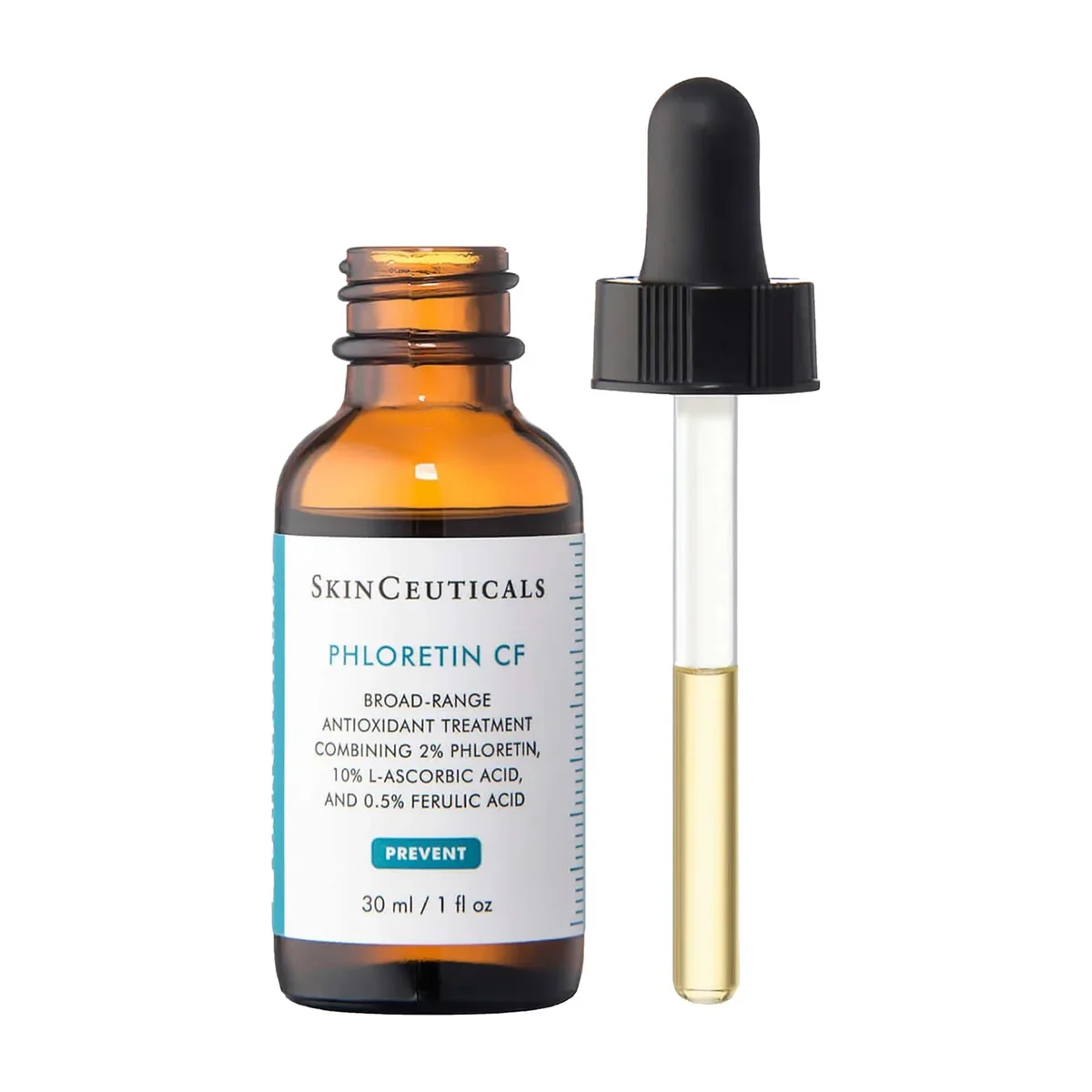
If you have spent any time researching vitamin C serums, you have almost certainly run into the name CE Ferulic — SkinCeuticals' flagship antioxidant serum, the product that built the modern vitamin C category and that dermatologists have been quietly recommending for nearly two decades. What you may not have noticed is that CE Ferulic has a sibling. Phloretin CF is built on the same Duke antioxidant patent, uses the same 10% L-ascorbic acid at the same pH of 3.2, and includes the same 0.5% ferulic acid to stabilize the ascorbic acid — but instead of vitamin E, it uses phloretin, a flavonoid polyphenol derived from apple skin. That swap changes everything about who this serum is for.
The pitch is specific. CE Ferulic was designed for dry, normal, and mature skin — the vitamin E content makes it slightly richer and more emollient, and it reads better on skin that needs a little extra comfort. Phloretin CF was designed for the opposite: oily, combination, and hyperpigmentation-focused skin, where the vitamin E content would feel too heavy and where the phloretin component specifically targets pigmentation pathways more effectively. Both serums share the Duke patent chemistry that makes them so reliably effective. The difference is in who they serve, and if you have oily skin or melasma, Phloretin CF is almost certainly the one you want.
The formulation is exactly what you would expect from a serum at this price point: 10% pure L-ascorbic acid (the only form with truly robust clinical data for topical antioxidant effects), 2% phloretin, 0.5% ferulic acid, sodium hyaluronate for a lighter feel, and a solvent system built around dipropylene glycol and ethoxydiglycol to carry the ascorbic acid at low pH. The pH of 3.2 is deliberately low, because L-ascorbic acid needs to stay protonated to penetrate the stratum corneum effectively. That low pH also explains why first-time users sometimes feel a brief tingle on application — it is not a defect, it is the chemistry doing what it is designed to do.
The texture is a clear, slightly viscous amber-gold liquid that pours out of the dropper in drops rather than streams. It absorbs within thirty seconds into a nearly invisible finish with just a hint of slickness from the hyaluronic acid. There is a distinctive scent — faintly metallic, slightly acidic, unmistakably vitamin-C-forward — that is completely unlike the perfumed products most skincare buyers are used to. If you have used Phloretin CF or CE Ferulic before, you know the smell. If you have not, it can take a couple of uses to get used to it, but it does not linger after application.
Results show up in the mirror on a consistent timeline. Within two weeks, most users notice that skin looks visibly brighter and slightly more even in tone. Within four weeks, the effect on dullness and luminosity is clearly present. Over eight to twelve weeks of daily morning use, the more specific benefits — reduced dark spots, improved melasma, better tone evenness, reduced appearance of fine lines — develop and become obvious. The effect on hyperpigmentation is particularly notable with Phloretin CF specifically, which is why dermatologists treating melasma and sun damage reach for this version over CE Ferulic.
The clinical backing here is unusually strong for a cosmetic product. The Duke patent (often referenced by the lead researcher Dr. Sheldon Pinnell) has been independently cited in peer-reviewed dermatology literature, and the specific combination of L-ascorbic acid at 10% plus ferulic acid at 0.5% has been studied for its ability to maintain stability and provide measurable photoprotection at the skin level when used under sunscreen. Phloretin CF inherits that base and adds the phloretin component, which is supported by research into flavonoid antioxidant mechanisms, though the specific finished-product trials for Phloretin CF come primarily from the manufacturer.
And now, the price. One hundred eighty-two dollars for one ounce is legitimately expensive, and we need to be honest about what that premium pays for. It pays for the Duke patent chemistry, the clinical validation, the brand's manufacturing consistency, and the integration into a full SkinCeuticals morning routine. It does not pay for dramatically better efficacy than a well-formulated cheaper vitamin C serum — Timeless 20% Vitamin C + E + Ferulic, Paula's Choice C15 Super Booster, and several others deliver meaningful antioxidant benefits at significantly lower prices. What those cheaper serums do not deliver is the specific Phloretin CF formulation, the brand research story, or the clinical-office distribution network that makes SkinCeuticals the default recommendation in so many dermatology practices.
The right buyer is someone focused specifically on hyperpigmentation or melasma, or someone committed to a clinical-brand morning routine and looking for the best possible vitamin C serum for oily or combination skin. For that buyer, Phloretin CF is genuinely one of the best products in its category and earns most of its price tag. For a budget-conscious shopper whose main goal is general antioxidant protection, cheaper alternatives will deliver most of the benefit. The value decision comes down to how specifically you care about the Phloretin CF formulation and how much the clinical brand track record matters to you. Both answers are valid, but neither is trivial.