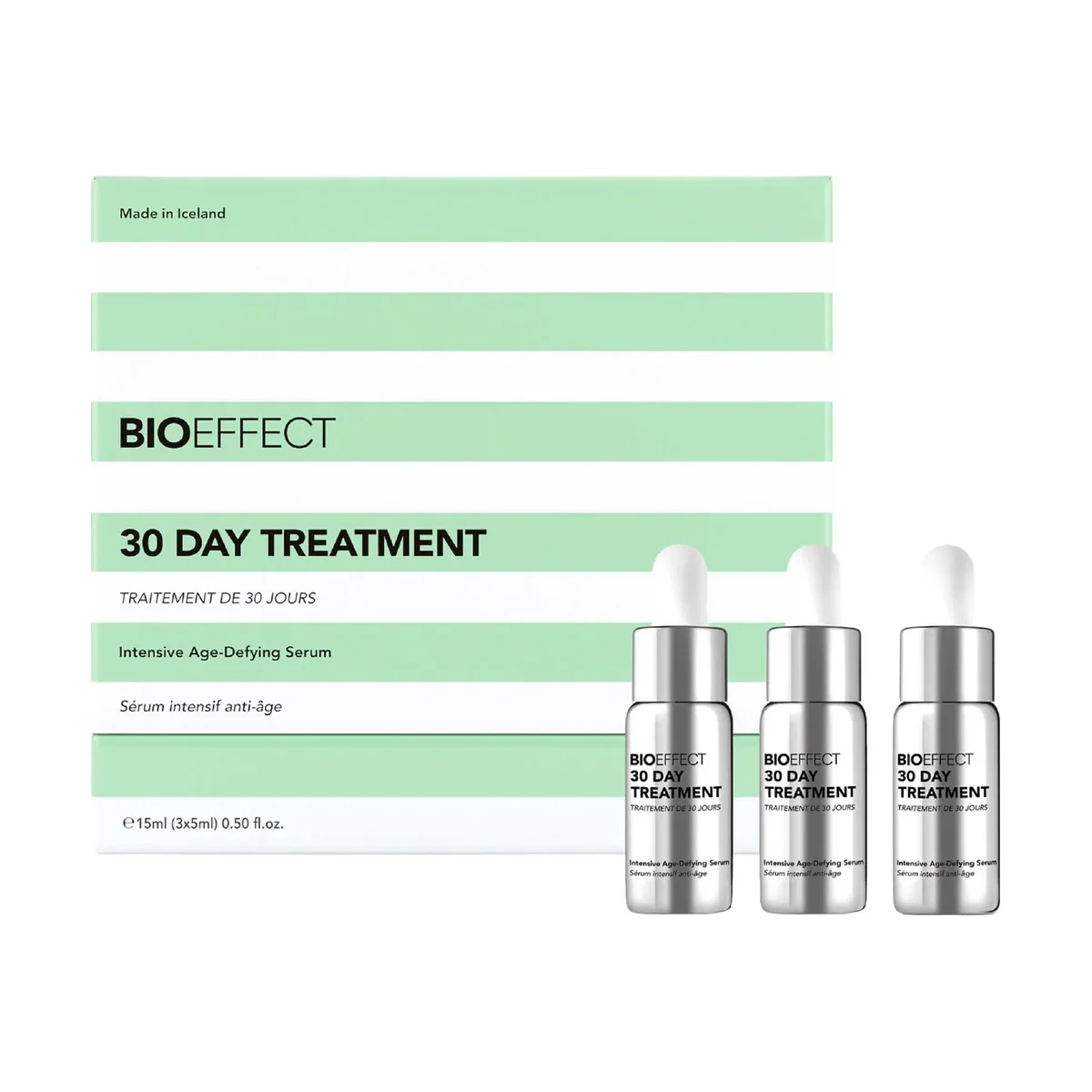
If the original Bioeffect serum was a minimalist bet on a single growth factor, the Power Serum is that same bet placed twice, with a genuinely proven side wager added for good measure. Whether doubling down is worth a two-hundred-nineteen-dollar price tag, the brand's highest for a serum by some distance, comes down entirely to how you weigh the upgrades, so it's worth walking carefully through exactly what changed and what stayed the same. Bioeffect, the skincare arm of Icelandic biotech firm ORF Genetics, bio-engineers its growth factors inside barley plants, which is a legitimately novel piece of technology and the reason the brand has built a cult following despite prices that make most people wince.
The headline addition is a second growth factor. Alongside the signature EGF, epidermal growth factor, a renewal-signaling protein, now sits KGF, keratinocyte growth factor, also grown in barley and aimed at barrier repair and strengthening. The two target genuinely different biological processes, which makes combining them mechanistically reasonable on paper rather than just a way to fatten the ingredient list. But clear eyes are warranted here, and this is the crux of the whole thing: both are growth factors, and both face the identical unresolved question of whether large proteins actually penetrate intact skin in meaningful amounts and deliver durable topical anti-aging benefit. The supportive data is largely brand-associated or drawn from small studies, not independent large-scale trials. Doubling the growth factors broadens the theoretical story you can tell, but it does not resolve the underlying scientific debate, and it raises the price considerably more than it guarantees any additional result.
The genuinely useful upgrade is the quieter one that doesn't get top billing: N-acetyl glucosamine, or NAG. This amino sugar is the most independently-backed treatment active in the entire formula, with reasonable evidence for supporting the skin's own hyaluronic acid synthesis and, particularly in combination studies, for gently brightening and evening out tone. It gives the serum a proven element the original bare formula lacked, and it's a real, substantive improvement rather than a cosmetic one, which is worth weighing heavily if you're trying to justify the upgrade to yourself.
Everything that made the original lovely survives intact in this version. The formula is still minimalist, only twelve ingredients, and entirely fragrance-free, oil-free, and free of common irritants, which makes it exceptionally gentle, fungal-acne-safe, and well suited to sensitive and reactive skin that struggles with busier products. Glycerin leads the list alongside sodium hyaluronate, the humectant pairing that delivers reliable, immediate plumping and hydration and forms the calm, low-risk base everything else is carried in. The texture is lightweight and slightly viscous, absorbing into a smooth, hydrated finish, and it's essentially scentless. In practice the hydration and plumping arrive immediately, while the NAG brightening and any growth-factor benefit build, if at all, gradually over a span of eight to twelve weeks. It's a genuine pleasure to use and about as low-risk as a serum gets, which the strong tolerability score reflects honestly.
The real caveats are the brand's familiar ones, amplified by the higher price. The growth-factor efficacy remains debated, with the most flattering data coming from the brand itself rather than independent researchers; the reliable, immediate benefit is hydration, which is achievable for a tiny fraction of this cost almost anywhere; and topical growth factors aren't well studied in pregnancy, making this a check-with-your-doctor product in that situation. And at two hundred nineteen dollars for fifteen milliliters, the value math, which the score does not sugarcoat in the slightest, is even steeper than the already-pricey original serum's. You're paying a significant premium over an expensive product for a second growth factor whose added benefit is theoretical, plus a NAG active that on its own costs very little to formulate.
It's worth being precise about the timeline, too, because growth-factor serums tend to attract inflated expectations. The hydration and surface plumping are immediate and reliable, the kind of result you'll notice the first morning. Anything beyond that, the brightening from NAG, any renewal or barrier benefit the growth factors might confer, builds slowly and subtly over a couple of months of daily use, and even then the gains are modest rather than dramatic. It's not a serum that announces itself, and anyone expecting a visible overnight transformation from a fifteen-milliliter bottle, however expensive, is setting themselves up to feel shortchanged. Approached as a gentle, hydrating long-game product rather than a quick fix, it's far easier to be satisfied with, because you stop measuring it against a promise it was never positioned to keep.
That tension is the entire decision. If the dual-growth-factor concept genuinely excites you and budget simply isn't a constraint in your life, this is a beautifully clean, gentle, and slightly more substantive serum than the original, with the NAG brightening a real if small bonus on top. If you're weighing it on proven results per dollar, you're paying a great deal for an upgrade whose core promise remains scientifically unsettled. So it lands as a serum for a specific buyer: someone with normal, dry, combination, or sensitive skin and a generous budget, drawn to the growth-factor biotechnology as an idea and willing to pay handsomely for it. For value-focused or evidence-focused shoppers, the original serum was already a stretch and this is more of one still, because proven brightening and reliable hydration are both available, in abundance, for a fraction of the price elsewhere.