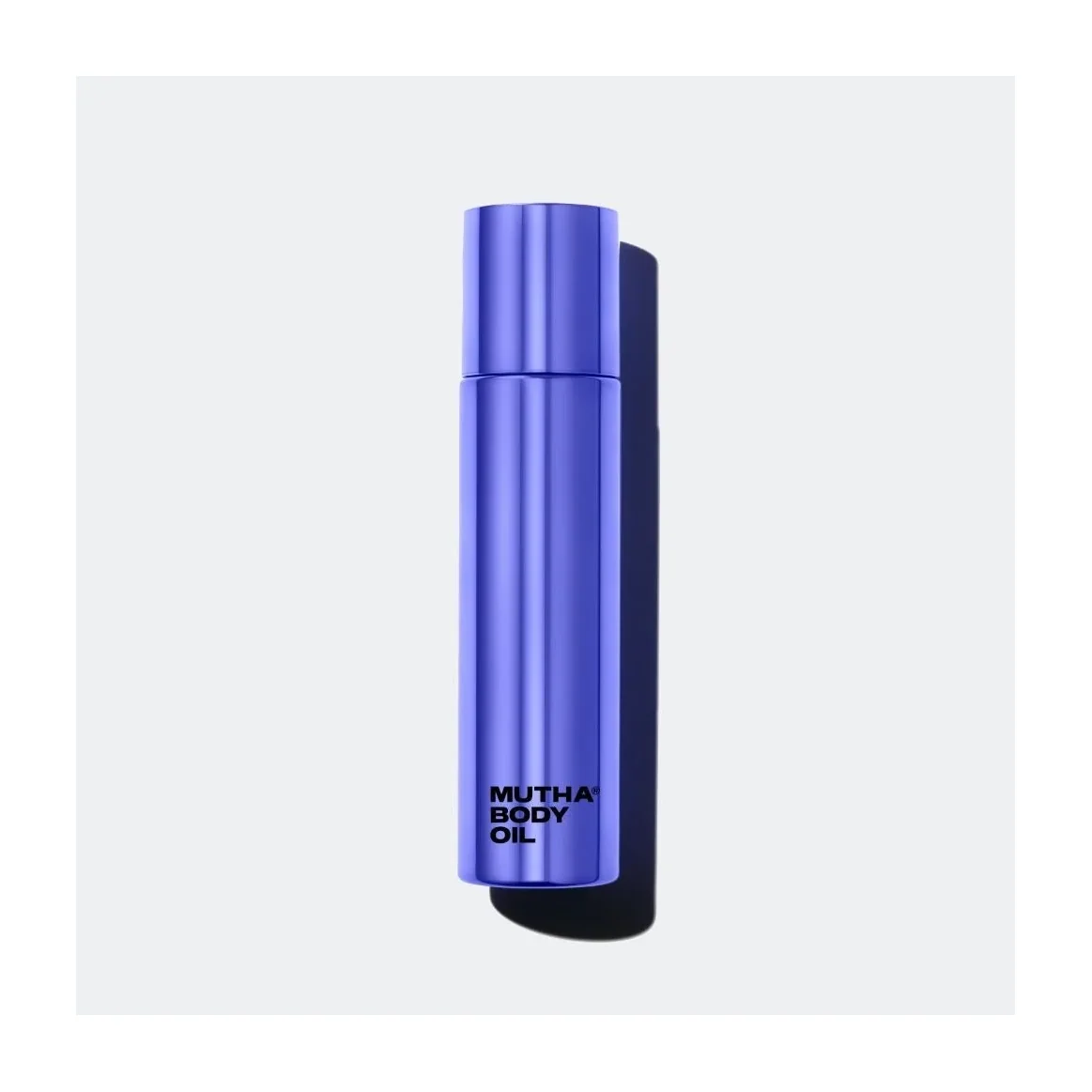
MUTHA Body Oil in a cobalt blue 100ml pump bottle
Good choice for Dryness
What makes this different

It is a short, purely botanical blend that leads with rosehip seed oil rather than a cheaper carrier, rounded out with grape seed, apricot, jojoba, olive and almond oils and scented only with citrus peel oils.

MUTHA

MUTHA Body Oil Review

Rosehip-Led Bump Oil Body Care oil luxury Paraben free Cruelty free Vegan

A beautifully simple body oil led by rosehip, which absorbs fast and leaves skin soft and glowing. It does exactly what good plant oils do, no more. The stretch-mark statistics come from a consumer panel, not a controlled study, and at $105 for 100ml you are paying luxury prices for an ingredient list any oil lover could recognise.

Price $105.00 100ml / 3.4 fl oz · more sizes
Shopper rating 4.7 ★★★★★ 103 reviews
On the market 2019 launched
Best for drynormal
Buy at Amazon ♥
Verdicts

How well it fits each concern

MUTHA's Body Oil has around 100 reviews on the brand's own site, fewer than its best-selling butter, and the brand's efficacy percentages come from a self-reported consumer panel. Our assessment relies mainly on the published ingredients and independent evidence on plant oils and stretch marks.

One verdict per concern. Open a row for the reasoning; the receipt has every source.

The scaleRecommendedGoodSupportingEarly evidenceNot for thisAvoidhow it works

Good choicefor DrynessJojoba Oil is a reference standard by mechanism for dryness; this oil carries it high in the ingredient list.Receipt1 source on the row · concentration not declared; studied range 1–100% · row checked Jul 17, 2026 · rule R5, same reading on 9,843 products · open the receipt

The case for it

  1. Simmondsia Chinensis is a reference standard by mechanism for this concern — an established physical action, not a trial result.
  2. It is present at an effective concentration, declared or high in the ingredient list.
  3. The formula carries no trigger this concern is sensitive to, with the cautions noted.

Limited evidenceStandard tolerabilityNo reviews read yet

Cautions: fragrance.

Same rule for everyone. “Good choice” is the verdict on 10,340 of 45,446 concern verdicts across the catalog; rule R5 decided 9,843 of them. Unchanged since October 7, 2026, engine 5.2.0.

Brand or formulator? Disclose a concentration or correct a fact →

The full receipt: rule, row, sources, dates →All dryness products →

Also listed for Dullness and Winter Skin — the actives here (Rosehip Oil, Plant & Seed Oils, Sweet Almond Oil, Jojoba Oil) are in our research queue for those concerns; there is no verdict until their evidence rows are written. That is a gap in our table, not a mark against the product.

As a body productNot judged: what a body product is for — real substance, not just slip, realistic to use daily — cannot yet be measured from the ingredient list (only fragrance load can).

A verdict is Dermington’s assessment of how well a product’s ingredients fit a concern — never a claim about what the product treats. Evidence dots and collected reviews sit beside it and are never blended in. Rules 0.5.1 · evidence table ev-2026.10-r231 · engine 5.2.0 · how we decide · this product’s receipt

Reader poll · Town SquareQuestion 1 of up to 3

Have you used Body Oil?

One tap counts. A couple of optional follow-ups come next.

No account neededOne answer each, change it any timeCounted only in anonymous totalsHow the Square counts →
Assessment

Pros & cons

What it does well 6

  • Rosehip seed oil leads the blend, a meaningful and relatively costly choice
  • Absorbs within minutes and leaves a soft, satin glow
  • Short, purely botanical ingredient list with no fillers
  • Pairs effectively with a body butter for very dry skin
  • Gentle natural citrus scent rather than heavy perfume
  • Pump bottle keeps application clean and controlled

Where it falls short 5

  • Stretch-mark figures come from a consumer panel, not a controlled trial
  • Very expensive for a blend of plant oils
  • Citrus peel oils and their terpenes can irritate sensitive skin
  • Contains nut and kernel oils, a concern for some allergies
  • Rosehip-rich blends oxidise and should be used within months
Review

The full review

One hundred percent agreed it deeply hydrated their skin. One hundred percent noticed increased plumpness. Ninety-six percent saw a reduced and faded appearance of stretch marks. Ninety-six percent felt their skin was firmer. Those are the numbers on MUTHA's Body Oil page, and they are the kind of figures that sell a $105 bottle to an anxious expectant parent. The footnote matters more than the numbers: they are based on a consumer panel test.

A consumer panel is not nothing. It means a group of people used the product and filled in a questionnaire about how they felt it worked. That is useful for learning whether people like a texture or scent. It is much weaker evidence for an effect like fading stretch marks, because there is no comparison group, no blinding and no objective measurement. Participants who are given a beautiful oil in a blue bottle and asked whether their skin looks better tend to say yes. Stretch marks also fade naturally, turning from red or purple to silvery over months, so almost any product used for a while can seem to help. A panel cannot separate the oil's effect from time, expectation or simply moisturising more often.

None of which makes this a bad product. The ingredient list is short and honest. Rosehip seed oil comes first, which is a meaningful choice, because rosehip is one of the more expensive and interesting seed oils: rich in linoleic and alpha-linolenic acids and containing small amounts of natural retinoid compounds. Grape seed and apricot kernel oils make up much of the remaining base, with jojoba, olive and sweet almond oils behind them, a touch of elderberry extract, and orange and grapefruit peel oils for scent. There are no silicones, no synthetic fragrance and no fillers.

That blend feels good. Several of these oils are high in linoleic acid, which makes them lighter and quicker to absorb than heavier oils such as coconut or olive alone. Jojoba, technically a liquid wax, adds a silky glide and helps stabilise the more oxidation-prone oils. In use, three or four pumps spread easily over legs, arms and a growing belly, sink in within a couple of minutes and leave skin soft with a satin glow. The citrus scent is gentle. Reviewers on MUTHA's site, about a hundred of them, rate it at around 4.7 stars and mostly praise the absorption and glow; the complaints are, predictably, about the price and how quickly the bottle empties.

The brand designed the oil to be layered under its Body Butter, and that pairing is genuinely effective for dry skin. Oil on damp skin straight from the shower helps hold water in the outer layer, and the denser butter on top locks it in. If your skin is only mildly dry, the oil alone is enough.

Now to the stretch-mark question itself, because that is what many buyers care about. The best independent evidence is a Cochrane systematic review of topical preparations for preventing stretch marks in pregnancy. It looked at randomised trials of creams and oils, including olive oil and cocoa butter, and found no high-quality evidence that any topical product prevents stretch marks. Genetics, hormones and the speed of stretching matter most. Rosehip oil has been included in some combination products studied for striae, but there is no good evidence that rosehip oil alone prevents them. Moisturising a stretching belly can make tight, itchy skin feel much better, and that is a real benefit. It is not a guarantee, and anyone who develops marks despite diligent oiling should not feel they did something wrong.

Safety is straightforward. Nothing here is a typical pregnancy concern. The citrus peel oils carry citral, limonene and linalool, recognised allergens that become more irritating as they oxidise, so people with very sensitive skin or eczema should patch test. Sweet almond and apricot kernel oils come from nuts and stone fruit kernels, which matters to anyone with a relevant allergy. Rosehip oil oxidises fairly quickly, so the bottle is best used within six months of opening and kept away from heat and sunlight.

A word on how to get the most from it. Oils work best on skin that is still wet, so keep the bottle in the bathroom rather than the bedroom and apply before towelling off completely. Massage in circles rather than simply smoothing it on; the extra minute spreads the oil thinly and evenly, and it is the part of the ritual many pregnant users say they enjoy most.

Then comes the price, which is the hardest part to defend. These are good-quality oils, and rosehip is not cheap, but $105 for 100ml is among the highest prices you will see for a plant-oil blend. A 25ml travel size at $38 lets you try it but costs even more per millilitre. Luxury packaging, a compelling founder story and the emotional pull of pregnancy marketing account for much of the premium.

MUTHA Body Oil is a lovely, uncomplicated product that makes skin feel and look wonderful. Buy it if the texture, scent and ritual appeal to you and the price does not sting. Do not buy it because a panel of enthusiastic users said their stretch marks faded.
The science

This oil works through the same mechanisms as any well-chosen blend of plant lipids. Rosehip, grape seed and apricot kernel oils are rich in unsaturated fatty acids; linoleic acid in particular is a component of the ceramides that make up the skin barrier, and topical application can help replenish barrier lipids in dry skin. Jojoba oil, a mixture of long-chain wax esters, is chemically close to human sebum and oxidatively stable, so it improves spreadability and helps protect the more fragile polyunsaturated oils. Rosehip seed oil also contains small quantities of trans-retinoic acid and carotenoids, although at levels far below those of retinoid treatments. Applied to damp skin, the blend reduces water loss by forming a thin lipid film.

The claims around stretch marks are where scrutiny is needed. MUTHA's percentages come from a consumer panel, a perception survey without a control arm or objective measurement. The more rigorous evidence base is a 2012 Cochrane systematic review of randomised trials of topical preparations for preventing striae gravidarum, which included trials of olive oil and cocoa butter. It found no high-quality evidence that any topical product prevents stretch marks in pregnancy. Striae arise from a combination of rapid mechanical stretch, hormonal influences on dermal fibroblasts and genetic predisposition, and these are not readily altered by surface oils. Moisturising may reduce the itch and tightness of stretching skin and improve the appearance of skin texture, which are worthwhile comfort benefits.

The citrus peel oils contribute citral, limonene and linalool. These terpenes are recognised contact allergens, and their oxidation products, which form after opening, are more sensitising than the fresh compounds.

References 1 ShowHide
  1. Topical preparations for preventing stretch marks in pregnancy — Cochrane Database of Systematic Reviews (2012)

The clinical view

Plant-oil blends are a reasonable choice for dry body skin, and clinicians often suggest applying oils to damp skin after bathing and following with a cream or ointment for more severe dryness. In pregnancy, dermatologists generally describe regular moisturising as helpful for itch and tightness, while being clear that the evidence does not show topical oils prevent stretch marks. For patients bothered by established striae, treatments with more supporting evidence, such as vascular or fractional lasers and, after pregnancy and breastfeeding, topical retinoids, are typically discussed instead. Fragrance compounds from citrus oils, including citral and limonene, are well-known contact allergens, so patients with eczema or fragrance allergy are usually advised to use unscented oils or emollients. Those with tree-nut allergies are often counselled to avoid products containing almond oil.

Formula

Key ingredients

  1. Rosa Canina Seed Oil

    The lead oil, high in linoleic and alpha-linolenic acids with traces of natural retinoids; it gives this blend a lighter, faster-absorbing feel than the brand's butter and supports barrier lipids.

    Not yet assessed
  2. Simmondsia Chinensis (Jojoba) Seed Oil

    A liquid wax ester that resembles skin's own sebum and resists oxidation, steadying the blend's more fragile linoleic-rich oils and adding a satin slip.

    Established mechanism for Dryness · established mechanism
  3. Prunus Armeniaca (Apricot) Kernel Oil

    A light, oleic-rich oil that with grape seed oil forms the bulk of the base and spreads easily over large areas such as legs and belly.

    Not yet assessed
  4. Prunus Amygdalus Dulcis (Sweet Almond) Oil

    A classic massage oil that adds cushion and slip; it sits low in the list but contributes to the glide that makes this oil pleasant for bump massage.

    Not yet assessed
  5. Olea Europaea (Olive) Fruit Oil

    A small share of olive oil adds richness; olive oil has been tested for stretch-mark prevention in pregnancy trials without showing a clear benefit.

    Not yet assessed
Full ingredient list 12 ingredients ShowHide

Rosa Canina Seed Oil, Vitis Vinifera (Grape) Seed Oil, Prunus Armeniaca (Apricot) Kernel Oil, Simmondsia Chinensis (Jojoba) Seed Oil, Olea Europaea (Olive) Fruit Oil, Prunus Amygdalus Dulcis (Sweet Almond) Oil, Limonene, Sambucus Nigra Fruit Extract, Citrus Aurantium Dulcis (Orange) Peel Oil, Citrus Grandis (Grapefruit) Peel Oil, Citral, Linalool

Safety & formulation facts

  • Pregnancy safe
  • Not fragrance free
  • Alcohol free
  • Not oil free
  • Silicone free
  • Paraben free
  • Sulfate free
  • Cruelty free
  • Vegan
  • Not fungal-acne safe
Potential irritants Citrus Aurantium Dulcis (Orange) Peel OilCitrus Grandis (Grapefruit) Peel OilCitralLimonene
Common allergens LimoneneCitralLinaloolPrunus Amygdalus Dulcis (Sweet Almond) Oil
Compatibility

Skin types & routine

Routine step moisturizer
Time of day Morning & night
Best season All year
Finish glowy, satin

Layering

Massage a few pumps into damp skin straight out of the shower; for very dry skin, follow with a butter or cream to seal it in.

When to expect results

Skin looks glossy and feels softer straight away; dry patches and dullness improve over one to two weeks of daily use.

Pairs well with Body butterBody brushGentle body wash

A routine built around it

Morning

  1. Shower
  2. MUTHA Body Oilthis product

Night

  1. Shower or bath
  2. MUTHA Body Oilthis product
  3. Body butter
Guidance

How to use it, and who it's for

How to use

Straight out of the shower, while skin is still damp, dispense three or four pumps into the hands and massage over the body from the neck down, paying attention to dry areas and a growing belly or hips. Allow a couple of minutes to absorb before dressing. For very dry skin, follow with a body butter or cream to lock in moisture. Use once or twice daily. Patch test first if you have sensitive skin or nut allergies. Store the bottle away from heat and sunlight, and use within about six months of opening.

Is it worth the price?

One hundred and five dollars for 100ml places MUTHA Body Oil at the very top of the body-oil price range. Leading with rosehip seed oil is a quality choice, and the formula is free of filler, but the ingredients are still plant oils that are widely available for a fraction of the price. The 25ml travel size at $38 is a way to try it, though it costs more per millilitre. A young luxury brand with no independent research behind its claims, MUTHA is charging for experience and story as much as formulation. Lovely to use, poor value.

Who should buy it

People who love the ritual of a luxurious body oil and want a short, plant-only formula with a gentle citrus scent, including expectant parents seeking a comforting massage oil, provided the price is not a concern.

Who should skip it

Shoppers on a budget, people with tree-nut or kernel allergies, and anyone with eczema or fragrance sensitivity should look elsewhere. If your main goal is preventing stretch marks, the evidence does not support paying a premium for that promise.

Ready to try it?MUTHA Body Oil · $105.00 · 100ml / 3.4 fl oz
Details

The product, in detail

Texture
A golden, medium-light dry-ish oil that spreads easily and sinks in within a couple of minutes, leaving a satin sheen.
Scent
Soft orange and grapefruit from natural peel oils, lighter and fresher than most fragranced body oils.
Packaging
A cobalt-blue metallic bottle with a pump; 100ml and a 25ml travel size.
How long it lasts
At three to four pumps per full-body application once a day, the 100ml bottle lasts about five to six weeks.
Once opened
Use within 6 months · track your toss-by date →
Size
100ml / 3.4 fl oz · other sizes available
Launched
2019

What the first two weeks feel like

Feels luxurious and glides well for massage; skin looks immediately glossy and feels soft, with little residue on clothes once absorbed.

The story behind it

Why it exists

The Body Oil launched alongside the Body Butter as one of MUTHA's two original products in 2019, designed to be layered under the butter for pregnant and postpartum skin.

About MUTHA Established Brand (5–20 years)

Hope Smith launched MUTHA in 2019 with two products, a body butter and this oil, after developing plant-based formulas for her own pregnancy. Its performance claims come from brand-commissioned consumer panels and small studies rather than published trials.

Brand founded 2019 · This product since 2019

Myth vs. reality

What people get wrong about it

Myth96 percent of users seeing faded stretch marks proves the oil works.

RealityThat figure comes from a consumer panel recording participants' own impressions, not measured outcomes against a control group; existing marks also fade naturally over time.

MythNatural oils cannot cause allergies.

RealityCitrus peel oils contain citral, limonene and linalool, and sweet almond oil can be an issue for people with nut allergies.

MythBody oils dry out the skin because they lack water.

RealityOils seal in moisture; applied to damp skin, they help hold water in the outer layer.

FAQ

Questions people ask

Does MUTHA Body Oil fade stretch marks?

MUTHA reports that 96 percent of a consumer panel felt their stretch marks looked faded, but that is self-assessment without a control group. Independent reviews of topical oils have not shown that they prevent stretch marks.

What oils are in MUTHA Body Oil?

Rosehip seed oil leads, followed by grape seed, apricot kernel, jojoba, olive and sweet almond oils, with elderberry extract and orange and grapefruit peel oils for scent.

Should I use MUTHA Body Oil before or after the Body Butter?

Use the oil first on damp skin, then layer the butter on top to seal it in. On its own, the oil is enough for normal or mildly dry skin.

Is MUTHA Body Oil safe during pregnancy?

It contains only plant oils, elderberry extract and citrus peel oils, none of which are usual pregnancy concerns. People with nut allergies should note the sweet almond and apricot kernel oils.

Is MUTHA Body Oil greasy?

It absorbs within a couple of minutes and leaves a satin glow rather than an oily film, which most reviewers mention.

Reviews

What shoppers tend to say

Recurring themes our editors read across retailer reviews — summaries in our words, not quotations, and not a substitute for a patch test.

Common praise

  • Absorbs quickly without greasiness
  • Leaves a soft glow
  • Pairs well with the Body Butter

Common complaints

  • Very expensive for a plant oil blend
  • Small bottle runs out fast
  • Citrus scent not for everyone
Next stepCheck it against what you already useClashes, spacing and the right order, with everything on your shelf.