Lanolin (Wool Wax)
Products with Lanolin (Wool Wax)
 Everyday SPF Lip Protection
 Daily Care Lip Balm SPF 15
A budget-friendly daily SPF lip balm that delivers reliable moisture and passable sun protection, but the inclusion of oxybenzone — increasingly avoided in modern formulations — and limited UVA coverage make it feel like a product that hasn't quite caught up with the times.
Key Octinoxate · Petrolatum
 1968 Formula, Grey Tube
 For Men Moisturizing Lotion
Clinique's founding 1968 lotion — mineral oil, petrolatum, urea, sesame oil — in a grey squeeze tube, and none the worse for its age: fragrance-free, non-stinging after a shave, and reliably comfortable on dry skin all day. At $42 for 100 ml it is a heritage tax on a very simple formula, and the lanolin alcohol and three dyes are avoidable flaws, but the moisturising itself is beyond argument.
Key Petrolatum · Urea
 Backside Barrier Spray
 Aquaphor Ointment Body Spray
The classic Aquaphor Healing Ointment formulation — 41% petrolatum, mineral oil, panthenol, lanolin alcohol — in an aerosol can that solves the practical problem of applying ointment to hard-to-reach body areas. The format is the innovation; the underlying formulation has been a dermatology-office staple for decades.
Key Petrolatum · Mineral Oil
 Century-Old Skincare Standard
 Original Healing Cream
The 125-year-old foundational Eucerin product — a deliberately simple seven-ingredient occlusive cream descended directly from the original 1900 Eucerit emulsion. Petrolatum and mineral oil at high positions, lanolin alcohol for substantive feel, fragrance-free and gentle for sensitive compromised skin. The kind of product that newer 'clean-beauty' alternatives can't replicate without sacrificing the substantive occlusive effect that's the entire point.
Key Petrolatum · Mineral Oil
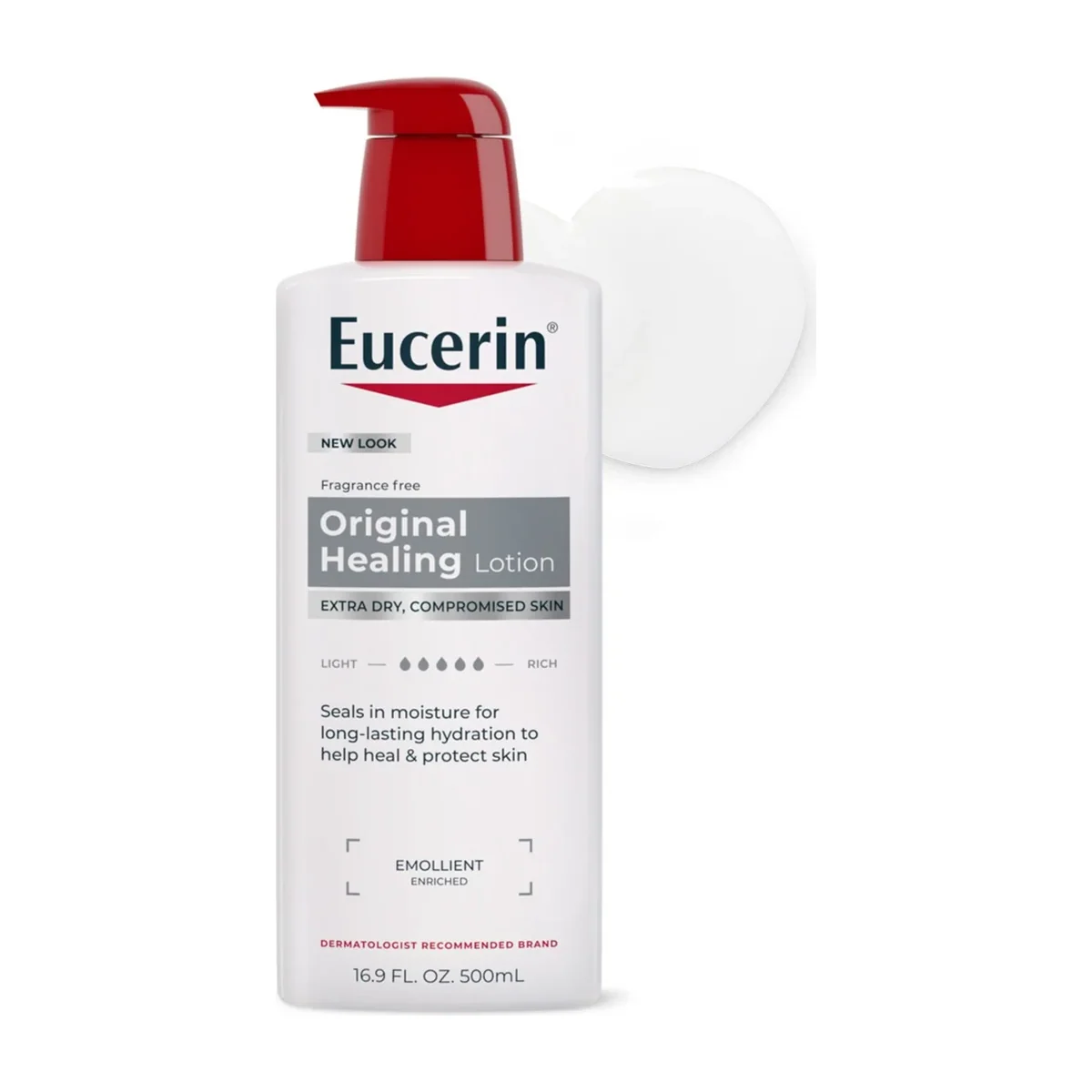 Daily Driver Body Lotion
 Original Healing Lotion
Eucerin's daily-use body lotion counterpart to the Original Healing Cream — same century-old heritage formulation philosophy in a lighter texture appropriate for whole-body application. Mineral oil and lanolin-alcohol-based emollient lotion with sorbitol and propylene glycol humectants. Exceptional drugstore pricing for clinical-grade body lotion; same lanolin allergen consideration as the Cream.
Key Mineral Oil · Sorbitol
 Cult Classic Multi-Balm
 Balm Dotcom
Balm Dotcom is an honest, effective occlusive balm that does exactly what it promises — seal moisture in and keep dry, cracked lips at bay. The formula is dead simple and proven, but the price asks you to pay a premium for the Glossier name on what is fundamentally a petrolatum-lanolin balm.
Key Petrolatum · Lanolin
 Word-of-Mouth Nail Balm
 Hard As Hoof Nail Strengthening Cream
A stiff wax-and-lanolin balm that stays on the nail fold for hours, which is exactly why it beats thin oils on badly cracked skin and brittle nails. The mechanism is moisture retention, it is well executed, and the silk and vitamins near the bottom of the list are decoration. The lanolin is genuinely effective and genuinely a common allergen.
Key Coconut Oil · Lanolin
 Overnight Lip Rescue Hero
 Lip & Body Treatment Balm
A no-nonsense, intensely effective occlusive balm that does exactly what severely dry lips and rough skin patches need — seal in moisture with a dense barrier of waxes, oils, and emollients. The jar packaging is its only real weakness; the formula itself is nearly perfect for its purpose.
Key Petrolatum · Lanolin
 SPF Lip Balm With Actual Hydration
 Sheen Screen Hydrating Lip Balm SPF 50
A genuinely well-formulated SPF 50 lip balm that solves the longstanding choice between protective and pleasant. Best for anyone who wants daily lip protection without the white cast of zinc sticks or the wax of drugstore options. Skip if you're allergic to lanolin or avoiding octinoxate.
Key Avobenzone · Octinoxate
 The Original Medicated Lip Balm
 Classic Medicated Lip Balm
Nearly 90 years old and still polarizing — Carmex's camphor-menthol-petrolatum formula delivers undeniable occlusive protection and that signature medicated tingle, but its old-school ingredient list full of potential irritants makes it a love-it-or-debate-it classic.
Key Petrolatum · Camphor
 The Original Lip Balm
 Original Lip Balm
The lip balm that invented the category and lent its name to an entire product class — ChapStick Original delivers dependable petrolatum occlusion at a price that barely registers, though its legacy formula with fragrance, dyes, and camphor feels increasingly dated in an era of clean simplicity.
Key Petrolatum · Camphor
 Tingle-Stage Herbal Gel
 Soothing Lip Care
A pharmacy-style herbal cooling gel — sage, calendula and echinacea in water and alcohol, with menthol, camphor and peppermint for the cold — built for the tingling hour before a cold sore and honest enough to say only 'suitable while cold sores'. It will not change what the virus does; it can make the prodrome feel better on an intact lip and will sting a split one. At $20 for five millilitres, it is a very expensive way to feel cool.
Key Botanical Extracts · Calendula Extract
 Heritage Lip Protectant
 Eight Hour Cream Lip Protectant Stick Sunscreen SPF 15
As a lip protectant this is the real thing: 30 percent petrolatum, castor oil, lanolin and four waxes in a glossy stick that seals cracked lips for hours and has done so for decades. As a sunscreen it is a museum piece, padimate O and oxybenzone at SPF 15 with no broad-spectrum claim, and as a formula it carries a fragrance with five declared allergens and two parabens. At $38 for 3.7 grams you are paying for the figure-eight tube and the scent; the occlusion inside is available for a few dollars.
Key Petrolatum · Oxybenzone
 Cold-Weather Comfort Layer
 Eight Hour Cream Skin Protectant Nighttime Miracle Moisturizer
A century-old comfort balm reborn as a sleep mask: this is a genuinely soothing overnight occlusive that softens dry, flaky skin by morning. But it is a fragrance- and lanolin-heavy petrolatum base wearing a luxury price tag, so it earns its keep on comfort and heritage, not on a sophisticated active formula.
Key Petrolatum · Lanolin
 Half-Century Apothecary Balm
 Lip Balm #1 Moisturizing Lip Treatment with Squalane
A fifty-year-old petrolatum-squalane-lanolin balm that seals cracked lips as well as anything on the counter and feels more nourished than plain petroleum jelly, at a price that reflects the apothecary name more than the tube. Its reputation as the simple, unscented choice is not quite earned: the current list carries a fragrance with six declared allergens and lanolin third. Excellent for tough lips, a gamble for reactive ones.
Key Petrolatum · Squalane
 Cult Lanolin Lip Balm
 101 Ointment Multi-Balm Fruities
Lanolips' 101 Ointment Multi-Balm Fruities is the cult Aussie lanolin balm in a fun, fruit-flavoured form — and the lanolin genuinely earns the devotion. As an occlusive that mimics skin's own lipids, it softens chapped lips and dry patches better than most petroleum or wax balms, lasts a long time, and multi-tasks all over the body. The only real caveats are the added flavour and lanolin's allergen potential.
Key Lanolin · Sunflower Oil
 Cracked-Skin Rescue Salve
 Golden Dry Skin Salve
Lanolips' Golden Dry Skin Salve takes the brand's superb lanolin and aims it at the body: a rich, multi-use rescue balm that pairs skin-lipid-mimicking lanolin with humectant glycerin and antibacterial manuka honey to genuinely soothe and seal cracked hands, feet and dry patches. It's greasy by design and lanolin isn't for everyone, but for truly parched, weather-beaten skin, it works.
Key Lanolin · Honey
 Smoothing Lanolin Lip Treat
 Lemonaid Lip Treatment
Lanolips' Lemonaid is the brand's iconic lanolin balm given a smoothing, citrusy twist: lemon and lime oils add a gentle natural-exfoliating tingle and a flattering shimmer on top of lanolin's superior moisturization, with shea butter making it richer than the original. It's lovely for flaky, dry lips — but the citrus oils bring fragrance allergens and mild phototoxicity, so it's a little less gentle than the plain 101.
Key Lanolin · Essential Oils
 Moisturizing Lip Scrub
 Lip Scrub
Lanolips' Lip Scrub solves the usual lip-scrub problem — leaving lips raw and dry — by building the exfoliation into a 70%-lanolin balm. Fine sugar and ground seed gently buff away flakes while the lanolin conditions and seals, so lips finish soft and moisturized, not stripped. It's a genuinely good, gentle weekly exfoliator; the natural flavour, lanolin allergen potential and physical particles are the only minor caveats.
Key Lanolin · Physical Exfoliants
 Caviar-Named Comfort Cream
 Caviar Day Cream
A rich, comfortable glycerin-and-ester day cream that hydrates dry, mature skin well, sits under makeup and costs twenty dollars, with caviar extract, elastin and nucleic acids as trace luxury garnish from the 1980s spa era. It has no SPF, its esters and lanolin are wrong for congestion-prone faces, and its fragrance, formaldehyde releaser, parabens and four dyes rule out sensitive ones. Buy it for the base, not the name.
Key Caviar Extract · Glycerin
 Everyday Drugstore Staple
 Original Moisture Body Lotion with Vitamin E
An honest, cheap, do-the-job daily body lotion that leans on mineral oil and glycerin with a vitamin E flourish. It softens normal-to-dry skin without grease and costs almost nothing, but the fragrance, parabens, and dated formula mean it's a maintenance lotion, not a treatment.
Key Vitamin E · Mineral Oil
 Old-School Chapped-Lip Fixer
 Mentholatum LipCare Medicated Lip Cream XD (2-pack)
A no-nonsense Japanese medicated lip stick that treats chapped, wind-burned lips with a cooling menthol-camphor duo on a heavy petrolatum-lanolin base. The occlusive seal genuinely heals roughness, and the 2-pack is cheap enough to keep one everywhere — just know the tingle and fragrance aren't for sensitive lips.
Key Menthol · Petrolatum
 Natural Nappy Staple
 Calendula Diaper Cream
A properly declared 12 percent zinc oxide barrier cream in an almond-oil, beeswax and lanolin base that wipes off far more kindly than a paste, from a brand with a century of pharmacy history. The essential-oil fragrance on diaper skin is the one real reservation, and for a baby with eczema it is reason enough to pick something unscented.
Key Zinc Oxide · Calendula Extract
 100-Year-Old Anthroposophic Heritage Balm
 Skin Food
A 100-year-old iconic anthroposophic skincare balm built around substantial plant oils (sunflower, sweet almond), lanolin and beeswax with anthroposophic medicinal botanicals (viola, rosemary, chamomile, calendula). The brand heritage and documented effectiveness for severely dry skin patches are genuine strengths. The substantial fragrance load (5 named EU fragrance allergens plus parfum) and lanolin content sharply limit suitability — this is a targeted dry-patch treatment rather than a broadly recommendable daily moisturizer. Within the specific audience it serves, Skin Food earns its century-long cult status.
Key Plant & Seed Oils · Lanolin
 Skin Food, Lip-Sized
 Skin Food Lip Butter
The 1926 Skin Food recipe in an 8ml lip tube: sunflower oil, lanolin second, beeswax third, the four botanicals and the scent. That makes it one of the most effective natural repairs for cracked lips on the shelf, glossy, long-wearing and cheap. The essential-oil fragrance, rosemary and alcohol matter more on lips than anywhere else Weleda uses them, and a real minority tingle, burn or peel. Most people will love it; reactive lips should not try it.
Key Sunflower Oil · Lanolin
 Minimalist Soothing Staple
 Moisturizing Cream
The minimalist, near-medicinal Bepanthen classic — roughly nine ingredients built around a real dose of dexpanthenol and trusty lanolin, fragrance-free and cheap. It soothes chapped, irritated, over-stressed skin fast and protects it, with almost nothing to react to (the lanolin being the one caveat). Not a fancy treatment, just a genuinely good, inexpensive soother that's earned its decades of trust.
Key Panthenol · Lanolin
 Elbow-and-Shin Rescue, Med Edition
 Ice Plant Intensive Cream
A dense, fragrance-free spot cream that does what the itch of very dry skin needs — seals cracked elbows and shins under avocado, mango butter, shea and lanolin within minutes — with the ice plant juice at its highest dose in the range. Lanolin and ethanol are odd passengers on a cream that names atopic skin and infants over six months, and $55 for 50 ml is a face-cream price on a body product. Good on the right patch; expensive and slightly compromised for the skin it is sold to.
Key Botanical Extracts · Avocado Oil
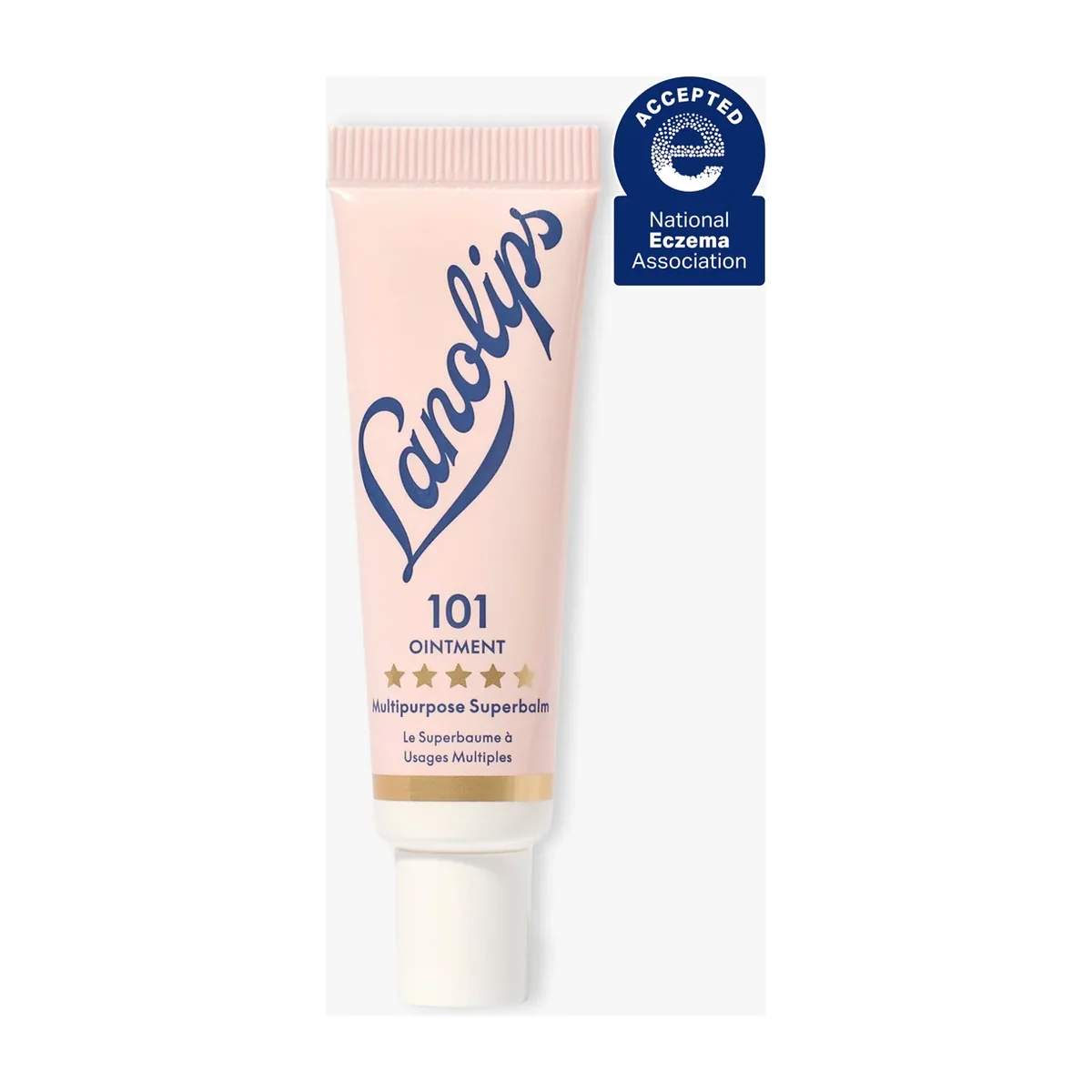 Cult Multipurpose Lanolin Balm
 101 Ointment Multipurpose Superbalm
A genuinely excellent, minimalist cult balm — just ultra-pure lanolin and vitamin E, doing the work of a whole drawer of single-purpose products. Lanolin uniquely both seals in and holds moisture, making one tiny tube a do-everything rescue for lips, cuticles, and any dry patch. It's affordable, broadly useful, and clean; the only real caveats are the sticky texture, the lanolin-allergy possibility, and that it isn't vegan.
Key Lanolin · Vitamin E
 The Hauschka a Dermatologist Might Tolerate
 Ice Plant Face Cream
The most dermatologist-friendly thing Dr. Hauschka makes: a rich, essential-oil-free jojoba-and-butter cream that genuinely ends the tight, flaky feeling of very dry skin, built around a desert succulent's juice with a good story and no trial. Lanolin, refined peanut oil and ethanol at position five are the old habits it did not shed, and they matter most for the eczema-prone skin it names. At $50 for 40 ml it is fair for the sourcing and steep for the evidence.
Key Botanical Extracts · Jojoba Oil
 Heritage Hand-Cream Icon
 Creme Tin
A 1911 icon that still earns its place as a heavy-duty occlusive for dry hands, lips, elbows, and wind-chapped skin. The dense water-in-oil formula seals and softens beautifully and costs almost nothing per use. The catch is a hefty fragrance-and-allergen load that rules it out for sensitive or acne-prone skin.
Key Lanolin · Mineral Oil
 Skin Food, Tamed
 Skin Food Light Nourishing Cream
The version of Skin Food most people should actually buy: the same sunflower oil, botanicals and herbal scent as the 1926 balm, rebuilt as a real cream with cocoa and shea butters and far less lanolin, so it absorbs in minutes, works under makeup and still protects dry skin through winter. Alcohol fourth, a declared fragrance and animal-derived lanolin keep it from sensitive, acne-prone and vegan buyers; for dry, normal skin it is excellent value with a vast review base behind it.
Key Sunflower Oil · Shea Butter
 Wax Glove, No Perfume
 Ice Plant Hand Cream
An unfragranced, wax-forward hand cream — Japan wax, bayberry wax and beeswax over avocado, babassu and sesame oils — that gives dry hands a satin glove lasting a wash or two, with the ice plant juice at a serious dose and lanolin at a token one. Ethanol at position four is the flaw on cracked or eczematous hands, and $30 for 50 ml is dear for the category. The best hand cream Dr. Hauschka makes, for the hands that can take the alcohol.
Key Botanical Extracts · Beeswax
 Prestige-Grade Member Pick
 Plantastic Apricot Butter Cleansing Balm
A genuinely luxurious cleansing balm that lives or dies on whether you are a Beauty Pie member. For members, it is one of the best-value prestige-grade balms you can buy in the UK; for non-members, the maths gets trickier. Dry and normal skin types will love it, sensitive and acne-prone users should probably keep scrolling.
Key Apricot Kernel Oil · Cocoa Butter
 Heritage Spot Rescue
 Skin Care Cream
Sudocrem's official answer to the celebrity 'dab it on a spot' hack — the heritage zinc-oxide formula repackaged in a tube for blemish-prone skin. As an overnight rescue for one angry, inflamed spot it genuinely soothes, but it carries no real acne active and its comedogenic base makes it a poor choice for all-over use.
Key Zinc Oxide · Lanolin
 Rich Dry-Skin Mask
 Masque Essentiel Nutri Confort
Guinot's Masque Essentiel Nutri Confort is a rich, old-school nourishing mask that genuinely comforts parched, dry skin in a 10-minute treatment — lanolin and conditioning oils do real work. But it's a relic in its irritant load: camphor, menthol, denatured alcohol, essential oils and lanolin make it a hard sell for anything but resilient, very dry skin, and the sensory tingle is dressing, not benefit.
Key Lanolin · Avocado Oil
 Salon Soothing Mask
 Azulene Calming Mask
A soft, creamy zinc-and-kaolin mask in a mineral oil base that soothes and mattifies mildly without ever drying, which is genuinely rare, and which contains no azulene despite the name. Lanolin alcohol, fragrance, a formaldehyde releaser, parabens, BHT and three dyes are the wrong list for a mask sold to sensitive skin, and they turn a gentle idea into a gamble for the people it is aimed at.
Key Zinc Oxide · Kaolin
 Century-Old Medicine-Cabinet Staple
 Antiseptic Healing Cream
A registered medicinal barrier cream that's been quietly soothing nappy rash, eczema, and angry spots since 1931 on essentially the same zinc-oxide formula. Cheap, versatile, and genuinely effective for protecting compromised skin — just don't mistake it for a daily facial moisturizer, because the lanolin-and-paraffin base wasn't built for that.
Key Zinc Oxide · Lanolin
 Versatile Protect-and-Repair Cream
 Multi-Expert Healing Cream
Sudocrem's generalist — the brand's trusted zinc-oxide chemistry repackaged into a do-many-jobs tube aimed beyond the nursery, at adult rashes, chafing, incontinence-related irritation, and minor wound protection. Genuinely versatile and cheap, with the same honest caveats as its siblings: a heavy, lanolin-and-fragrance base that's wrong for all-over facial use.
Key Zinc Oxide · Lanolin
 Matte Fibre Styler
 Strong Hold Texturizing Pomade for Men
The best styler in Brickell's line on pure performance — a cationic fibre polymer, kaolin and three waxes deliver a strong, re-workable, matte hold that washes out easily — and one to think twice about if your hairline is eczema-prone, because it carries lanolin and five essential oils. The natural story is thin; the fibre chemistry is good.
Key Lanolin · Kaolin
The full lanolin (wool wax) guide
Lanolin is the rich, waxy grease that sheep make to protect their wool, refined for skincare and medicine, and shepherds were rubbing it into cracked hands long before chemists knew why it helped.
It's unusually close to the skin's own oils, packed with cholesterol and related fats, yet thick enough to seal badly chapped skin. It holds water as it seals, which is why it's a classic for lips, heels, hands and sore nipples while breastfeeding. Its kinship to skin is also behind its well-known allergy question.
Where the evidence stands, by concern
Evidence for an ingredient is not one grade — it differs concern by concern. Each row below was researched separately against regulatory approvals, clinical guidelines, and trials our team opened and verified; the band and dots rank how central lanolin (wool wax) is to treating that concern, from first-line therapy down to supportive care, at treatment-level doses and vehicles. A product's own grade weighs its actual formula.
How it's regulated in the US
FDA does not classify ingredients — it classifies products, by what they are sold to do. The same molecule can be a drug active in one product and a cosmetic ingredient in the next, and only the claim on the label decides which. What follows is a statement about that legal standing, not about whether it works — the evidence question is answered separately above.
OTC drug active Lanolin is a skin protectant drug active from 12.5 percent up — the concentration at which nipple balms and heavy occlusives use it. Below that it is a cosmetic emollient.
- skin protection OTC monograph 12.5 to 50 percent; 15.5 percent in a permitted combination
Generally recognized as safe and effective under an FDA order — marketed without FDA approval
Permitted label wording “Temporarily protects minor cuts, scrapes and burns; Helps prevent and temporarily protects and helps relieve chafed, chapped or cracked skin and lips”
Lanolin's long medical use is the backdrop for studies of how its film slows water loss and keeps healing skin moist, along with pharmaceutical-grade standards. Studies of nipple soreness during breastfeeding compare it with simple alternatives such as expressed milk. Allergy is a major thread, studied through patch testing, with reactions more common in people with eczema, leg ulcers or other inflamed skin, and dermatologists have called attention to how often it's missed. Researchers also look at which parts of lanolin trigger reactions and how purification lowers that risk. For how dryness stacks up, the evidence panel below has the detail.
How it works
Lanolin is a complex wax — a mixture of esters, diesters, and hydroxy esters — secreted by wool-bearing sheep and refined to varying purity. Its makeup is unusually sophisticated for a natural material: a large fraction of sterol and cholesterol esters, lanolin alcohols, lanolin acids, and free sterols including cholesterol. That cholesterol-rich profile is what sets it apart from plant occlusives like shea butter or coconut oil. Because it echoes the lipid families already present in the stratum corneum, it can partially integrate into the intercellular lipid matrix rather than simply resting on the surface, which is thought to contribute to barrier support alongside pure occlusion. At the surface it forms a film that slows water evaporation. Crucially, that film is semi-permeable — it permits some moisture and gas exchange while still markedly reducing loss, a contrast to petrolatum, which is essentially inert and blocks evaporation almost entirely. Lanolin is also remarkably hydrophilic for a wax, capable of holding well over its own weight in water; polar hydroxyl groups on its sterols and alcohols create binding sites that trap and slowly surrender moisture back to the skin. The emollient role runs in parallel. Lanolin settles into the gaps between shedding corneocytes, smoothing roughness and softening dry, cracked, or calloused areas. On lips, heels, and elbows — thick but chronically dehydrated skin — that blend of sealing, structural fit, and water-binding makes it one of the most effective repair ingredients available off the shelf.
Key benefits
- Seals and softens cracked lips, heels and hands
- Holds water as it seals for deep comfort
- Close to the skin's own oils, rich in cholesterol
- Purified grades are gentle enough for nursing parents
- Smooths rough, calloused patches
Concentration & usage
In leave-on products lanolin spans a wide range — from a few percent in multi-ingredient moisturizers to 40% or more in dedicated lip ointments, barrier creams, and heel treatments. The US FDA recognizes lanolin at 12.5–50% as an OTC skin protectant. On an INCI list, watch for "Lanolin" (the anhydrous form), "Lanolin Alcohol" (the sterol/alcohol fraction, with higher sensitization potential), or "Hydrous Lanolin" (which contains roughly 25–30% water). HPA lanolin is specifically defined by free lanolin alcohol content below 1.5% — the grade used in medical nipple creams and products aimed at sensitive or atopic skin. Cosmetic-grade lanolin is less rigorously purified and carries a higher theoretical sensitization risk. There is no meaningful pH dependence; lanolin is effectively pH-neutral and functions across the range used in skincare.
Who it's for & who should be cautious
Who it's for
People with severely dry, cracked, or compromised skin are the clearest beneficiaries — the lipid kinship and high water-holding capacity suit dry, eczema-prone skin, chapped lips, split heels, and post-procedure recovery. It is also a sensible pick for nursing parents with nipple soreness, where pharmaceutical-grade (HPA) lanolin is the studied form and does not need to be wiped off before feeding. Anyone with normal-to-dry skin wanting a time-tested occlusive without silicones or petroleum-derived ingredients will find it delivers, provided they have no lanolin allergy.
Who should be cautious
Anyone with a known lanolin contact allergy should steer clear, and the ACDS 2023 designation is a real prompt to patch-test first if you have a history of atopic dermatitis, chronic leg ulcers, stasis dermatitis, or perianal/genital dermatitis — these groups show meaningfully higher sensitization rates. Oily and acne-prone skin should be cautious applying it to the face: it is thick, occlusive, and historically rated comedogenic, though modern purified grades are less troublesome than older crude material. Acetylated lanolin and acetylated lanolin alcohol carry higher pore-clogging potential than the base ingredient, so scan for them if you break out easily. Vegans and anyone avoiding animal-derived ingredients should note lanolin is not vegan.
Pairs with & conflicts
Myths & facts
Myth: Lanolin allergy is so rare it's not worth thinking about.
Reality: Its 2023 Allergen of the Year designation reflects a genuine clinical concern. Sensitization in patch-tested dermatitis patients runs roughly 1.8% to 4.6% depending on method and population, and the rate rises sharply in people with atopic dermatitis, chronic leg ulcers, and stasis dermatitis. It is uncommon in healthy skin, but the groups most likely to be applying heavy barrier creams — inflamed, compromised skin — are precisely where it matters most.
Myth: Lanolin and petrolatum do the same job, so it doesn't matter which you use.
Reality: Both are occlusives, but they behave differently. Petrolatum is inert and reduces water loss almost completely as a purely physical barrier. Lanolin's cholesterol-heavy makeup lets it partially integrate into the skin's lipid matrix, supporting barrier repair rather than just capping it. It also binds water actively, which petrolatum cannot. For skin needing both a seal and structural support, they're genuinely different tools.
Myth: All lanolin is the same — any product with it on the label carries the same benefits and risks.
Reality: Purity varies enormously. Crude and cosmetic-grade lanolin contains more free lanolin alcohols, the main sensitizing fraction, while highly purified anhydrous (HPA) lanolin is refined to below 1.5% free alcohol, substantially lowering allergic contact dermatitis risk. That distinction is practical: HPA lanolin is used on broken skin, infants, and nursing parents; lower grades are not recommended for those situations.
Frequently asked questions
Is it safe to leave lanolin on cracked nipples while breastfeeding?
Highly purified anhydrous (HPA) lanolin is the grade studied for this and is generally considered safe — it is structurally close to human sebum and does not need to be wiped off before a feed. HPA lanolin is defined by free lanolin alcohol content below 1.5%, which minimizes the sensitizing components. Less-refined cosmetic-grade lanolin is a different matter and is not what most breastfeeding-specific products use.
Will lanolin clog pores or trigger breakouts on the face?
It can, especially on oily and acne-prone skin. Lanolin historically scores in the 2–4 range on the old rabbit-ear comedogenic scale, a measure now considered a poor predictor of human responses. Purified modern grades are less problematic, but it remains a rich, occlusive ingredient best reserved for lips, heels, elbows, and very dry body areas rather than layered over congestion-prone facial skin. Acetylated lanolin derivatives carry a higher pore-clogging risk than the base ingredient.
Why was a centuries-old ingredient named Allergen of the Year in 2023?
The American Contact Dermatitis Society uses that designation less for new allergens than to raise awareness about ingredients underdiagnosed as a sensitization source. Lanolin appears in thousands of skincare products, ointments, and medical preparations — so exposure is widespread — and its sensitizing fraction (free lanolin alcohols) is hard to spot on a label. The award was a nudge to clinicians and consumers to take lanolin allergy more seriously in patch testing, particularly in atopic and compromised-skin populations.
What is the difference between 'Lanolin' and 'Lanolin Alcohol' on a label?
Lanolin (INCI: Lanolin) is the whole refined wax — esters, diesters, hydroxy esters, sterols, and acids together. Lanolin Alcohol is the sterol and aliphatic alcohol fraction isolated from it; it adds emollient and emulsifying properties but also concentrates the main allergens, the free lanolin alcohols. If you've reacted to lanolin, Lanolin Alcohol is specifically what to avoid, and it shows up frequently in its own right in cosmetic formulas.
Is lanolin vegan?
No. Lanolin comes from the sebaceous secretions of wool-bearing sheep, recovered during wool cleaning. The sheep aren't harmed to collect it — it's a shearing byproduct — but it is unambiguously animal-derived and unsuitable for vegan formulas. Plant butters and oils such as shea, mango butter, and meadowfoam oil are sometimes offered as functional stand-ins, though their lipid profiles differ from lanolin's.
- Clean Beauty & MarketingVegan, Cruelty-Free and Leaping Bunny Are Three Different Claims. Only One Is Audited.A lip balm can be certified cruelty-free and made largely of sheep wool grease and beeswax. Both statements are true, both are on the packaging, and most people buying it think they cancel out.
- Eczema & DermatitisOne Year, the Allergen of the Year Won for Being InnocentRead the list backwards and you get a history of the cosmetics industry replacing one preservative with another — and discovering, about a decade later, what it replaced it with.
- Lip CareLip Care: The Barrier That Physically Can't Hold WaterLip skin loses moisture about three times faster than your cheek and has no oil gland to replace it — which explains most of the reapplication loop, and none of the part your balm is causing.