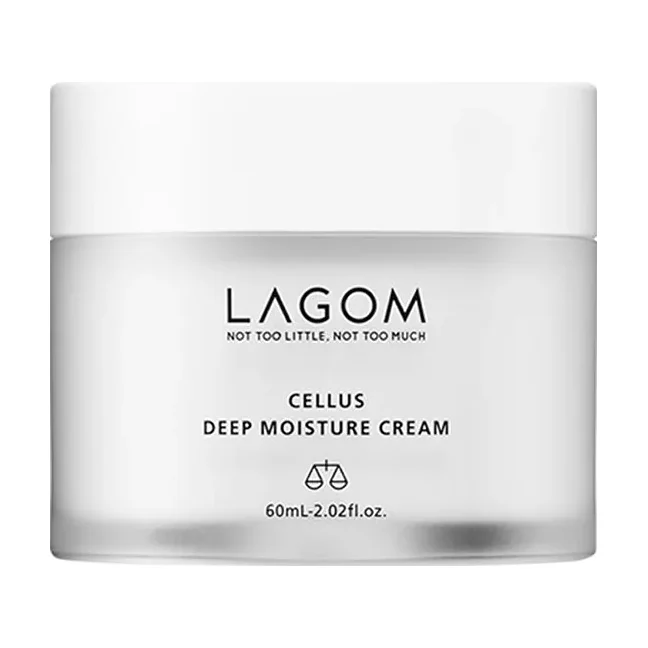
This cream is a frustrating case: a genuinely good moisturizer wrapped in a fragrance blend that undermines it. Lagom's Cellus Deep Moisture Cream has a barrier-and-NMF core worth praising and an essential-oil load worth warning about — and the warning is more serious than usual.
The good first. The core is a legitimately nourishing dry-skin formula. Ceramide 3 with phytosphingosine reinforces the barrier with skin-identical lipids; a full natural-moisturizing-factor complex — urea, yeast amino acids, betaine, inositol, taurine and trehalose — replenishes the humectants the skin uses to hold its own water; and polyglutamic acid plus hyaluronic acid add further hydration. On a rich emollient-and-occlusive base of hydrogenated polydecene, jojoba and macadamia oils and fatty alcohols, this seals and nourishes dry skin genuinely well, relieving tightness and supporting barrier repair over a week or two. Unscented, it would be an easy recommendation.
Now the problem, and it's significant. The cream is finished with a very heavy aromatherapy essential-oil blend, and one ingredient in particular deserves a flag: Myroxylon pereirae — balsam of Peru — one of the most common causes of fragrance contact allergy worldwide and a standard ingredient on dermatology patch-test panels. It's joined by bergamot, lemon, orange and grapefruit peel oils (which carry photosensitivity concerns), plus cedar, geranium, lavandin, rose, star anise and galbanum. This is where the 'natural is gentler' assumption fails: botanically-derived fragrance compounds are still potent sensitizers, and a blend this heavy — with balsam of Peru at the center — is genuinely higher-risk than a synthetic fragrance, let alone a fragrance-free formula. For sensitive, eczema-prone or reactive skin, that's a real reason to steer clear, and it's a poor fit in a daily moisturizer.
That tension defines who it suits. Resilient, dry, normal skin that loves an aromatherapy scent and tolerates fragrance may be perfectly happy and get the benefit of the good barrier core. But the very skin that would most value ceramide-and-NMF repair — dry, compromised, often reactive — is the skin most at risk from the fragrance. It's also rich and occlusive, so oily skin will find it heavy, and it isn't fungal-acne safe. It's vegan in composition (synthetic beeswax).
The practical guidance, if you use it: patch test first given the balsam of Peru and citrus oils, keep daytime use paired with sunscreen because of the photosensitive citrus oils, and stop at any sign of redness or itching that could signal a fragrance allergy.
In use, it's a rich, emollient cream that melts in, seals dry skin, relieves tightness, and carries a strong aromatherapy scent. The hydration and barrier feel are genuinely good; the scent is the reason for caution.
The brand context is Lagom's barrier-focused Cellus line, and the complete INCI confirms a well-built barrier-and-NMF cream burdened by a heavy, allergen-containing essential-oil blend.
The practical guidance, if you use it, is to patch test properly first — ideally on the inner forearm for several days — because balsam of Peru is exactly the kind of ingredient that triggers delayed allergic reactions, and to pair any daytime use with sunscreen given the photosensitive citrus oils. It's worth contrasting it with the brand's lighter Mild cream: this Deep version is the richer, ceramide-and-NMF one for genuinely dry skin, while the Mild is a lighter soothing cream with no ceramide — but both, frustratingly, carry heavy essential-oil blends, so neither is the fragrance-free option. The deeper lesson is the one about 'natural' fragrance: the botanical origin of these oils doesn't make them gentler, and balsam of Peru in particular is a leading cause of fragrance allergy precisely because it's a complex natural mixture. So the calculus here is unusual — the barrier core is good enough that resilient, fragrance-loving dry skin may well be happy, but the allergen load is high enough that the sensitive, compromised skin which would most benefit from ceramides and NMF should steer clear. For that audience, a fragrance-free ceramide cream delivers the same nourishment without the risk, which is why, despite the genuinely good core, this is hard to recommend broadly. The barrier core genuinely deserved a cleaner formula, and that gap between a good base and a risky fragrance is the whole story of this cream.
The bottom line: a genuinely nourishing rich barrier-and-NMF cream sabotaged, for the sensitive skin it should serve, by a very heavy essential-oil blend including balsam of Peru and citrus oils. Buy it only if your skin is resilient and dry, you love an aromatherapy scent, and fragrance and known allergens aren't a concern. Skip it if your skin is sensitive, eczema-prone, rosacea-prone or reactive (the balsam of Peru and citrus oils are a clear risk), if you're oily or fungal-acne-prone, or if you want a fragrance-free barrier cream — for which a fragrance-free ceramide cream delivers the same nourishment without the allergen load. The core deserved a cleaner formula.